
China has a way of reminding you that you’re somewhere different. It isn’t the language, or even the food. It’s the systems: paying for lunch, booking a hotel, hailing a taxi, ordering coffee… almost every small task depends on an ecosystem built for China–and for the people who live there.
As a visitor, you quickly realise you’re not just navigating a new country; you’re learning a different way of getting through the day.
And as someone who plans every trip with military precision, I thought I’d get ahead of the game. Weeks, even months before our extended family holiday to Shanghai, I found myself downloading app after app–payments, ride-hailing, maps, train tickets, restaurant bookings. By the time I was done, I’d installed six or eight Chinese apps, each solving one small part of the puzzle.
There was only one problem: my iPhone was already protesting. Years of refusing to delete travel photos had left me perpetually short of storage. Every new app became a negotiation. Which memories could I temporarily part with so I could make room for the next download?
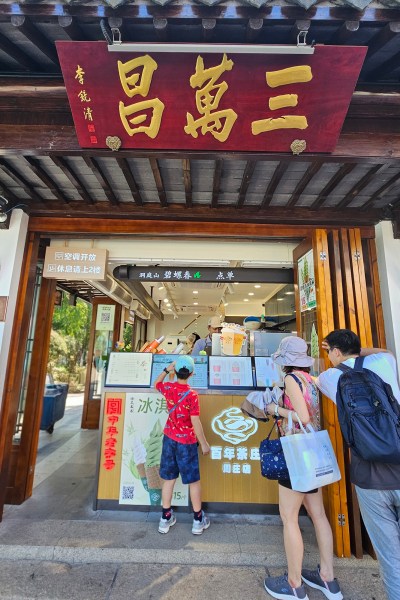
And then we arrived, and all that preparation had to become muscle memory. We stood at counters, studied screens, scanned codes and watched what everyone else seemed to know instinctively. The systems were invisible to the people who lived with them every day. For us, they were part of a very new experience.
It was only then that I realised the biggest challenge wasn’t navigating Shanghai itself. It was learning the invisible systems that made Shanghai work. For the first time, the biggest hurdle wasn’t crossing a border; it was crossing into another digital ecosystem.
And there was something strangely humbling about that.
At home, I am used to moving through the day without thinking too much about the infrastructure underneath it. I tap a card, open an app, book a ride, order something online. These actions have become so familiar that I barely register them. In China, those same habits suddenly had to be relearned. I became much more aware of how much of everyday life is shaped by the systems around us, and how quickly we stop noticing them once they become familiar.
Travelling with an extended family added another layer to it. There were more people to coordinate, more phones to keep charged, more tickets and bookings to keep track of, and more moments when someone would look to me as the designated organiser and ask, “So what do we do now?”
Which, admittedly, was not always a question I could answer.
For all my preparation, there were plenty of moments when we simply had to stop, look around and figure things out as we went. And perhaps that was the most useful part of the preparation after all. The apps helped, the saved information helped, and the careful planning helped — but none of them could completely remove the unfamiliarity of being somewhere new.
The preparation for China happened on my phone before it happened in my luggage. I spent weeks downloading apps, clearing storage and trying to anticipate what we would need. Once we arrived, there was still plenty I hadn’t thought of — which, in retrospect, was probably inevitable.


