Heart of the Alps, Switzerland

Though sharing the Alps mountain range with France, Italy, Austria and Liechtenstein, land-locked Switzerland is undoubtedly regarded as heart of the Alps. The Alps occupy about 65% of Switzerlandโ€™s surface area, making it one of most alpine countries in the world. Notably, Switzerland is not a member of the European Union. Therefore, Euros are not widely accepted in the alpine country as they still use their own currency and legal tender โ€“ the Swiss Franc or CHF. So does Liechtenstein.

A few entities are synonymous with the Swiss โ€“ traditional Swiss cottages, cheese fondue, milk chocolates, banks, the Swiss army and watches. In a nutshell, anything associated with Switzerland is almost guaranteed to be of high quality.

After a half-day trip to Lake Maggiore in Italy, our coach entered Switzerland from the south. By the time we arrived in Lucerne, it was already early evening. We wasted no time in setting down our luggage in our room, for we wanted to be out and about roaming the streets of Lucerne before night fell.
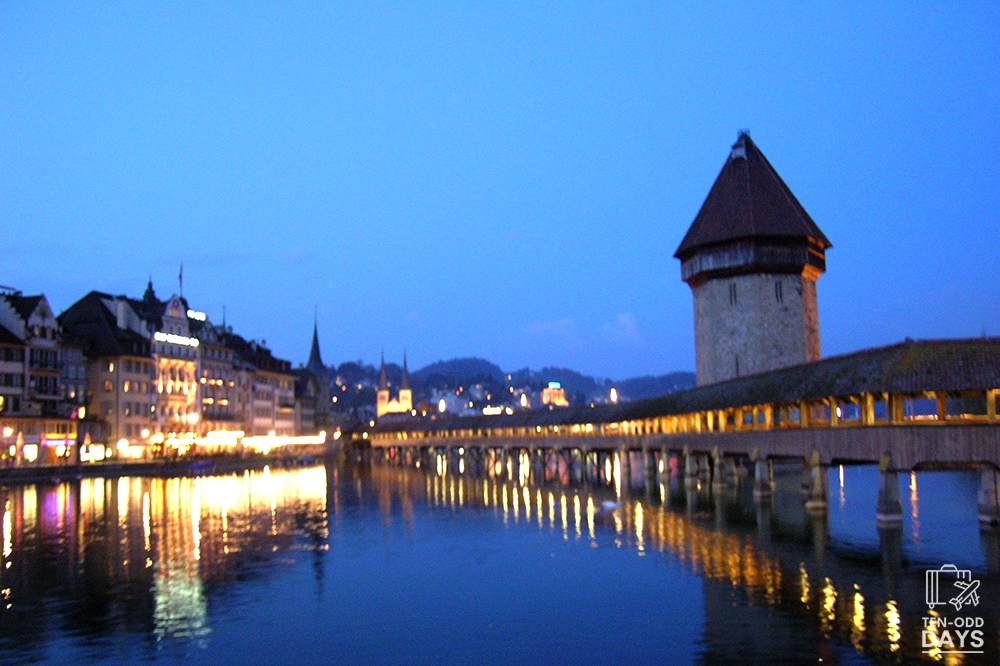
Chapel Bridge
The landmark Chapel Bridge during Blue Hour.

The Chapel Bridge crossing the Reuss River, a short jaunt from our hotel, is the oldest wooden-covered bridge in Europe. The current bridge standing in Lucerne is however, not the original constructed in 1333 as much of the bridge was destroyed in a fire in 1993. The Swiss wasted no time in rebuilding the bridge since it is a major tourist attraction and is easily the most photographed monument in the country.

Tomorrow we would be scaling Mount Titlis, wellโ€ฆ not in the traditional sense. Exhilarated to finally get to meet the Alps at close range.


Mount Titlis is reputed as having the worldโ€™s first revolving cable car that delivers a 360-degree panoramic view of the glaciers, valleys, rivers etc. One has to take a total of 3 cable cars to reach the summit, and the reward for the chore of changing cable cars several times โ€“ a breathtaking view of the Alps above the clouds. No photograph in the world would do justice to the spectacular sight which greeted us โ€“ you would really quite have to see it for yourself.
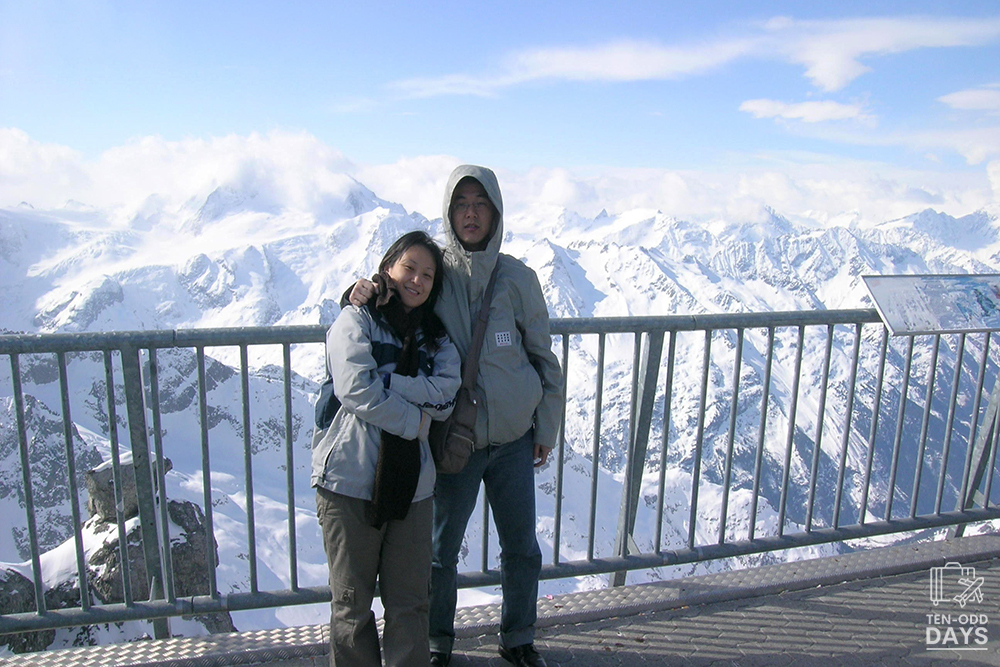
Mt Titlis
At the summit of Mount Titlis. I think we managed to make it
look much less colder than it actually was.

We were blessed with clear blue skies and good weather when we โ€˜mountedโ€™ the summit with the assistance of the cable cars. However, we suffered the repercussions of our wilfulness. In a bid to lighten our luggage, we omitted our winter overcoats and the full works as we saw no point in packing them just for half a dayโ€™s worth of visit. Our group mates were much more prepared, and we finally understood why they needed luggage space double of ours โ€“ they were warm and snug in their bulky winter wear while we were seriously freezing our asses off. Silly usโ€ฆ

At a height 3,028m above mean sea level, the ambient temperature out in the open was easily in the range of minus 10ยฐC. We couldnโ€™t bear to stay out longer than necessary and were frequently dashing into the comforting warmth of the indoors. Even our trusty DSLR died on us intermittently, as if protesting against the biting cold.

Seeing that the tourist crowd was reaching the summit in throngs, we decided it was time to quickly settle our lunch at the cafeteria ahead of lunch hour to avoid the crowd. If you ever have the opportunity to visit Mount Titlis, you must try the delicious grape drink Grapillon. Weโ€™re quite certain this drink must also be widely available throughout Switzerland though. Look out for it if you are a grape drink lover like us.
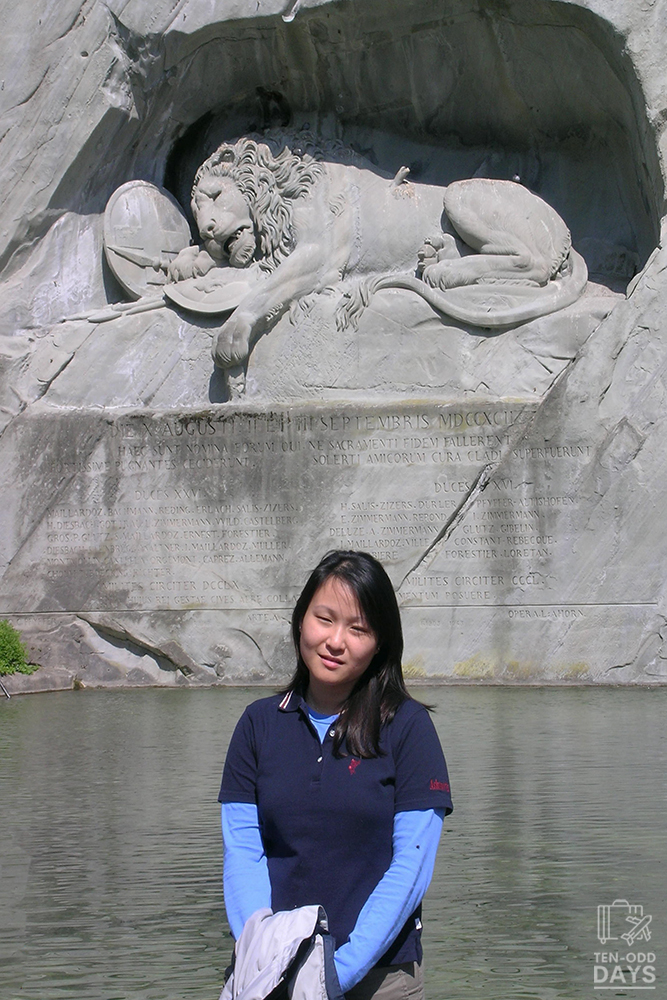

The Lion Monument
Squinting from the glare… the struggle is real.

The Lion lies in his lair in the perpendicular face of a low cliff โ€” for he is carved from the living rock of the cliff. His size is colossal, his attitude is noble. His head is bowed, the broken spear is sticking in his shoulder, his protecting paw rests upon the lilies of France. Vines hang down the cliff and wave in the wind, and a clear stream trickles from above and empties into a pond at the base, and in the smooth surface of the pond the lion is mirrored, among the water-lilies.

Around about are green trees and grass. The place is a sheltered, reposeful woodland nook, remote from noise and stir and confusion โ€” and all this is fitting, for lions do die in such places, and not on granite pedestals in public squares fenced with fancy iron railings. The Lion of Lucerne would be impressive anywhere, but nowhere so impressive as where he is.

–  Mark Twain, A Tramp Abroad, 1880

A befitting tribute to the Lion Monument in Lucerne, which commemorates the Swiss Guards who served the French King Louis XVI and were massacred during the French Revolution in 1792. That sentimental Swiss monument was our next stop after Mount Titlis.

After visiting the Lion Monument, we were sent back to the vicinity of our hotel and left to our own devices. We went shopping at Bucherer and the neighbouring shops. In particular, we were looking to buy some Swiss chocolate home but were advised against it as the climate was getting warmer and there was no telling if the chocolates would hold for another 5-6 more days before we arrived back in Singapore.

Next on, the City of Lights!
Playground of the Rich & Famous

Our next destination brought us to the French Riviera (French: Cรดte dโ€™Azur), the southeast Mediterranean coastline off France. Due to its hot summers and mild winters, the French Riviera started out as a playground and vacation spot for European aristocrats who would temporarily move southwards to eschew the cold, bitter winters in the north. Now, the region has become a fashionable tourist destination, especially for the rich and famous. It is said that many celebrities own houses in the region.

The first stop โ€“ Parfumerie Fragonard at Grasse. Fragonard started out as โ€˜a novel concept of selling perfumery products directly to tourists who were beginning to discover the French Rivieraโ€™s charmsโ€™ and has remained remarkably true to its initial business concept since almost 80 years ago.

We were walked around the historic perfume factory by an English-speaking guide. The complementary tour was brief but most informative โ€“ we learnt a fair bit about the perfume production process, the three notes and how eau de toilette differs from eau de parfume. Our tour ended at the store, and being typical tourists, we bought quite a few items after perusing the merchandise.

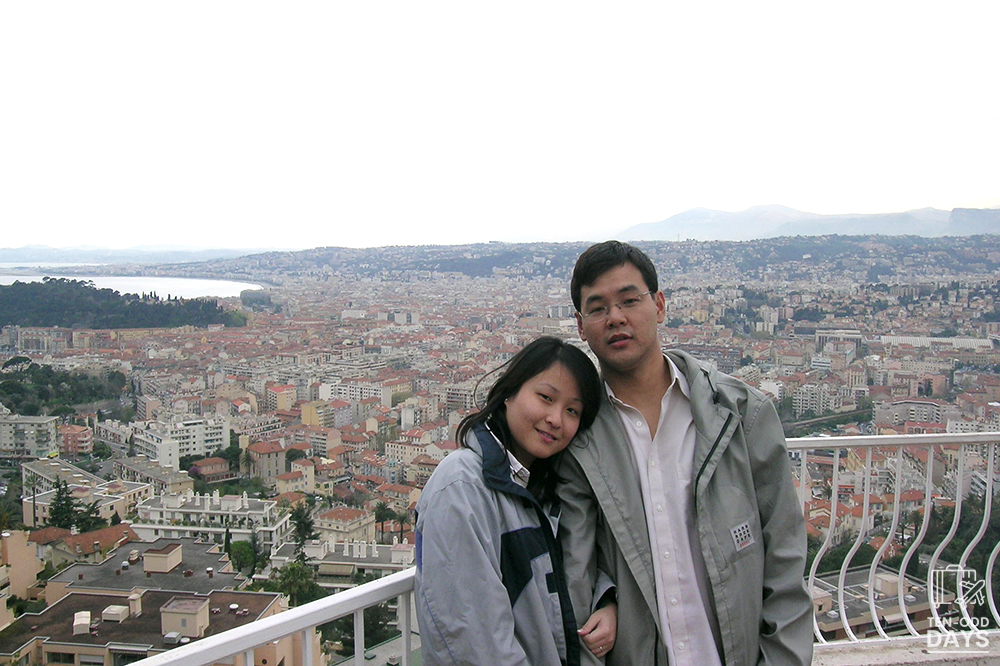
Nice Panorama
What a lovely panoramic view of Nice!

The drive along the narrow, curvy and hilly roads flanking the Mediterranean Sea continued till we reached a pseudo pit stop which gave us an awesome vantage view of Nice (pronounced as โ€˜nieceโ€˜, not nice). Reluctantly we returned to the coach when our tour leader reminded us that time was running out and that our driver would like to arrive at Nice before the evening rush hour drove drones of cars up the hilly roads. As it is, the roads are difficult enough to navigate without impatient drivers. Little wonder it is said that driving on the Riviera is reserved only for the very brave.

Our coach driverโ€™s wish was granted โ€“ we arrived at Nice safe and sound well ahead of the evening rush hour. After checking into what we would deem to be the worst accommodation throughout the tour, we were back at the lobby in a jiffy. The room was dark, small and came complete with a musty smell; we couldnโ€™t wait to get out. It was so bad we were most disinclined to return after dinner and a night stroll, but we didnโ€™t relish wandering about the whole night and possibly getting rounded up by the authorities for suspicious behaviour. I stayed awake for most part of the night.


We had one full day dedicated to the French Riviera, and the places to cover included Monaco, Saint-Paul de Vence and Cannes (pronounced as โ€˜kanโ€˜, not cans). For the first time in days, we saw the sun peeking out of the clouds, and rejoiced. We embraced the respite from the cool, rainy weather in Italy, however short it might be.

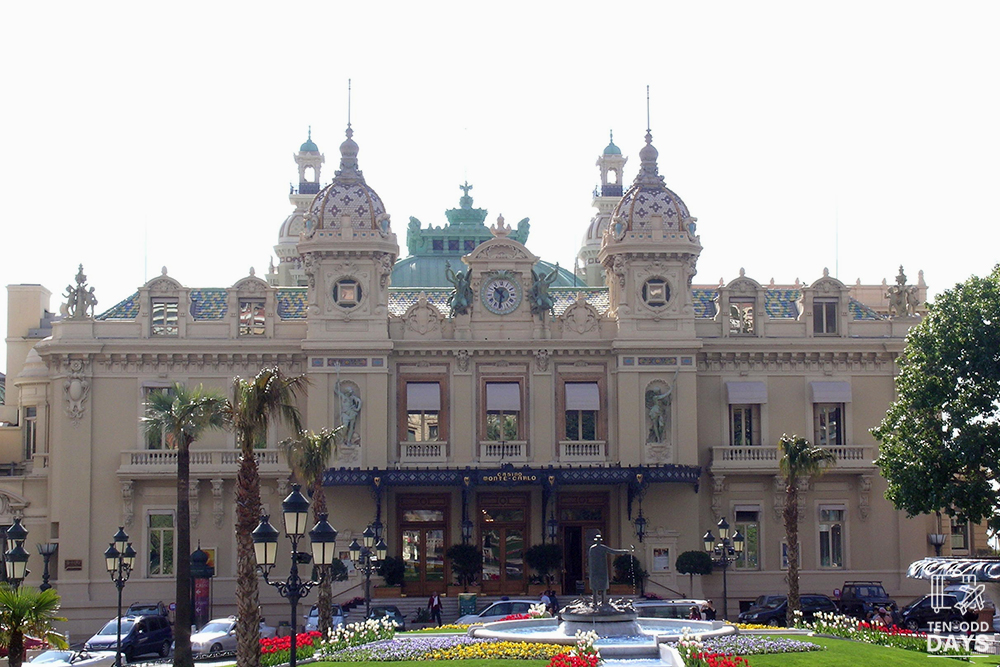
Monte Carlo, one of Monacoโ€™s administrative areas, is synonymous with the Monte Carlo Casino and Circuit de Monaco (of the F1 Monaco Grand Prix). Apparently you could in fact drive most part of the Grand Prix Circuit if you choose to drive into Monaco, but do not attempt to race or you could run into some serious trouble with the police.

Casino Monte Carlo
Casinoย deย Monte-Carlo.

Admittedly, we have very little interest in gambling and casinos, but were suitably impressed with the several Ferrari and Lamborghini sighted outside, and the little park situated across the road from the casino. Playground of the rich and famous indeed.

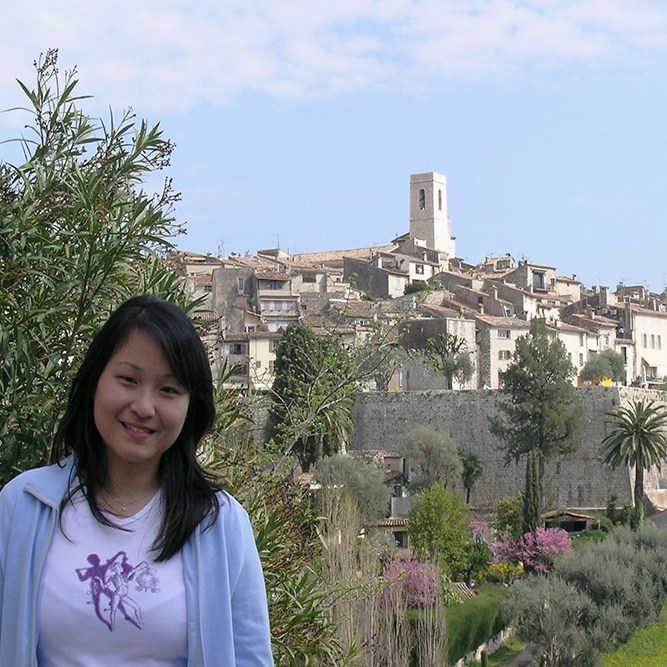
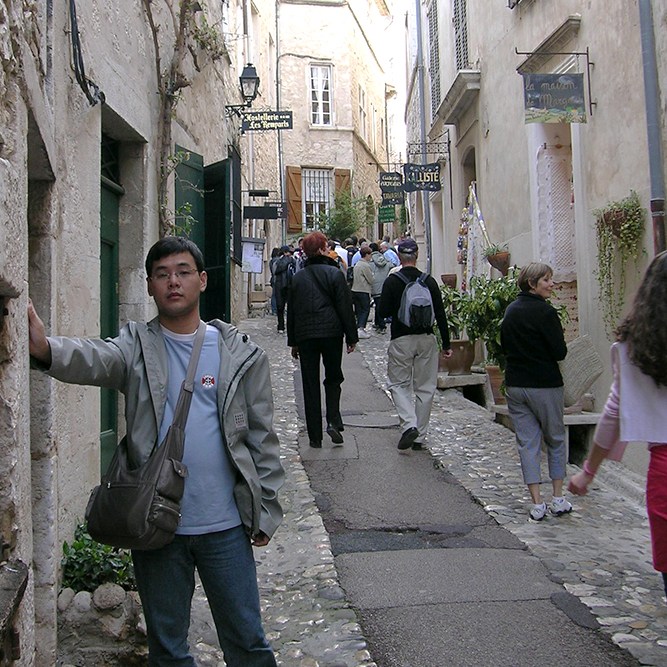
After a quick lunch, we headed for Saint-Paul de Vence, one of the oldest and best-preserved medieval towns in the French Riviera. This charming hilltop-fortified quaint little town somehow houses an astonishing number of art galleries. Even if you are not quite an art afficionado, it would be as pleasurable an afternoon sitting at a sidewalk cafe sipping coffee or tea.

The cobblestoned roads and streets at Saint-Paul de Vence are so narrow that no cars can pass so be prepared to do some walking, with good sensible walking shoes.

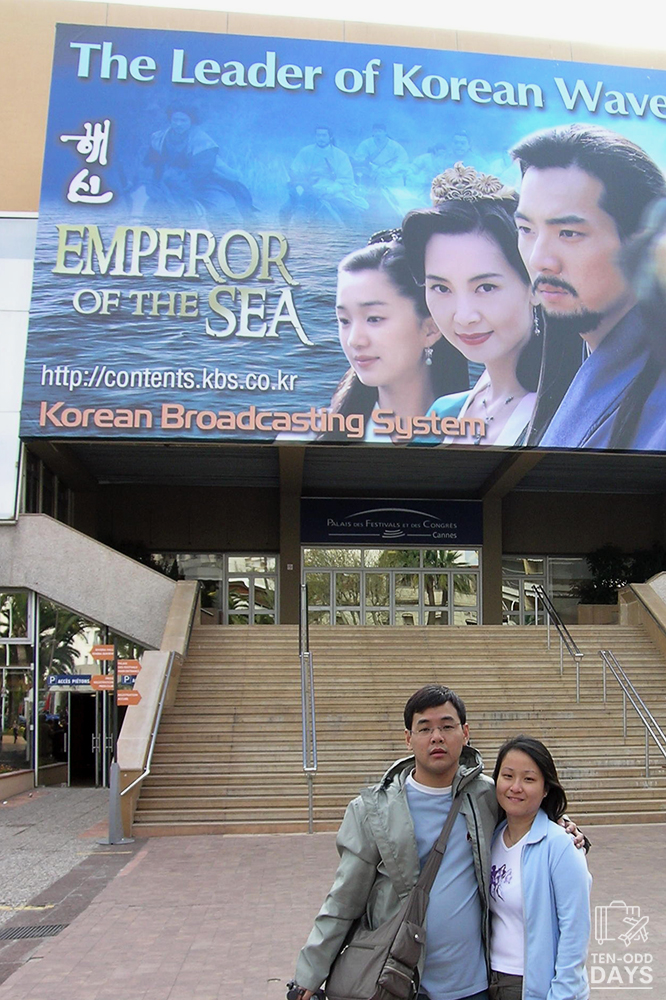
Last but not the least, we dropped by Cannes fully expecting to be blown away by the host of the annual Cannes Film Festival. Well, do not expect Cannes to be โ€˜dressed up to the ninesโ€™ as it appeared to be on live telecasts of the renowned film festival, for the Cannes we saw was anything but. In fact, I did a double take and looked to the mister for re-confirmation. Without the red carpet and the bling-blings (from the female guests to the festival) playing with the lights and our eyes, I must say that Cannes was ratherโ€ฆ underwhelming.

In Cannes
The power of Hallyu,ย all the way in Cannes.

That said, all one need to do is to walk around and you would find that Cannes is more than able to hold its own without the festival for city is also about luxury boutiques, restaurants, hotels and more.

I really liked the French Riviera, in part because it reminded me much of Singaporeโ€™s balmy weather, without the unbearably high humidity. The  best of both worlds, so to speak.

The Romance & Fashion Capitals

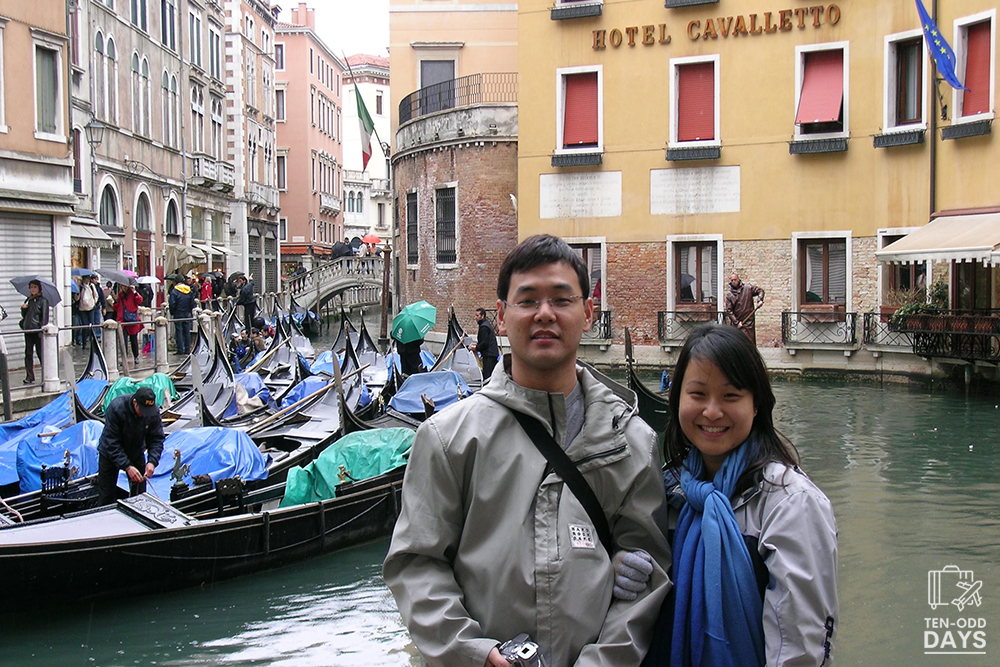
Venice (Italian: Venezia), a city in northern Italy proverbial for tourism, goes by several other names including โ€œCity of Masksโ€, โ€œCity of Bridgesโ€ and โ€œThe Floating Cityโ€. However, none of these monikers befits this Italian stunner more than โ€œThe Romance Capitalโ€. Indeed, many who have visited Venice left deeply stirred within, intrigued by romantic charm of this breathtaking city on water. Us included, without a doubt.

We couldnโ€™t have visited Venice in weather more awful: there was a deluge during most parts of the day, so much so that flooding was a very real threat. Not that floods (or โ€˜Acqua Altaโ€™, as known to Venetians) are rare occurrences in Venice. As a matter of fact, it is said that even floods should not deter tourists from visiting Venice; all is required would be a pair of rubber boots and off they go! That said, it was most certainly comforting to know that floods in Venice seldom linger, for they usually recede after 2-3 hours.

Once landed on Venice after a bumpy boat ride on choppy waters, we headed straight down one of the numerous narrow alleys and scanned for a local bistro to satisfy our growling stomachs. Itโ€™s bizarre how Singaporeans like to flock together โ€“ apart from 2 other couples who decided to have sandwiches for lunch, the rest of us all settled for the same restaurant. That must had been one elated restaurant owner!

Venice Restaurant
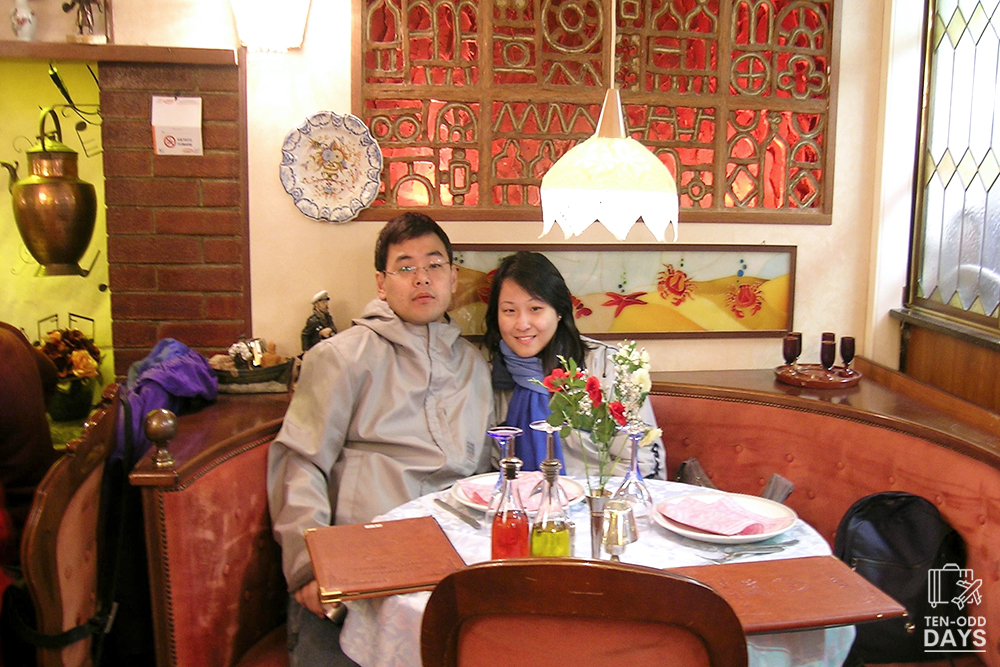
Waiting for our pasta lunch at our booth.

Following our exceptionally saporous lunch of pasta, we followed our tour leader around as he showed us the must-see famous sights and sounds of Venice including St. Markโ€™s Square and Basilica, Bridge of Sighs and Rialto Bridge. Then we were ushered into a small factory to watch a Murano glass-blowing demonstration. Fascinating, that demonstration was. We were then led into the shop front where beautiful pieces of Murano glass graced the shelves. Although not obliged to purchase any of the pieces, we ended up acquiring two pretty tea glasses which, till this day, we still have not found a use for.

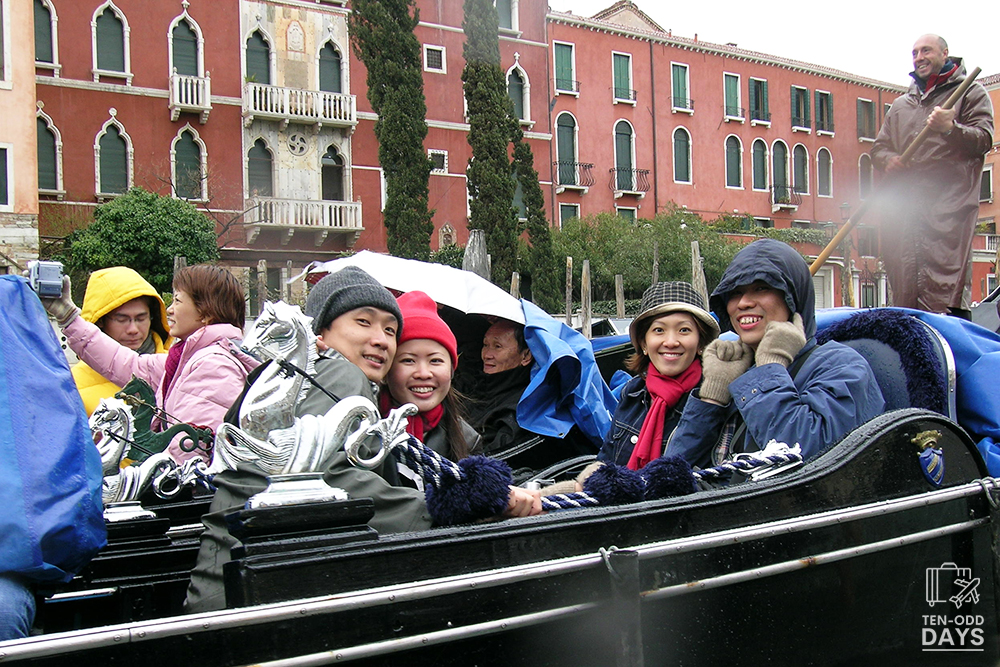
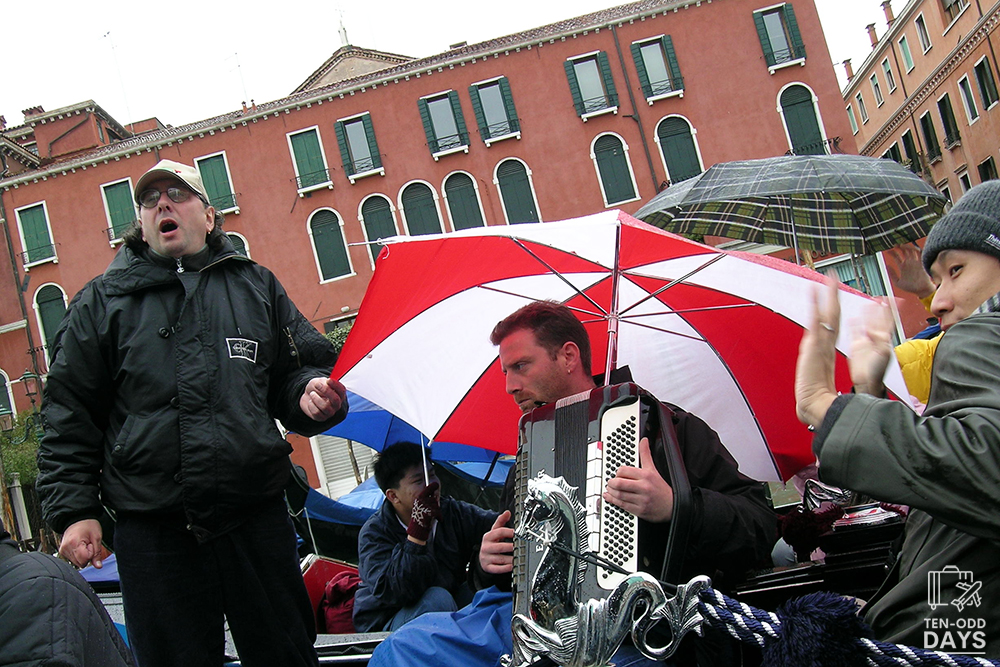
Despite the downpour, several of us agreed upon renting two gondole (Italian: singular – gondola, plural – gondole), complete with two musicians, for a ride along the Grand Canal. We must have been quite a sight, huddling close together and carrying umbrellas on the gondole rides. It was a once-in-a-lifetime experience which did not come cheap. Rental for a gondola generally costs about 100โ‚ฌ for a 1-hour ride, and does not come with musicians at that price. Such a ride can be a rather delightful experience for first-time visitors to Venice, but only if you could somehow forget the price and ignore the stench at some parts of the canal. Remember โ€“ concentrate on the novelty of the experience and you’ll be fine!

We left Venice with an inexplicably deep sense of regret. Despite being warned of its touristy aspects, the mister and I fell hopelessly in love with the Romance Capital. Tโ€™is a pity that the weather was acting up the whole time during our visit; it vastly limited our activities, and much of the time was spent ducking from shelter to shelter. It is imperative that we revisit.

For the record, we broke 3 brollies during that one day in Venice. The gusts were that strong.


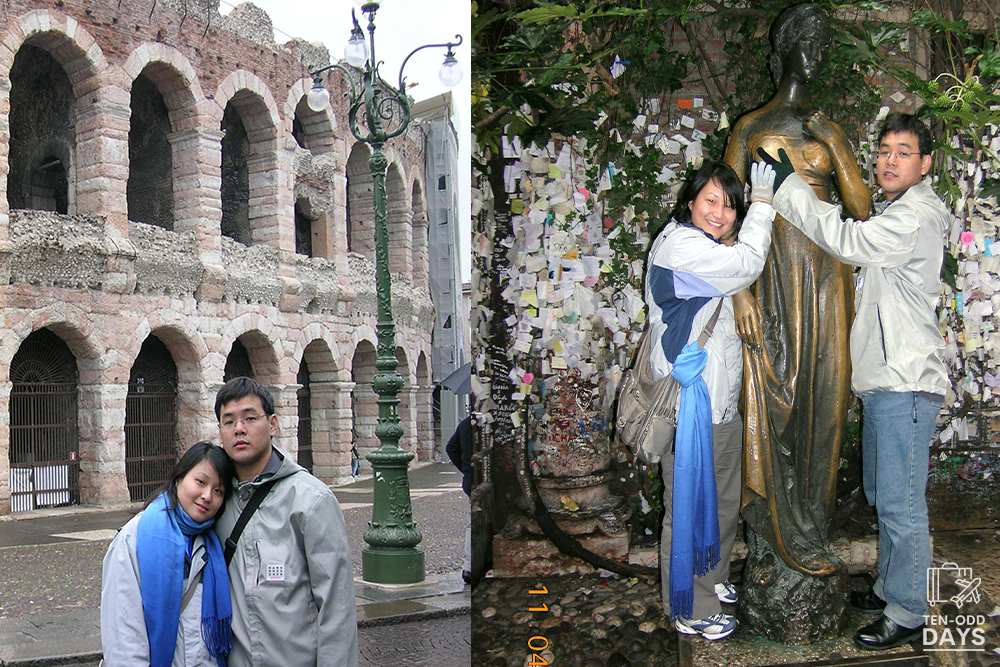
The next morning, we headed for Verona prior to Milan. Verona is a city in Veneto between Venice and Milan which is chiefly known for its Arena and the tourist trap that is Julietโ€™s House & Balcony. Verona is in actuality far more than that. If anything, it being awarded world heritage site status by UNESCO, predominantly for its urban structure and architecture, should count for something.

In Verona

The rain seemed to fancy us, for it โ€˜tailedโ€™ us like hound dogs wherever we went. As a result of getting caught in the rain several days in a row (we were sometimes too indolent to utilise the brolly), I was feeling a little under the weather. The mister, who astutely noticed that I was becoming less chatty and more touchy by the minute, wisely decided upon chilling at a nearby cafe over traipsing about aimlessly.

In no time, we were back in the coach and on our way to Milan. Our first stop was Sforza Castle (Italian: Castello Sforzesco), the symbol of power of the House of Sforza, which reigned in the 15th century after the Ambrosian Republic of Milan collapsed. It now houses several of the cityโ€™s museums and art collections.

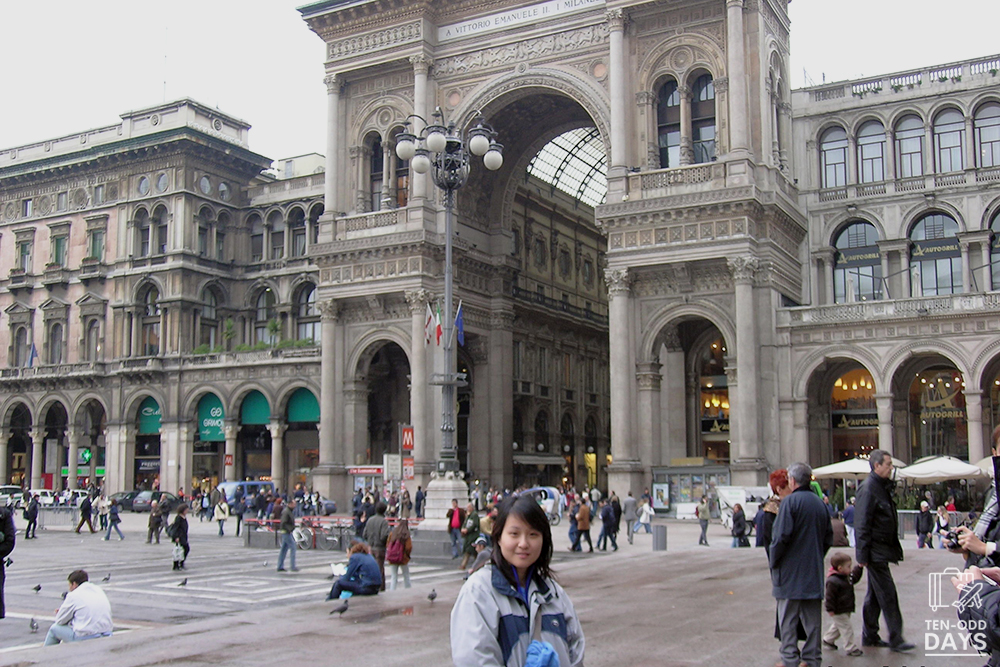
Milan (Italian: Milano) is touted to be one of the leading fashion capitals in the world, alongside Paris and New York. According to Wikipedia, New York and Milan are considered the economic and true current media fashion capitals of the world while Paris and London are considered symbolic fashion centres of Europe. None of these makes much sense to me since I do not boast to have an impeccable fashion sense. Rather, I often opt for functionality over fashion. Nevertheless, we all know that Milan is home to many world-famous fashion designers โ€“ including Versace, Armani, D&G, Prada and Trussardi โ€“ who are widely regarded as fashion maestros. And the one place where their boutiques all convene โ€“ Galleria Vittorio Emanuele II, reputed to the be worldโ€™s oldest shopping mall.

Galleria Vittorio Emanuele

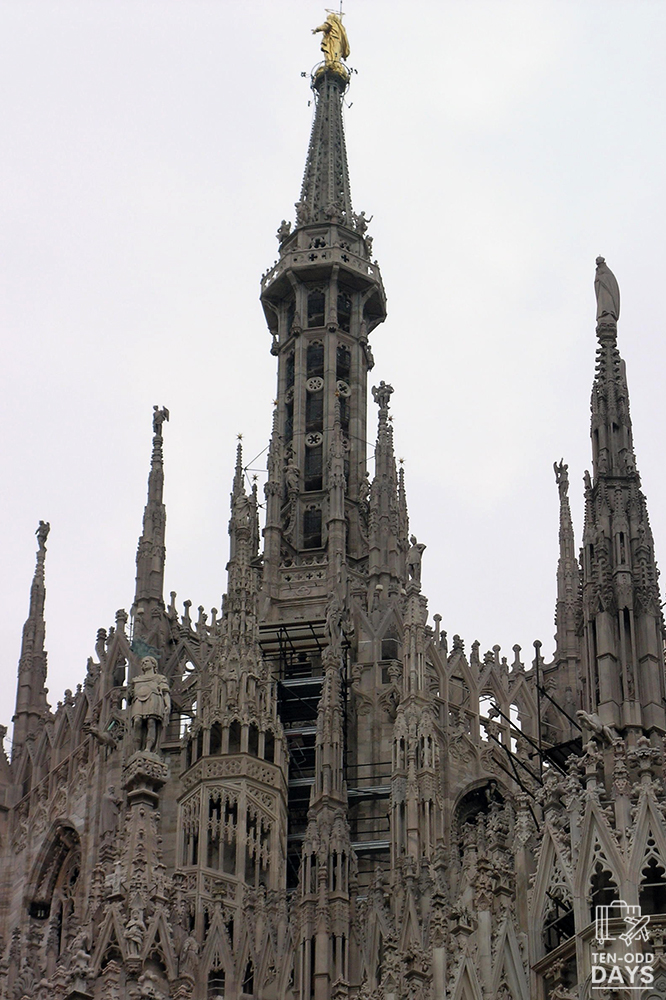
Within walking distance are the renowned gothic Milan Duomo and La Scala, Milanโ€™s opera house. The Milan Duomo is the seat of the archbishop of Milan and Milanese, like most of the Italian population, are Roman Catholics. This astoundingly beautiful gothic cathedral apparently took 5 centuries to construct. In contrast, the partially completed gothic-styled Sagrada Familia in Barcelona is rumoured to be taking no more than 150 years (construction is still underway). One could only imagine the many vicissitudes the Milan Duomo must have witnessed over the 500 years of construction.

Milano Duomo

The Milan Duomo is purportedly also the largest gothic cathedral, and second largest Catholic cathedral in the world (the honour of being the largest Catholic cathedral goes to Seville Cathedral; St. Peterโ€™s Basilica at the Vatican City is not considered a cathedral and the reasoning eludes me). Statistics and rankings aside, the cathedral casts an imposing presence as the nerve centre of Milan, for most of Milanโ€™s streets either radiate from or circle around it. If you intend to visit Milan, this Milan Duomo is a must-visit. Accord some time to thoroughly explore the cathedral, and if you could, take the walk up to the roof of the cathedral at a small fee of 3,50โ‚ฌ or make use of the elevator for 5,00โ‚ฌ.

Tomorrow we would be travelling south-westwards to warmer climate. Canโ€™t wait!

TRIVIA:
The Carnival of Venice (Italian: Carnevale di Venezia) is held annually where people wear elaborate costumes and masks, then hang out all over town. This is the reason why one sees masks in all shapes and sizes being sold as souvenirs in Venice throughout the year. The Carnival season lasts for several weeks and culminates on Shrove Tuesday, the day of the Carnival. It is a fun time to visit Venice so as to soak in the Carnival spirit as people costume themselves, drink and make merry.

First Encounter with The ‘Boot’

Italy (Italian: Italia) also often goes by the moniker of โ€˜The Bootโ€™, ascribed by the physical shape of the country. This endearing nickname is honestly rather befitting for a soccer-crazed nation like Italy, me thinks.

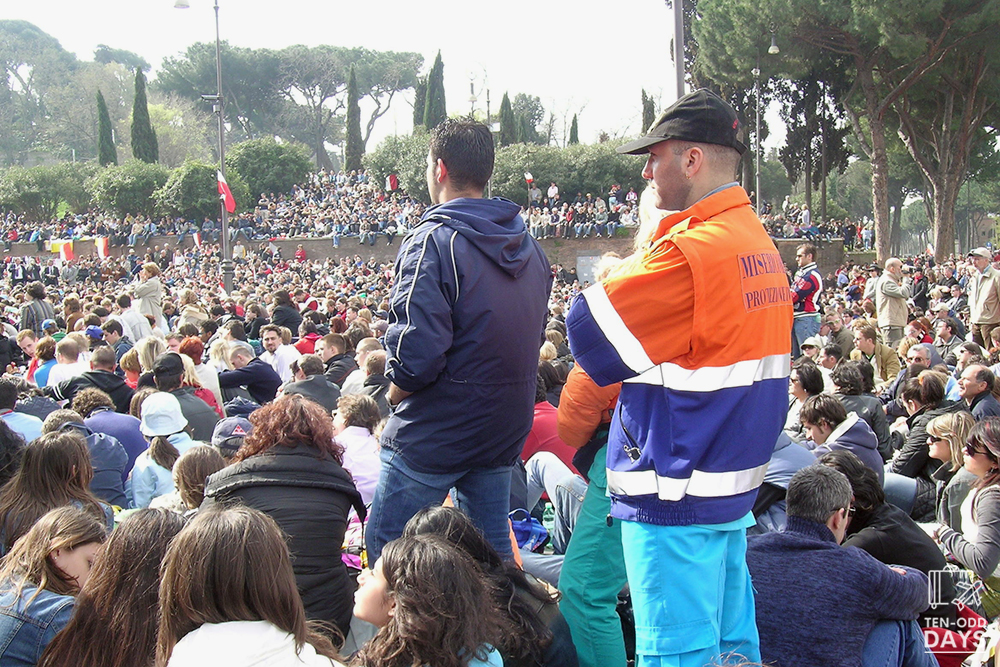
We landed at Rome Fiumicino Airport on a special day โ€“ 8 Apr 2005, incidentally late Pope John Paul IIโ€™s day of funeral. Rome (Italian: Roma) was swarmed with multitudes of pilgrims whom, together with numerous heads of state and dignitaries, were making their way to Vatican City to pay their last respects to a much-loved and well-respected leader of the worldwide Catholic Church. While I am not entirely certain if that day was declared a public holiday in Rome, it was a futile effort trying to proceed with our tour itinerary (for Rome itself) since several iconic landmarks including The Colosseum and The Pantheon were closed as out of respect. Vatican City, where the funeral was taking place, was also out of bounds to commoners like us.

Remote TV Screens
It almost seemed like everyone in Rome that morning decided to go outdoors
to follow the funeral mass proceedings together.

Pilgrims and locals alike were watching the funeral mass on many of the mobile TV screens we saw set up all over Rome. As a result, it became exceedingly inconvenient for the coach to move around in the city due to the crowdedness. That was when our tour leader opted for us to travel on foot instead. I werenโ€™t upset with the sudden turn of events (not that anything would change if I were), for how many people could actually boast that they were in Rome on such a day of significance? To witness the populace being moved and touched by the passing of a great spiritual leader wasโ€ฆ a very sobering reminder that we all could, and should endeavour to continue doing good in our lives.

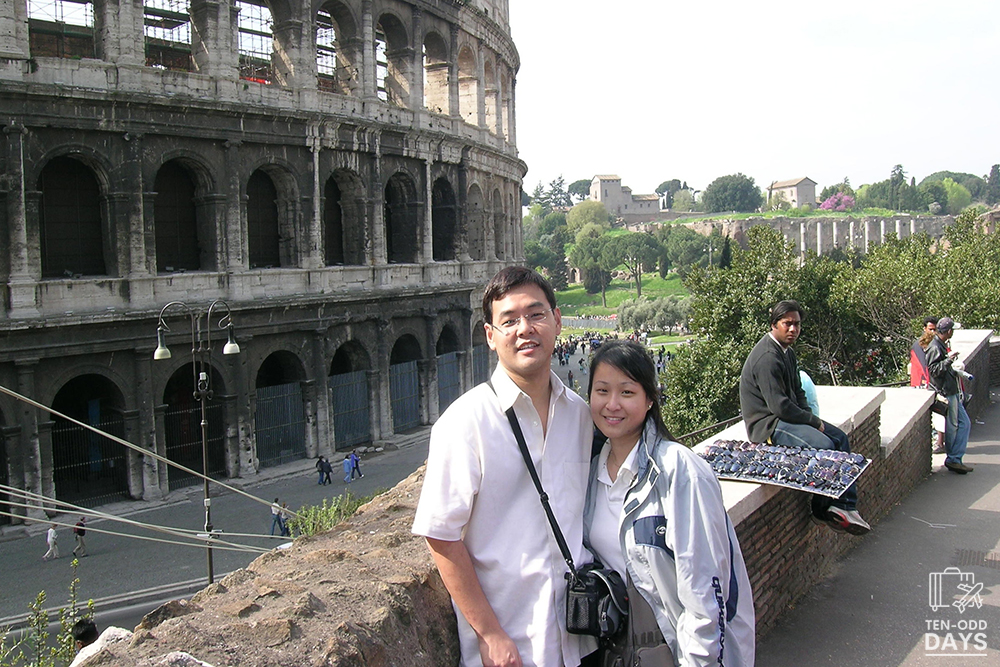
At Colosseum
The Colosseum was closed, so we took a shot of it across the street.
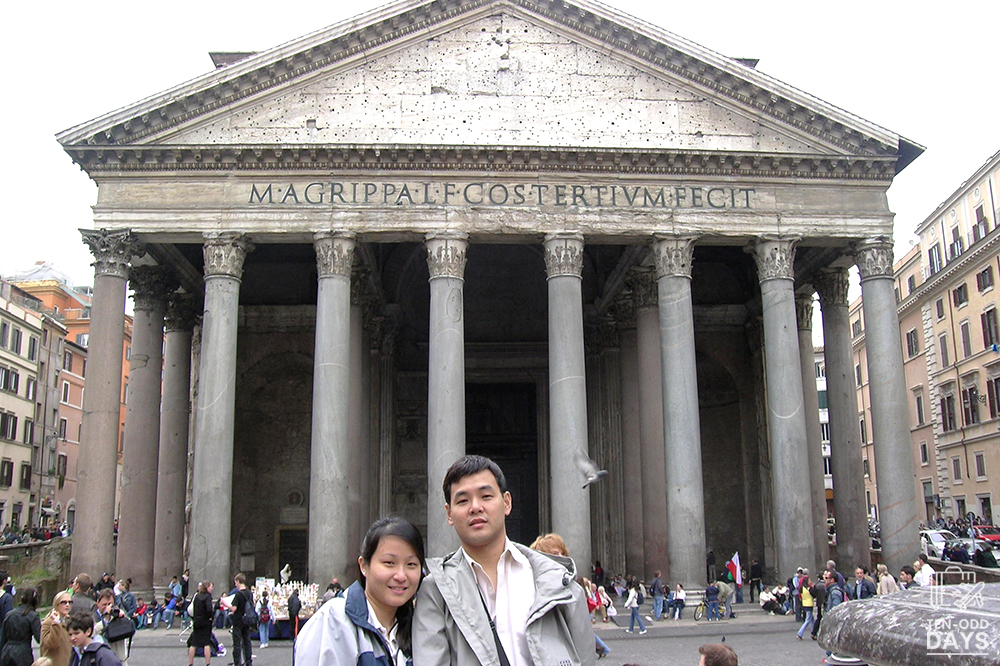
At Pantheon
The Pantheon was also closed for the day.

After the obligatory photo stops at the few famous landmarks including The Colosseum, Trevi Fountain and The Pantheon, we were very much left to our own devices in the vicinity of Spanish Steps. It started raining intermittently, which dampened our moods considerably. The mister and I explored the area a little, and after throwing perfunctory glances at the upmarket designer stores and restaurants, we decided to seek refuge (from the rain and the maddening crowd who were out and about in throngs after the funeral mass ended) at the McDonaldโ€™s outlet near the steps till it was time for the group to reassemble.

The rest of the day spent in Rome was rather nondescript and uneventful. We were still rather jet-lagged and sleepy (no thanks to the great selection of movies available on Singapore Airlines, I hardly slept on the red-eye flight) hence the decision to have an early night.


The second day started early (and this is to be expected for most package tours) as we were leaving Rome for Florence (Italian: Firenze). After a forgettable breakfast at the hotel, we were all raring to go.

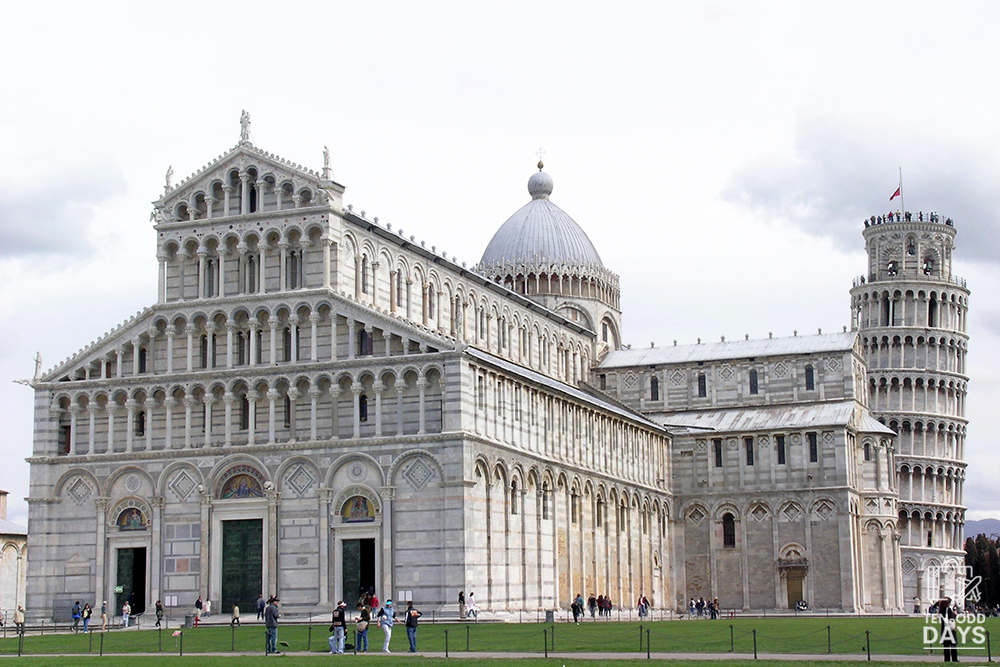
On the way to Florence, we made a short 3-hour stop at Pisa. Ah, Pisaโ€ฆ who isnโ€™t fascinated with the leaning tower located at Square of Miracles (Italian: Piazza dei Miracoli)? The evil Superman in the 3rd installation of the same-titled series of movies introduced me to the Leaning Tower of Pisa when I was but a young lass barely of schooling age. I remember being extremely puzzled by the existence of a tilting building in the world, following my parents around and questioning them incessantly in an attempt to satisfy my inquisitive young mind. โ€˜Does it really exist? Why didnโ€™t it topple over? Why didnโ€™t they tear it down and rebuild it? Is anyone living in the building?โ€™ I swear I went on and on about it, but back then the parents were not equipped with the requisite knowledge to explain things adequately to appease me. I too, moved on to obsess over other stuff.

Later on in life, I went to college, majored in civil & structural engineering, and learnt all about foundation and soil consolidation. Admittedly, foundation engineering was not one of my favourite topics, but it sure did answer my questions, albeit almost 2 decades late.

Miracle Square
The truly beautiful Piazza dei Miracoli.

Unlike the other tourists who were attempting to take shots with the tower in all poses conceivable, I was busy reading about the ongoing restoration works, which demanded my assiduous concentration. My professors at college would have been proud of me, for I was about the only person in the vicinity who was interested! The mister was understandably more than pleased to accompany me in my pursuit to satisfy my insatiable thirst for knowledge; he is as camera-shy as I am otherwise shutter-happy.

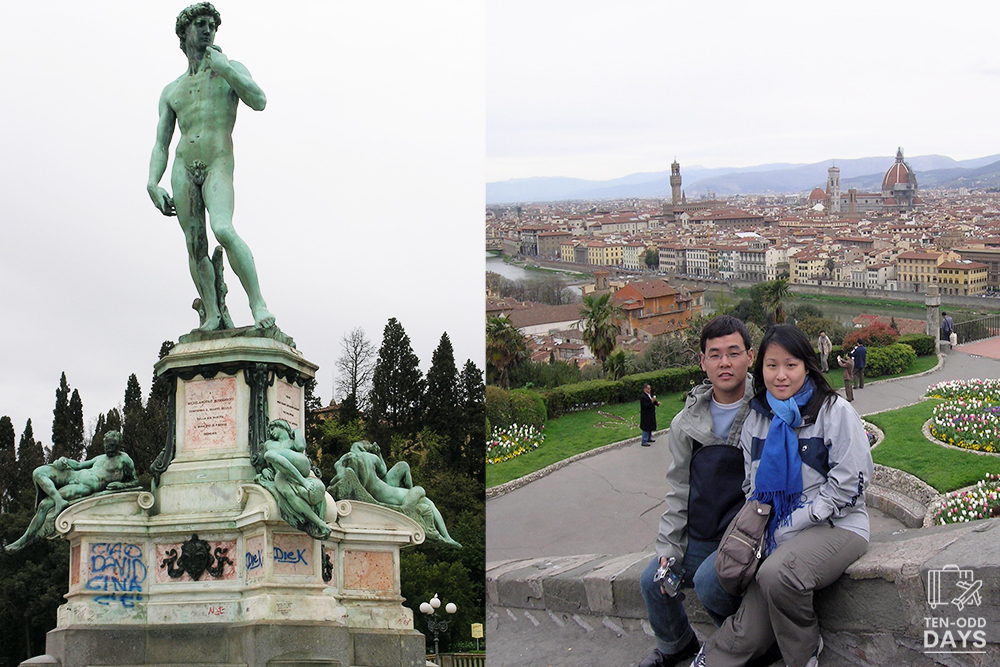
Michelangelo Park
The sun was setting and the park was becoming quite chilly.
The panoramic view of Florence totally made up for the cold.

It was slightly past mid-afternoon by the time we finally arrived in Florence. Florence, arguably the grand old dame of the Renaissance movement, is one classy lady. We were whisked off the coach at Michelangelo Park located up on a hill where we saw a replica of โ€˜Davidโ€™ and a magnificent panoramic view of Florence. The view which greeted us was breathtaking, both literally and figuratively โ€“ the ambient temperature of the square had noticeably dropped with the drizzle and setting sun, which resulted in my nose turning numb from the cold. Each breath I took was becoming a rather laborious effort and though I enjoyed the view, I couldn’t wait to hide out in the coach.

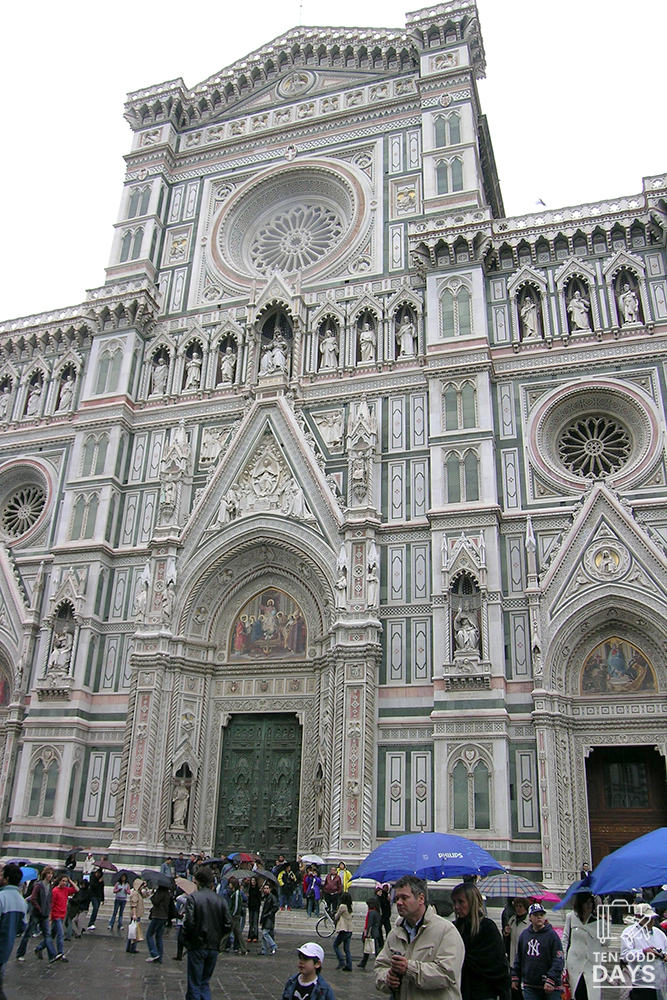
Piazza del Duomo, where Duomo of Florence (Italian: Basilica di Santa Maria del Fiore) is sited, is a must-visit and was where we found ourselves next. The square, located in the heart of the historical centre of Florence, is one of most visited places in Europe. With exterior facade of the basilica lined with marble panels in various shades of green and pink bordered by white, it resulted in a very, for lack of a better word, attractive neo-gothic exterior. Not everyone thought the same though โ€“ to some, the facade appeared to have been excessively decorated.

Florence Cathedral
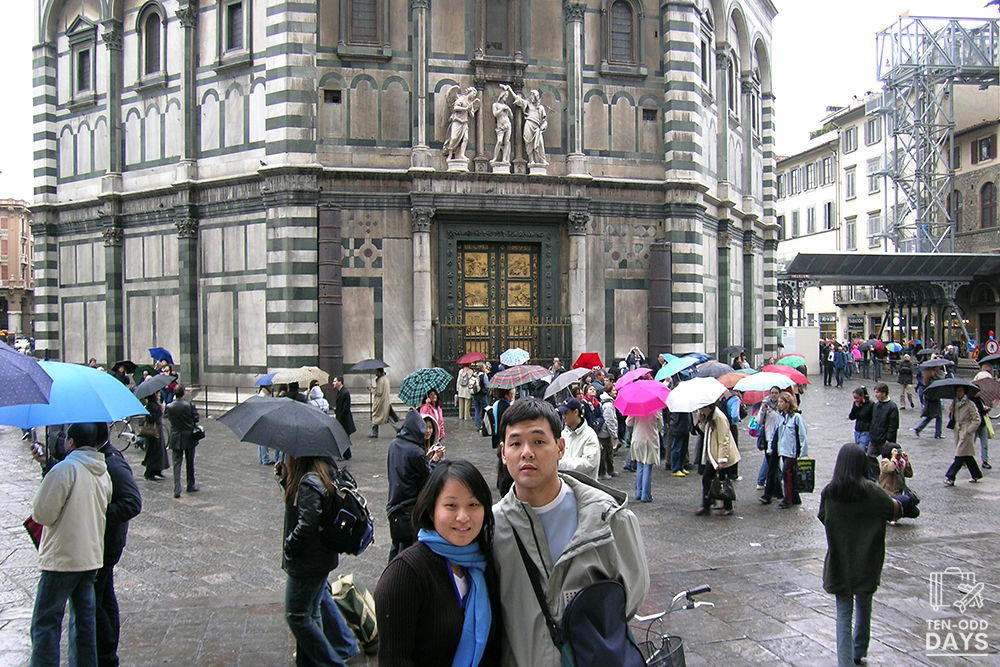
Gates of Paradise
Gates of Paradise in the background.

Opposite, we saw the great east gates of the Florence Baptistery, more commonly referred to as the Gates of Paradise, a term coined by Michelangelo the maestro himself, comprising 10 panels depicting scenes from the Old Testament. Lorenzo Ghiberti, the sculptor of the 10 panels himself admitted that they were โ€œthe most singular work that I have ever madeโ€. Although the panels that are mounted on the east doors now are mere copies (the originals are carefully restored and kept in a dry environment), the remarkable beauty and grandeur of the original works shone even through their replicas.

After a long day on the roads, we again turned in early after yet another nondescript dinner.