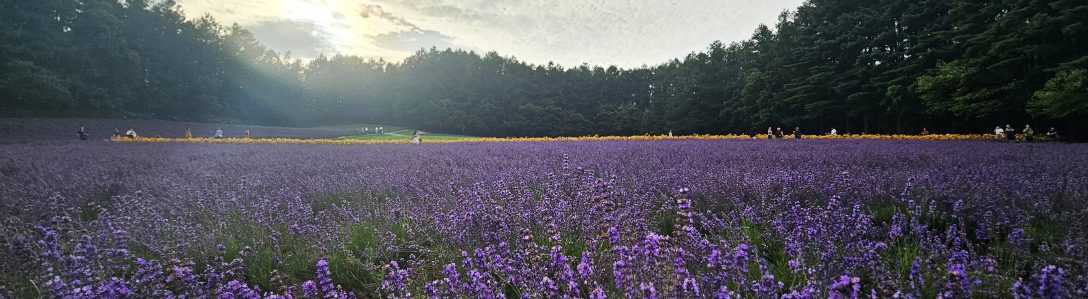
Gifu, Japan
Summer · May 2025
Everyone knows green tea. Far fewer have had the privilege of standing among rows of tea bushes, handpicking tender leaves, and getting hands-on experience turning those freshly plucked leaves into tea or grinding processed tea leaves into matcha powder.
The day began rather unremarkably. I came across an Instagram post about a green tea harvesting tour and forwarded it to H without giving it much thought. Knowing how his roster worked and how understaffed they were, I wasn’t holding out much hope that he would be able to get time off at such short notice. But one day, he surprised me by asking if I was genuinely interested in the tour, because he could spare the time to go with me. I don’t think I’ve ever nodded my head so enthusiastically.
And, as they say, the rest was history.
Ours was a small group of just eight participants, plus the tour guide. We had sworn off guided group tours two decades ago, and approached this one with some trepidation, fervently hoping we wouldn’t have to put up with inconsiderate tour mates again. As it turned out, our prayers were answered and then some. I suppose I shouldn’t have been too surprised; perhaps a niche interest tour like this tends to attract well-travelled individuals who share a genuine appreciation for the experience and a certain consideration for their fellow travellers.
Shirakawa-cho, not to be confused with Shirakawa-go, famous for its thatched-roof houses, is nestled in the mountains of Gifu Prefecture. Nearby Mino is renowned for its traditional washi paper. Unlike Uji, whose tea enjoys widespread recognition, Shirakawa-cho remains off the beaten track for most visitors. In fact, our visit was such a rarity that we even made it into the local news!
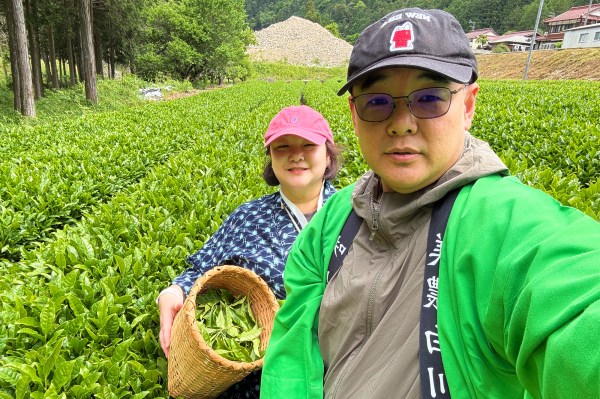
Shirakawa-cho produces some fine green tea, albeit on a modest scale. Being complete amateurs, we weren’t entrusted with plucking leaves from the hillside plantations. Instead, our first taste of tea picking took place in a small tea field beside the car park in the town centre. It looked easy enough, but picking tea leaves was hard work. For us city dwellers, it was certainly no walk in the park. And that wasn’t even counting the mosquito bite on my temple, which swelled to worrying proportions. Yes, a foreign mosquito left me with an infection.
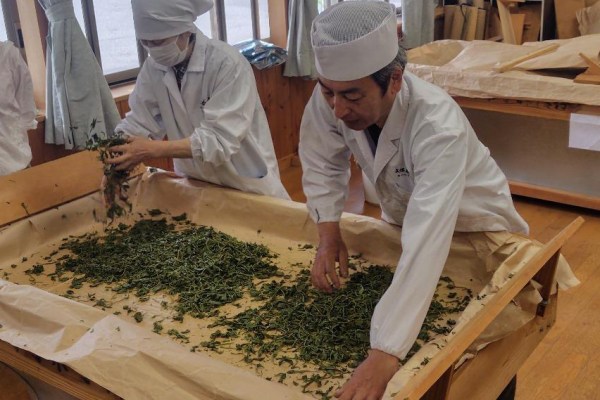
We had a full two days of immersive, hands-on experience. After plucking the tender tea leaves, we went through the entire process of making kamiiricha, pan-roasting the leaves in a large iron pan. We weren’t quite using our bare hands, but the fabric gloves provided so little protection from the heat that it sometimes felt as though we were!
And just when I thought the worst was over, we moved on to yet another method of tea-making: temomicha, or hand-rolled tea. Throughout the day, we took turns hunching over the heated work station, under the watchful eye of an award-winning artisan. She offered pointers along the way, often stepping in to take over before we could do too much damage to the precious tea leaves. Her gentle manner really touched me, especially since we weren’t exactly doing a stellar job. Well, I wasn’t, anyway. H, on the other hand, seemed to have a natural knack for it!
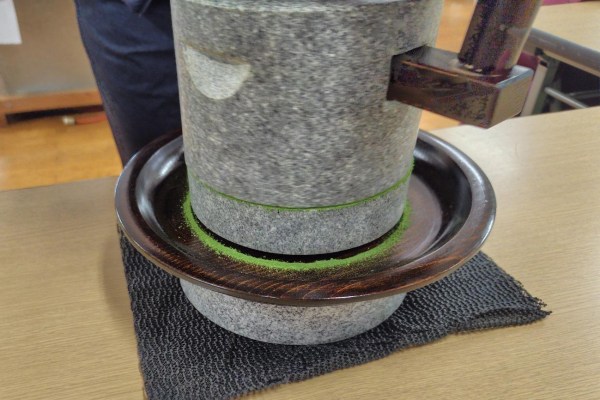
Of all the activities, I much preferred stone-grinding tencha into bright green matcha powder, partly because I love drinking matcha (nope, I’m not going to admit that the fact that this was the easiest of all the tasks might also have had something to do with it). It was quite amazing to watch the transformation and fascinating to think that those dark green leaves could yield such a vivid green powder!
And oh, did I mention that we also had a tea master come by to teach us how to prepare and enjoy our matcha in a simple Japanese tea ceremony? And as if that wasn’t enough, we ended the day with a tea-tasting workshop, sampling so, so many different types of tea. By then, we had certainly earned our stripes as tea enthusiasts!
We left Shirakawa-cho the next morning with a deeper appreciation for the humble cup of green tea — something so readily available on supermarket shelves, yet the product of so much care, skill, hard work and pride in one’s craft.
If this tour sounds like your cup of tea, it’s organised by Kitabi Travel, and I believe Heidi runs it annually in early summer. And no, this isn’t an advertisement — just a genuinely enjoyable experience worth sharing!

