Of Camp Nou & Port Vell

Having had a total of two days in Barcelona, we decided to break away from the group to explore Camp Nou and the city by our own on the second day. Though not avid fans of Futbol Club Barcelona, the soccer-loving mister felt a compelling need to pay a visit to legendary Camp Nou since we were in the very city. It meant that we had to forgo some of the sightseeing included in the package tour but between those places and the largest stadium in Europe, our choice was quite clear.

As the hotel we put up at (Hotel NH Sant Boi) is located in the outskirts, we had to brave the public bus to get ourselves to the city centre (Plaça d’Espanya) where we switched to the metro. It turned out to be less of a nightmare than we thought it would be. Moreover, we had a taste of how it was like to live like a typical Spaniard, even if it were just for one short day.

Plaça d’Espanya is one of the biggest and most important squares in Barcelona as the junction of several major thoroughfares. It also leads to the National Art Museum of Catalonia (in Spanish, ‘Museu Nacional d’Art de Catalunya‘), the national museum of Catalan visual art.
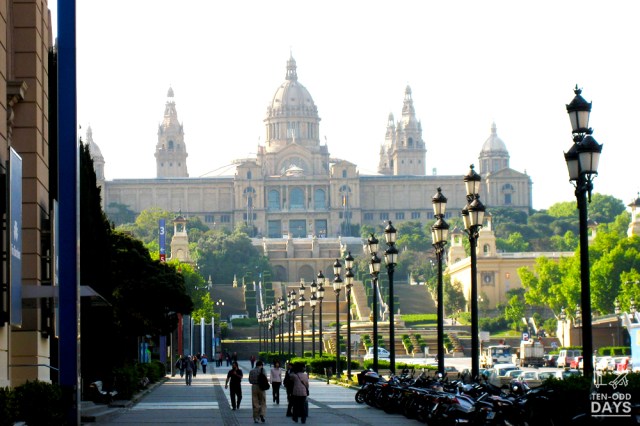
The imposting Museu Nacional d’Art de Catalunya

From afar, the museum building looked an imposing work inspired in the Spanish Renaissance. The lovely classicist facade especially the main dome crowned in roman style called out to us earnestly, especially to the photographer wannabe in me. Alas, with limited time to spare we simply couldn’t visit. Instead we made our way to the metro station, unable to contain our excitement at the prospect of visiting Camp Nou.
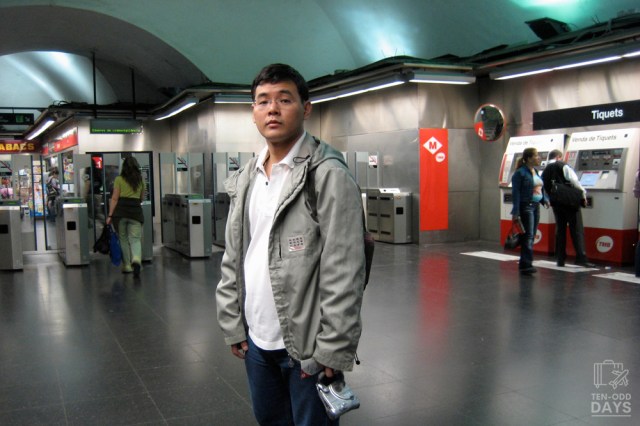
After arriving at the metro station closest to Camp Nou.

We don’t speak a word of Spanish but had little difficulty navigating our way at the metro station – from purchasing the tickets to boarding the correct train. The real challenge we faced came from asking for directions to Camp Nou after alighting at the correct metro station. As with most other major stadiums in Europe, Camp Nou was quite a walk from the metro station. When we initially asked the hotel staff for directions, they gave us precise instructions right up till the point of alighting at the correct metro station. Beyond that, they told us to ask for directions from passersby, who would be able to point us in the direction of Camp Nou.

They couldn’t be more wrong. To our (immense) surprise, the Spaniards we came by spoke little if no English at all. Many got frustrated at not understanding our repeated attempts asking for directions, and we ourselves got disheartened at not being understood. Eventually we approached a young lady manning a booth outside a mall, hoping that the younger generation spoke more of English than the officer workers. She did, but we were made to feel extremely patronised when she replied accompanied with a surly face.

As the saying goes, beggars can’t be choosers. In spite of the treatment we received, we listened attentively and managed to understand her instructions and gesturing. After politely thanking her, we were more than glad to be on our way.
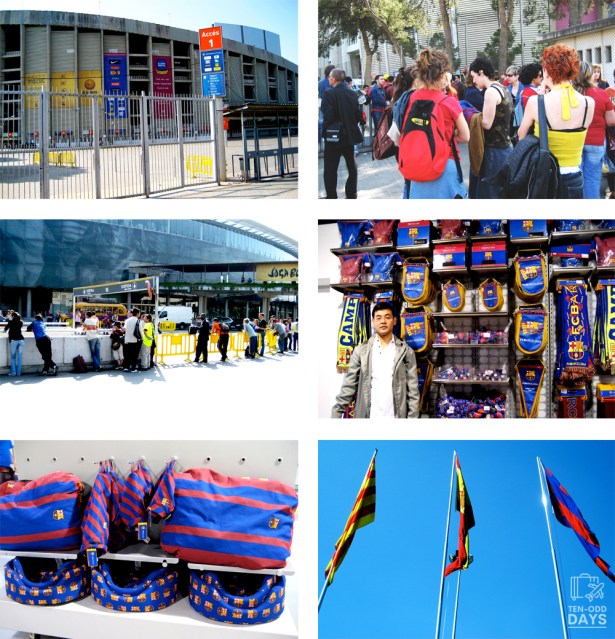
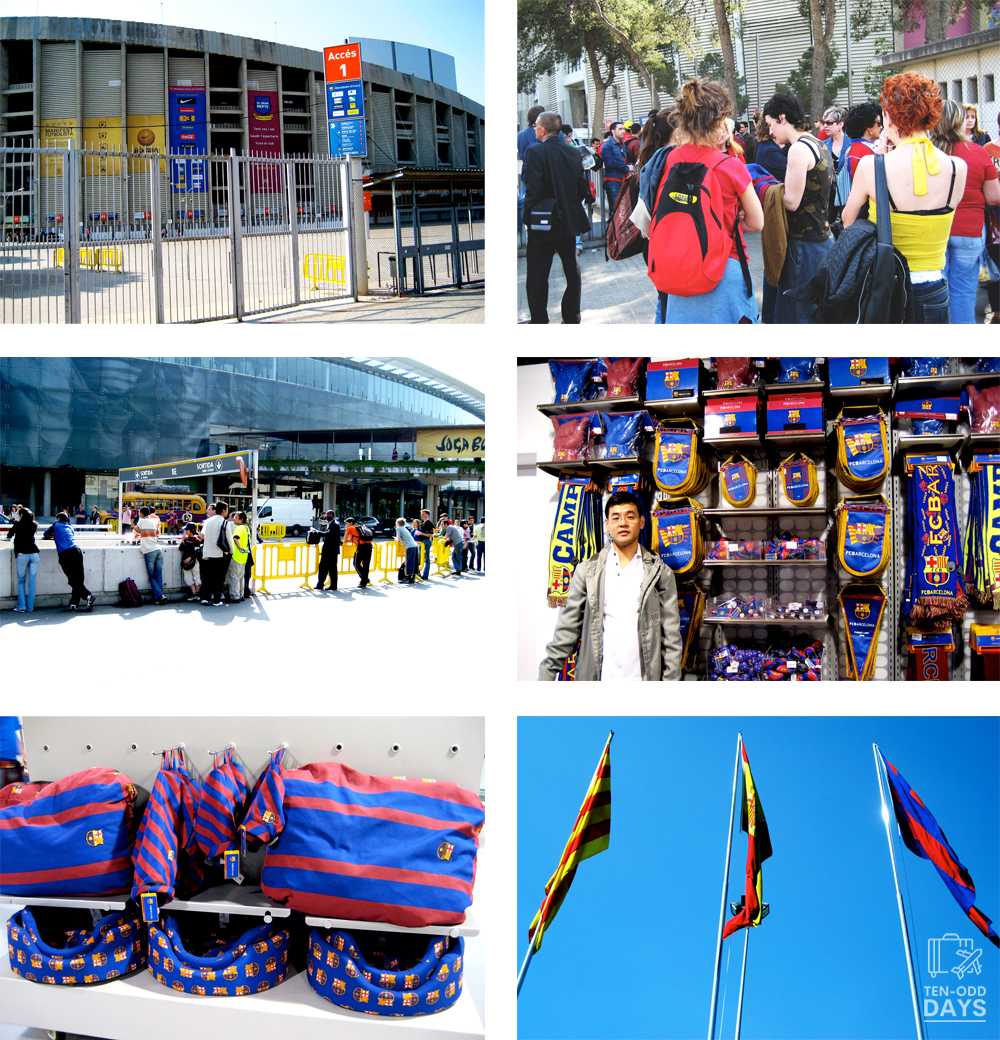
It was not a short walk. Though not physically unfit (the walk was manageable), I was getting irritable by the scorching heat. We first came upon Camp Nou from its side, and I had to agree that it looked humongous just from the side profile (has to be, since it seats almost 100,000). We explored the stadium and were most impressed with the merchandise store. Perhaps it being our first visit to a world-class soccer stadium had something to do with our awe; our eyeballs almost popped out looking at the deluge of merchandise they sold. You name it, they probably sell it.

We had to wait several hours for the tour of the stadium because the home team was having their practice. Unfortunately we couldn’t identify any of them as they drove their flashy cars into the basement car park. Not the other visitors to the stadium though, because some of them were leaning half their bodies out of the ledge trying to catch the attention of the soccer players (I worried for their safety) and screaming at the same time. Fans they must be.

After traipsing parts of the stadium grounds opened to the public, we decided to make a move. The tour was available at too late a timing; we didn’t want to sit around and do nothing in the few hours prior to it. Naturally we headed towards Central Barcelona where the shopping district and La Rambla are situated.
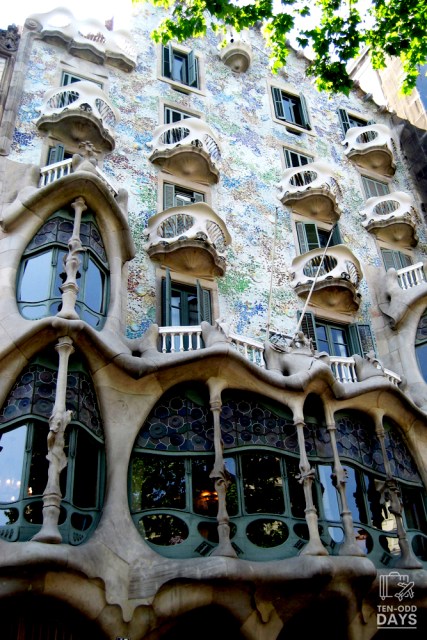
Casa Batlló is a stunning building!

As we were pottering around, we came upon another of Gaudí’s masterpiece – Casa Batlló. Locally it is known as House of Bones due to its visceral, skeletal organic quality. Once again we see the undulating facade that Gaudí seemed to favour very much. Remarkable design, and a total nightmare for the builders I presume.
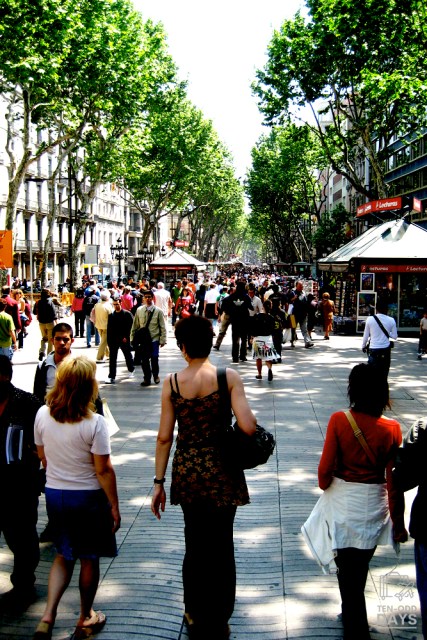
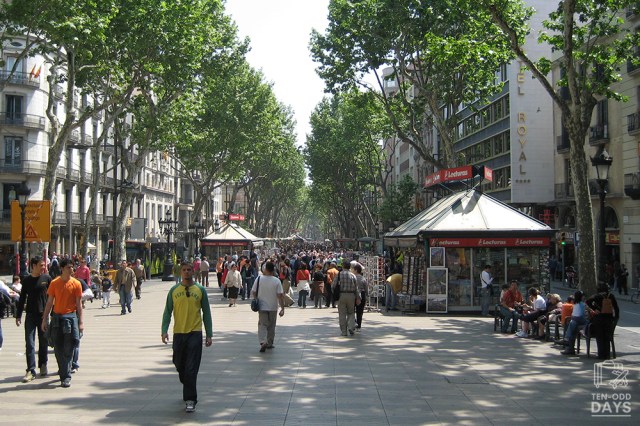
La Rambla was crowded, as expected.

By and by, we found ourselves strolling along La Rambla once again. This time, we spent lesser time on the street itself because our aim was to walk to the end of the street towards Port Vell. It was a weekday afternoon, but one most definitely couldn’t tell from the crowd along La Rambla.
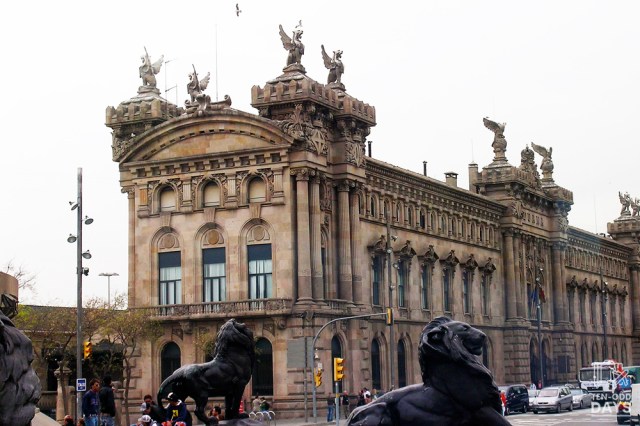
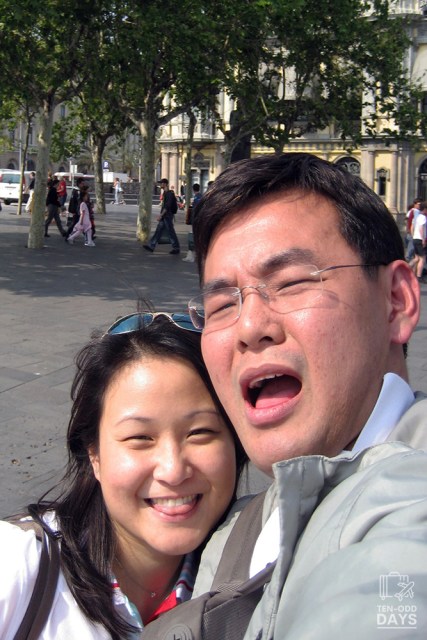
We passed by the Maritime Museum (‘Museu Marítim‘ in Spanish), which I heard is one of the most interesting museums about. We gave it a miss, as with most museums we came by because I would probably take half a day just browsing one museum. I’ve said it more than once that time is not a luxury while on a package tour. it didn’t help that the decision to break away from the group for a day was quite an impromptu one, hence we didn’t do any of the requisite homework we should have. If we had, we might have better managed that one day in Barcelona.
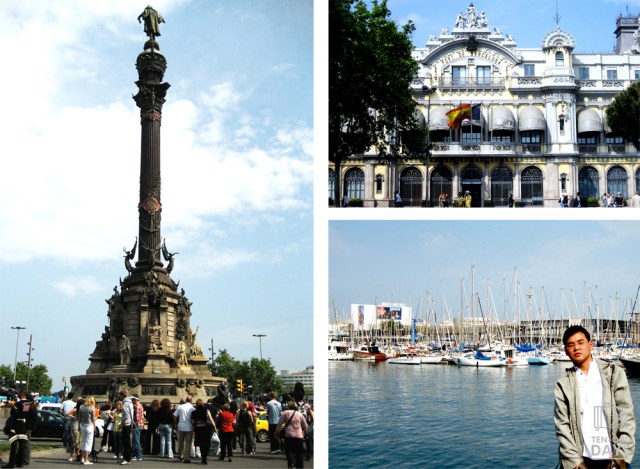
The Columbus Monument (‘Monumento a Colón‘ in Spanish), a 60 m tall monument stands at the site where Christopher Columbus landed in Spain after his first voyage to the Americas. It doesn’t look very apparent from the photograph, but the statue of Columbus had his right hand outstretched pointing towards The New World (as believed). Many, many tourists were crowing around the monument so it was quite an arduous task trying to get near the monument at all. We gave up eventually and simply took a picture of it across the street.

Port Vell, a waterfront harbour and part of Port of Barcelona, was a short walk away. Once a run-down area of empty warehouses, railroad yards, and factories, it underwent an urban renewal program prior to the 1992 Summer Olympics. And this is the result. We totally loved the vibrancy of the harbour. The way the warm sea breeze gently caressed our faces and the sailboats easily cascaded to the waves… reminded us a lot of home. Could be the reason why we took to the harbour immediately. Fancy us being homesick on the 2nd day of our tour. 😆
Barcelona, The City of Counts

Mention this city located on the North-Eastern coast of the Iberian Peninsula facing the Mediterranean Sea, and several images come to mind: the Port of Barcelona, La Rambla and Camp Nou. After a short and uneventful transit at Amsterdam Airport Schiphol, we landed at Barcelona El Prat Airport on a cloudy, balmy day. Almost immediately, we were whisked off to commence our tour of the City of Counts once we cleared the customs.

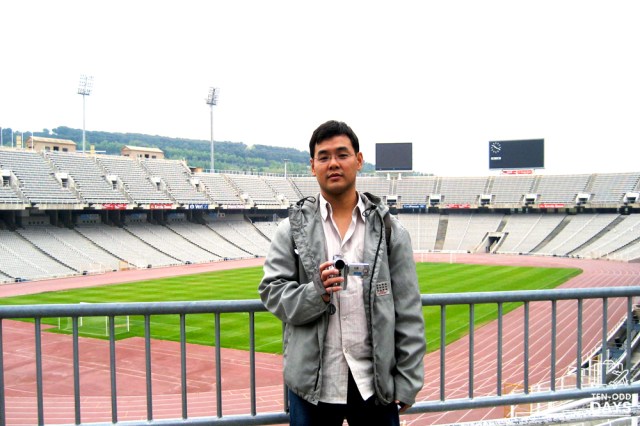
The mister still looking fresh after a long red-eye flight from home.

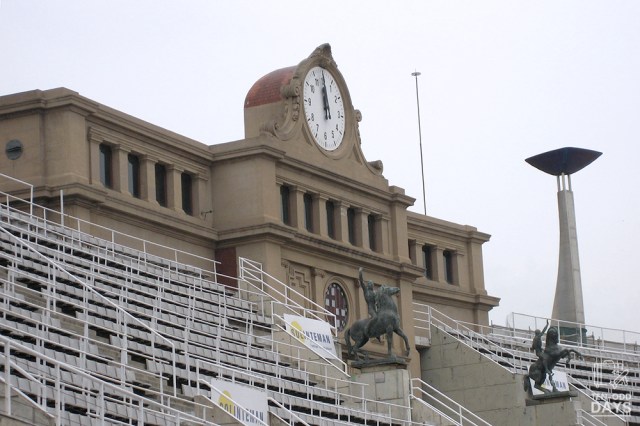
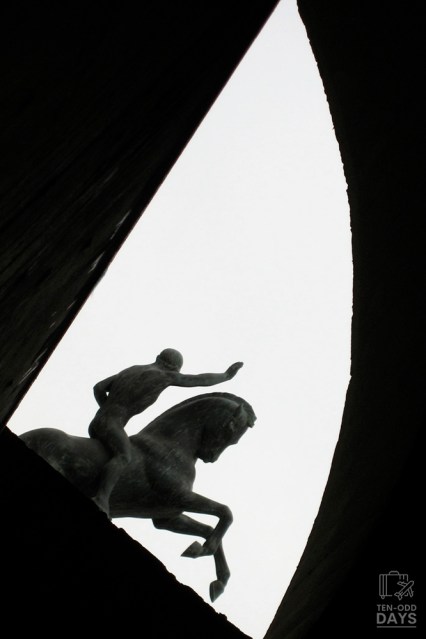
Our first stop – Barcelona Olympic Stadium (or Estadi Olímpic Lluís Companys, as renamed in 2001). The stadium was originally built in 1927, and renovated in 1989 in preparation to be the main stadium for the 1992 Summer Olympics. Today, the stadium continues to play host to some of the most important sporting events Barcelona sees. It also hosted numerous concerts held by several famous artists including Bon Jovi, Madonna, Rolling Stones and Shakira, just to name a few.

By a stroke of luck, we found the stadium to be relatively deserted. Perhaps it being mid-day had something to do with this seemingly odd phenomenon at otherwise a rather important landmark of the city. Shortly after, we were ferried to another place for more sightseeing.

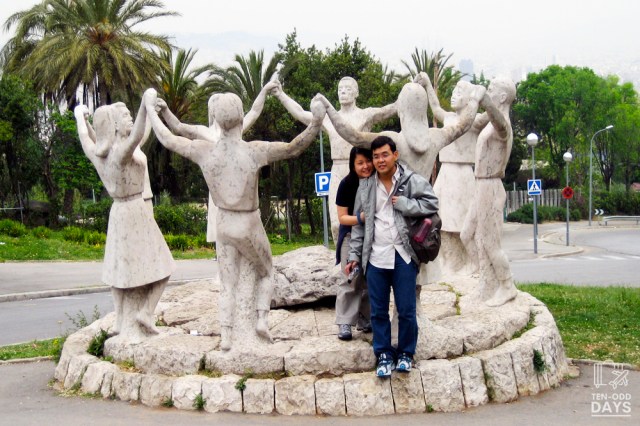
One important cultural aspect of Catalonian Barcelona is the Sardana Dance symbolising unity and pride. Circles of people join their raised hands and slowly dance round and round with small, precise steps. The circles become bigger as more people join in the dance, and eventually when the circle becomes too big, it may break into several smaller circles. Usually, all are welcomed to join but it is good to observe how to do the dance properly prior to jumping in because a wrong move could really upset the rhythm of the whole circle.

Given the significance of the Sardana Dance, little wonder that we came across a delightful monument depicting the unity dance on Montjuïc, a broad shallow hill with a relatively flat top overlooking the harbour, to the southwest of the city centre. The monument, known as La Sardana de Montjuïc, was completed by Josep Cañas and officially commissioned at Montjuïc Park in 1966.

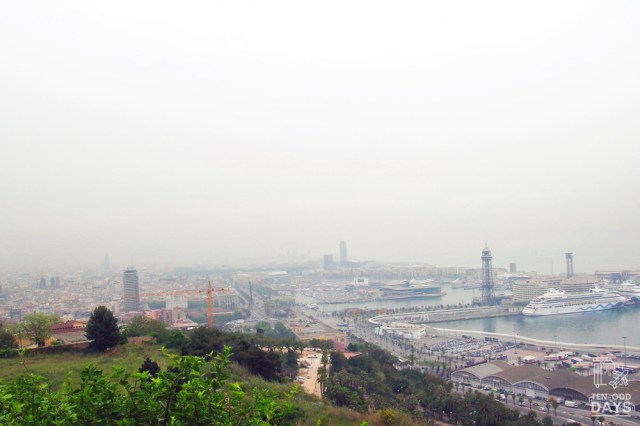
Panoramic view of the port of Barcelona.
Inexpensive souvenirs for family and friends.

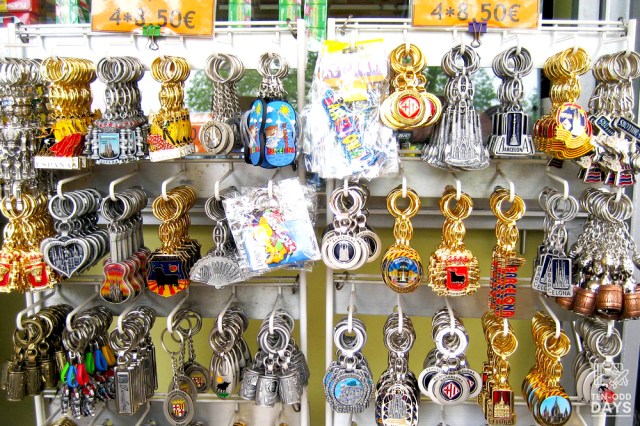
The monument was not the only reason why we found ourselves on Montjuïc. There, we were also greeted with a scenic panoramic view of Barcelona. Montjuïc Park seems like a must-visit for all tourists to the city because while we were there, tour buses were constantly offloading more and more tourists at the park. Apart from the view (which must look better on a clear day), the park came complete with a small cafe and mobile vendors selling keychain souvenirs. It only took us mere minutes to fulfill our responsibilities (with the requisite souvenirs) to our family and friends.

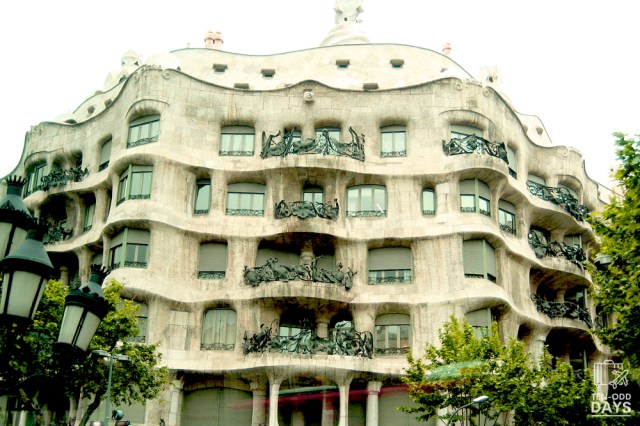
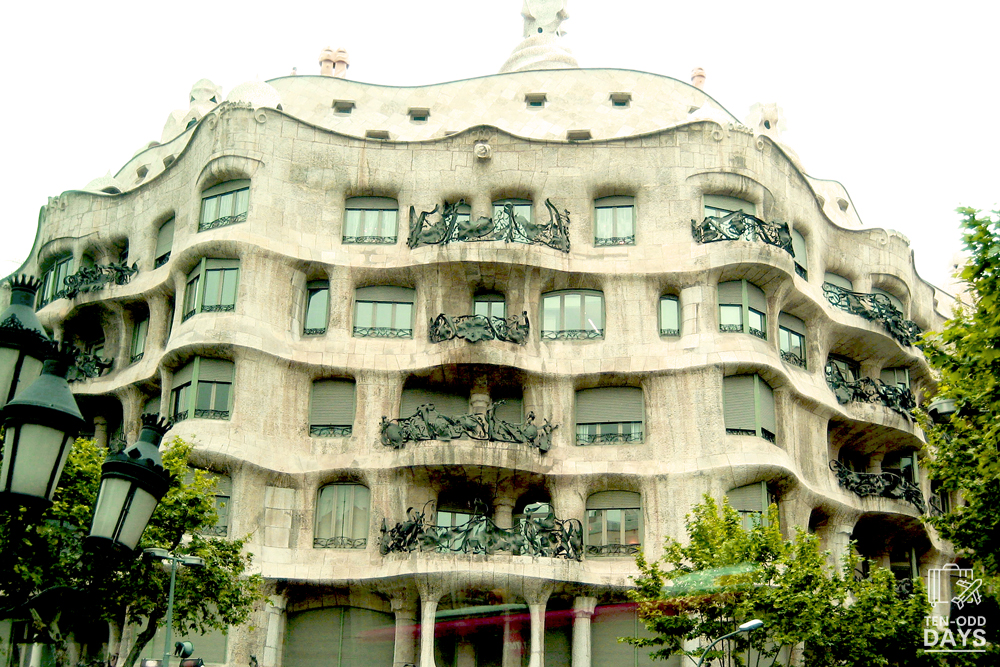
After a late lunch, we were brought around on a city tour where we saw numerous notable landmarks, in particular houses designed by Antoni Gaudí. Right from the start, Gaudí the architect thought very differently from his contemporaries. He loved nature and his designs were greatly influenced by different forms of nature. La Pedrera (or Casa Milà) with its bold forms of the undulating stone facade is a fine example.

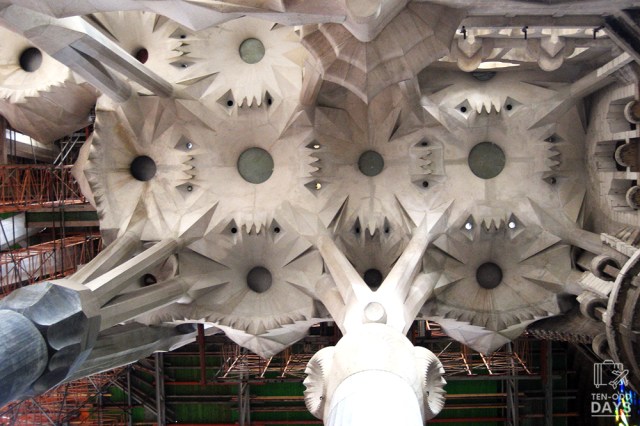
Interior ceiling depicting sunflowers.

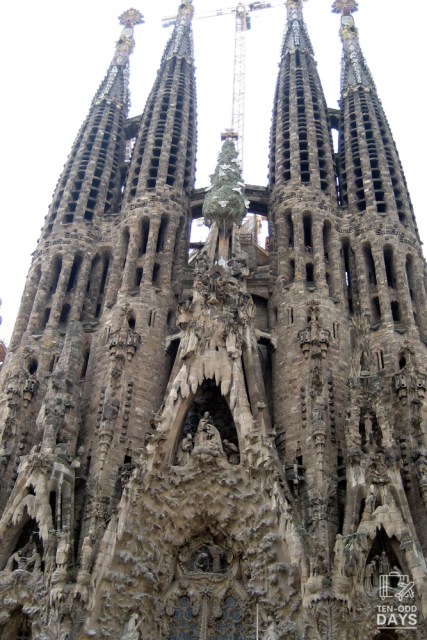
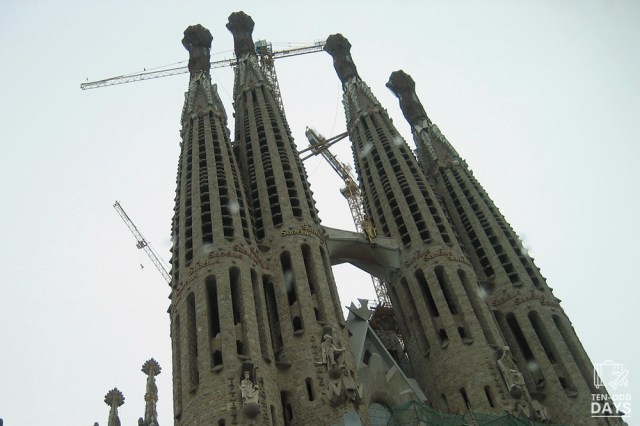
La Sagrada Familia is probably the singular most famous landmark ever to be associated with Gaudí and maybe even Barcelona. This large Roman Catholic Church commenced construction in 1882, and till today, is still incomplete. The construction progressed so slowly largely due to the fact that funds were coming in solely via private donations, not to mention the interruption of the Spanish Civil War. It is largely anticipated that the church will finally be completed by 2026, on the centennial of Gaudí’s death. Whether it can be completed on time remains much to be seen. If it does, we really should revisit Barcelona that same year, some 20 years after our first visit.

Construction of the Passion facade was still very much underway.

There are 3 grand facades to the church building – the Nativity facade to the east, the Passion facade to the west, and the Glory facade to the south. The Nativity facade was the first to be completed and directly bore most of Gaudí’s influence. At the time of our visit, only the Nativity facade was truly complete; both the Passion and Glory facades were still undergoing construction, especially the latter. Without a wide-angle lens, there was just no way one could take in the whole facade of the cathedral, which stood at an astounding height including the spires.

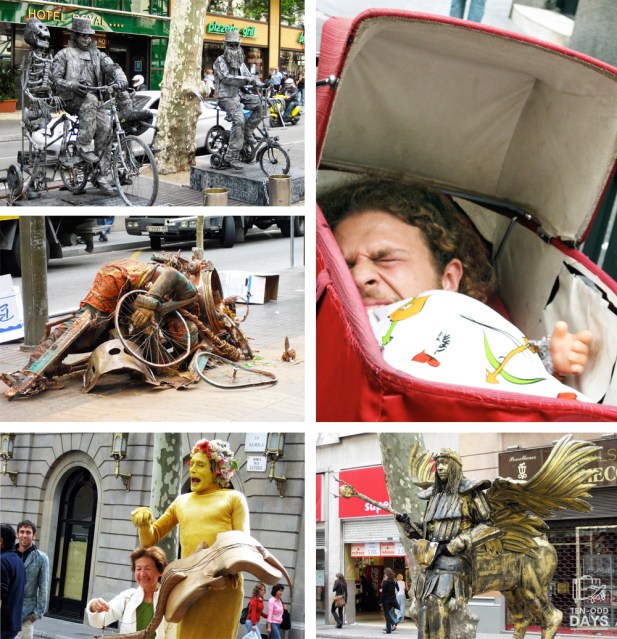
Our last stop for the day prior to dinner was a visit to La Rambla (‘Las Ramblas‘ in Spanish), a street in Central Barcelona lined with kiosks, stalls selling flowers and animals, buskers, street performers, cafes and restaurants. The promenade is therefore, a place to see and to be seen, for locals and tourists alike. However in recent years, more tourists than locals like to linger along the streets, and that has somewhat changed the character of the streets and the nature of businesses plying along the promenade considerably. Tourist crowd during the high season has also attracted many pickpockets to easy prey in the form of inattentive tourists.

Walking down La Rambla was quite an experience in itself. The street performers lining along two sides of the street were most impressive, and totally devoted to their trade. We’ve seen street performers prior to this visit, but never with such amount of vivacity and dedication. From the sheer ingenious to the downright absurd, we’ve seen it all. In fact we think we’ve seen the best here in La Rambla, Barcelona.

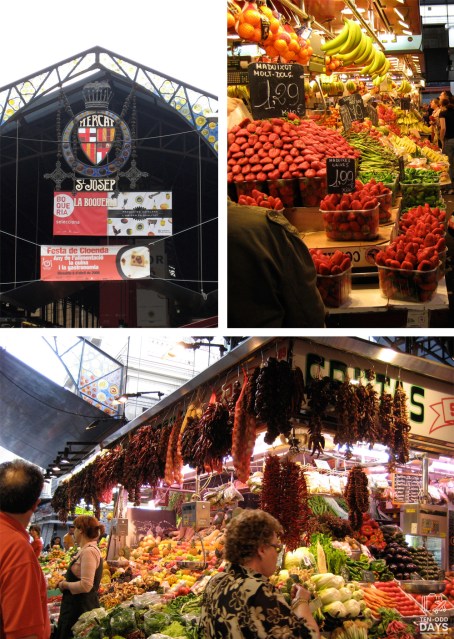
As we walked on, we came by this enthralling bazaar of sorts and decided to explore further. It turned out to be a wet market selling groceries and sweets. The surfeit of colours were so vibrant we felt like purchasing some of them, especially the fruits! Unfortunately time was not on our side. We left the bazaar after briskly walking through it and made our way back to the coach.

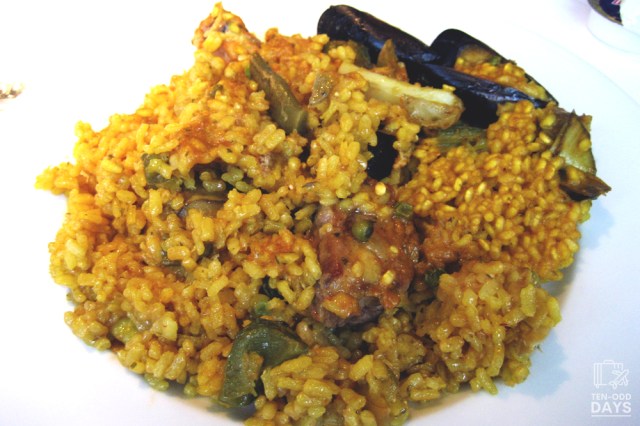
That evening, we were brought to a restaurant called Marina Moncho’s by the marina to have probably the most delicious seafood paella we’d ever eaten in our whole lives. It was our first time with paella and what a fine example it was. Never got to taste seafood paella that comes anywhere close since.

TRIVIA:
Barcelona, nicknamed the City of Counts (‘Ciutat Comtal‘ in Spanish), is the capital of Catalonia (an autonomous community of Spain) and the second largest city in Spain, after Madrid the capital. This moniker came about as sort of a commemoration to the Counts of Barcelona who took control of the city at the beginning of the 9th century. The counts became increasingly independent and expanded their territory eventually to control the whole of Catalonia. Barcelona is often erroneously abbreviated as Barça, which is used exclusively to refer to FC Barcelona. The locals commonly used the abbreviation ‘Barna’ instead.