Kōchi, Shikoku, Japan
Spring · Mar 2024
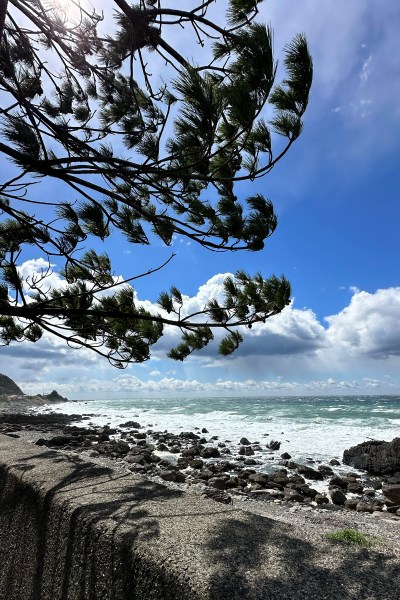
Standing before the raging waters of Kōchi, I lost myself for a moment in the fury of the waves. I stood there almost motionless, just watching them rise, break, and crash against the shore. For a while, I barely noticed anything else around me. My thoughts wandered—not really to the ocean itself, but to the people who had once set out into it. Fishermen who knew these waves not from a distance, but from within them.
The Pacific Ocean hurled itself relentlessly against the rocks. Strong winds tore at hats, scarves, and umbrellas. Parents instinctively held on to their young children as they stood watching. Cars pulled over along the coast, and strangers seemed to fall into the same quiet silence as I did, completely captivated by the raw force in front of us.
I shuddered, partly from the cold, but mostly from imagining what these waters must have been like centuries ago. Before modern engines and reinforced hulls. When fishing was not just a job, but a livelihood, and every time a boat left the shore, there was always the possibility of not coming back. How frightening it must have been.
Courage is not the absence,
But the conquest of fear.
For the first time, I understood courage a little differently.
It was not necessarily found in dramatic acts of heroism, but in ordinary people pushing their boats into a sea that frightened them because their families depended on it. Fear was never the opposite of courage. It was part of it.
Later, I learned more about the Nankai Trough, the offshore subduction zone capable of producing some of Japan’s most powerful earthquakes and tsunamis. Kōchi is among the prefectures most directly exposed to it. Knowing this added another layer to what I had already felt standing there. The people of Kōchi have lived for generations with the knowledge that the sea that sustains them can also threaten them.
Perhaps that is why what stayed with me was not really the violence of the waves, but the quiet resilience of the people who have learned to live alongside them. They do not conquer nature, but they do not surrender to it either. They simply carry on, with a deep respect for its power, accepting both what it gives and what it can take away.
The sea has given Kōchi an extraordinary abundance of seafood and shaped a culture deeply connected to it. But watching those waves, I began to think that every catch brought ashore carries with it generations of courage, perseverance and quiet resolve.
Long after the roar of the Pacific faded behind me, that memory was what stayed with me the longest.