This being a typical package tour, a lot of activities were packed into the few days we had in Turkey. Regrettably, some of these places weren’t properly document with our camera, considering how languid I was midway into the trip.
Some of the more interesting sights and scenes have been selected to be highlighted in this picture gallery, more as an attempt to remind ourselves of the happy memories we did possess of the trip rather than merely documenting for the sake of it.
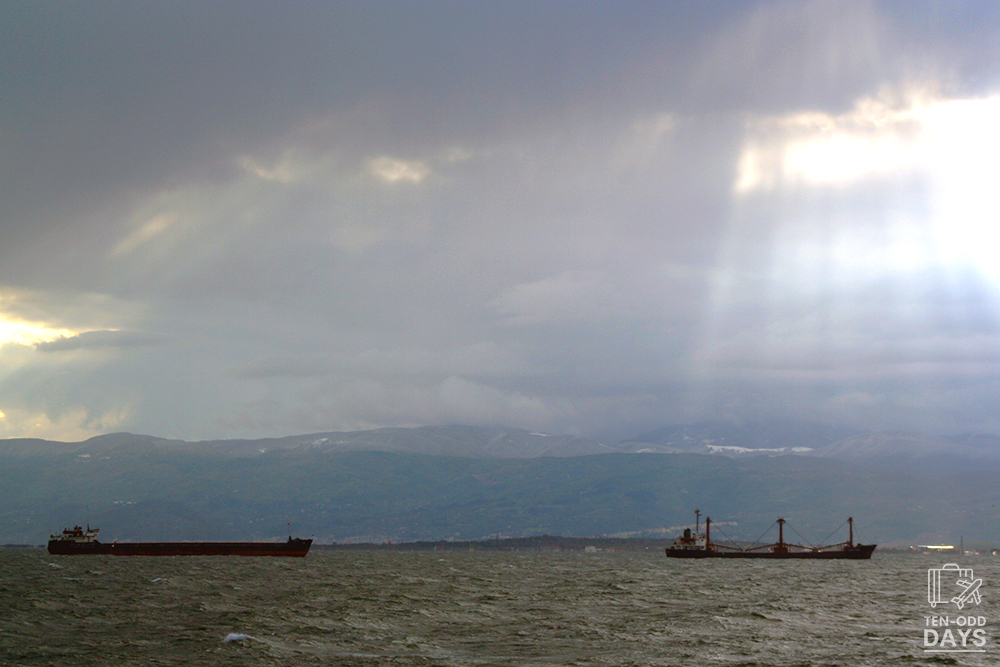
At the start of our trip, as we were crossing Sea of Marmara to get from Istanbul to Bursa. Totally captivated by how the sun rays streamed through the dark clouds.
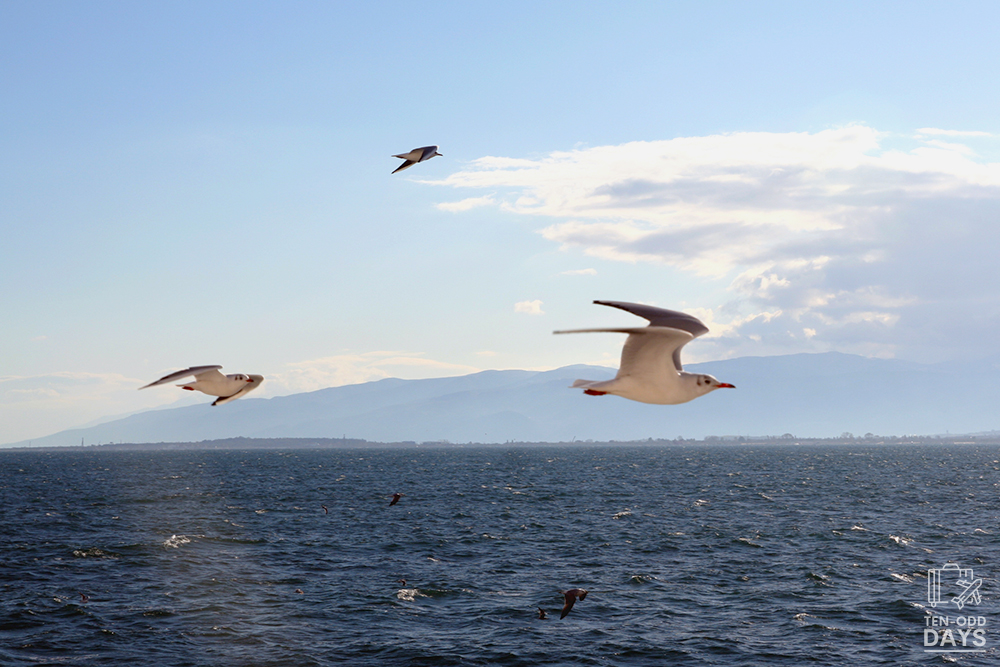
Seagulls in flight as we ferried across the sea.
An opportuned moment captured by our camera.
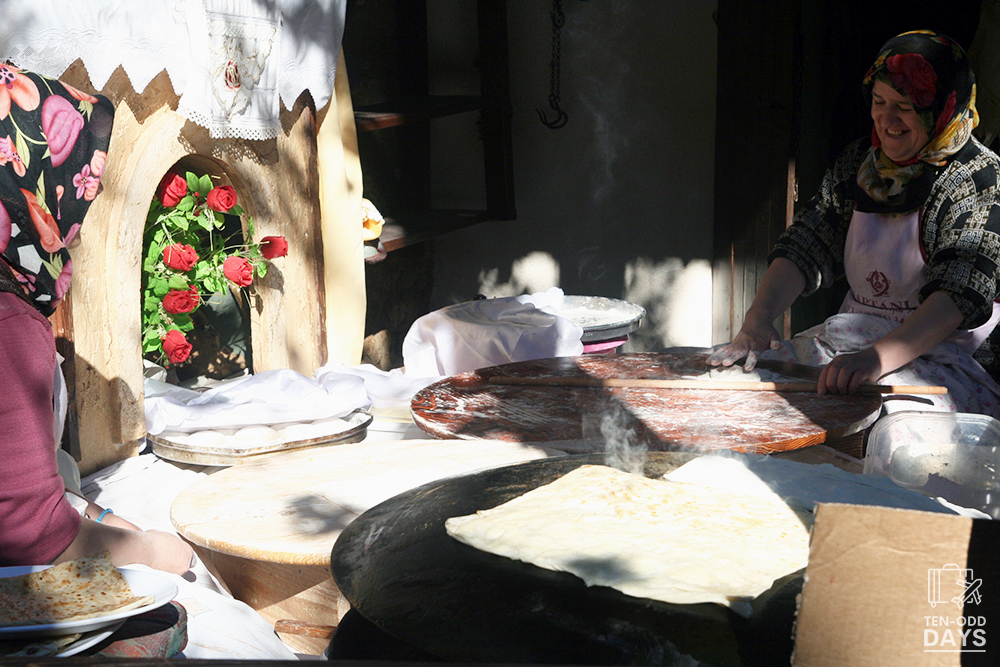
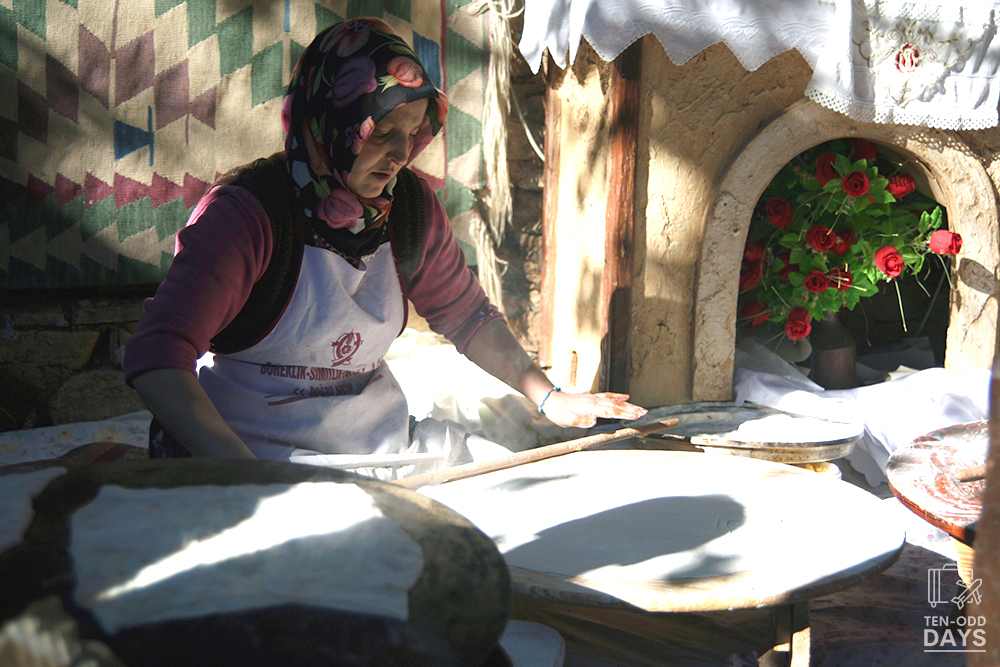
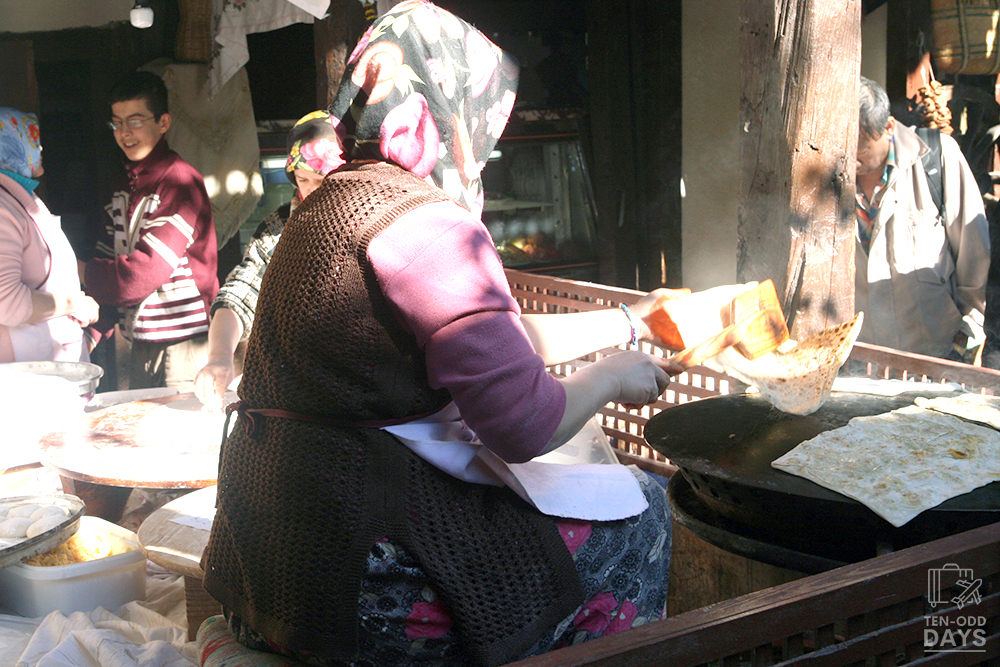
In the cobbled streets of Bursa, we came by a scene where Turkish women were making local naan.
It was mesmerising watching the women work.
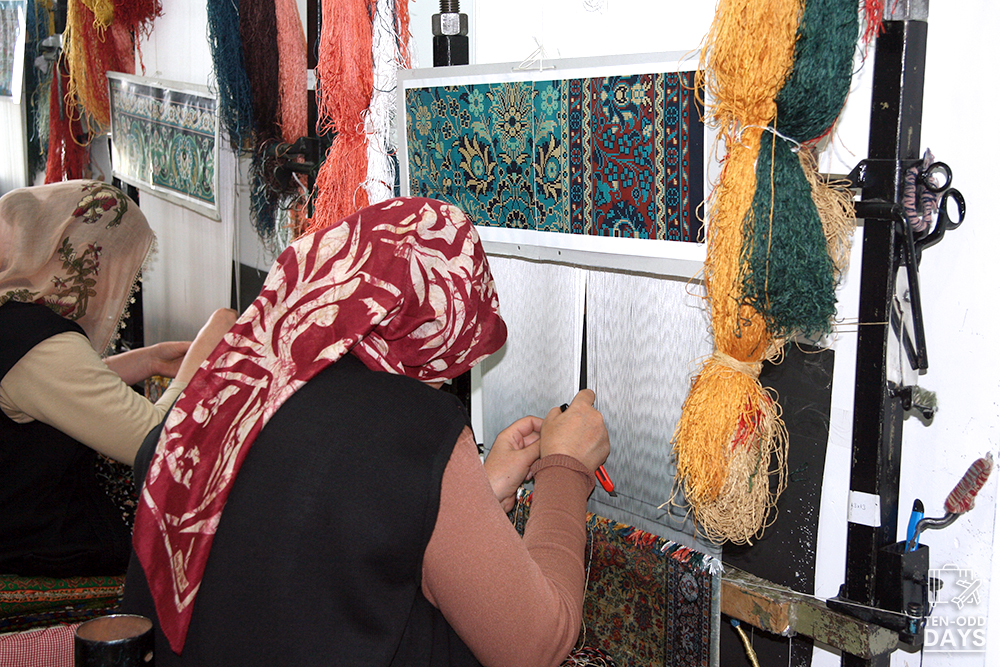
The hard work behind weaving carpets. It’s amazinghow these women can do such intricate designs without any reference.
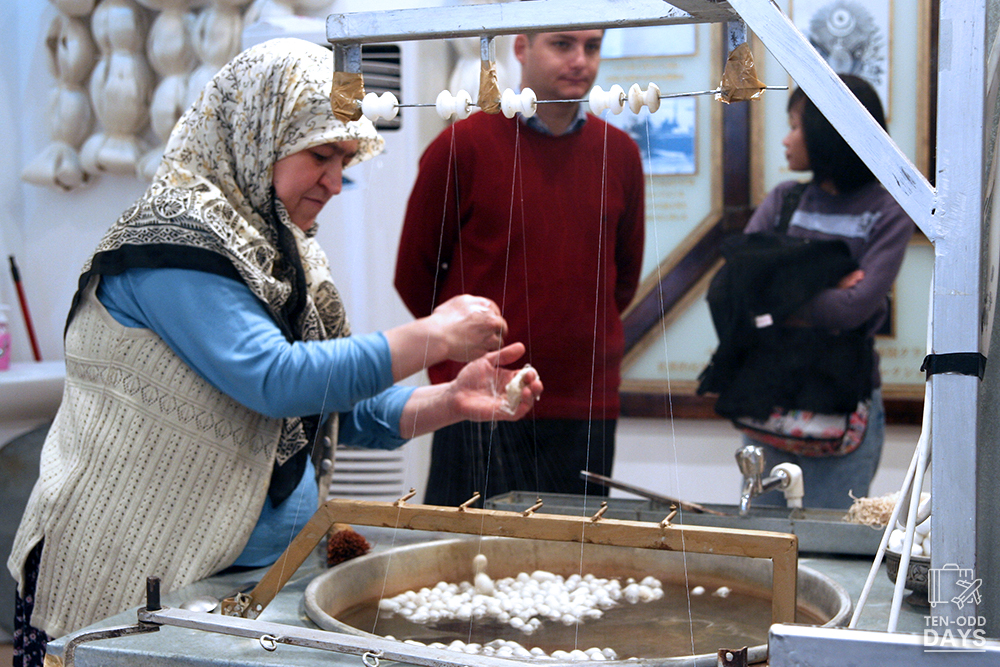
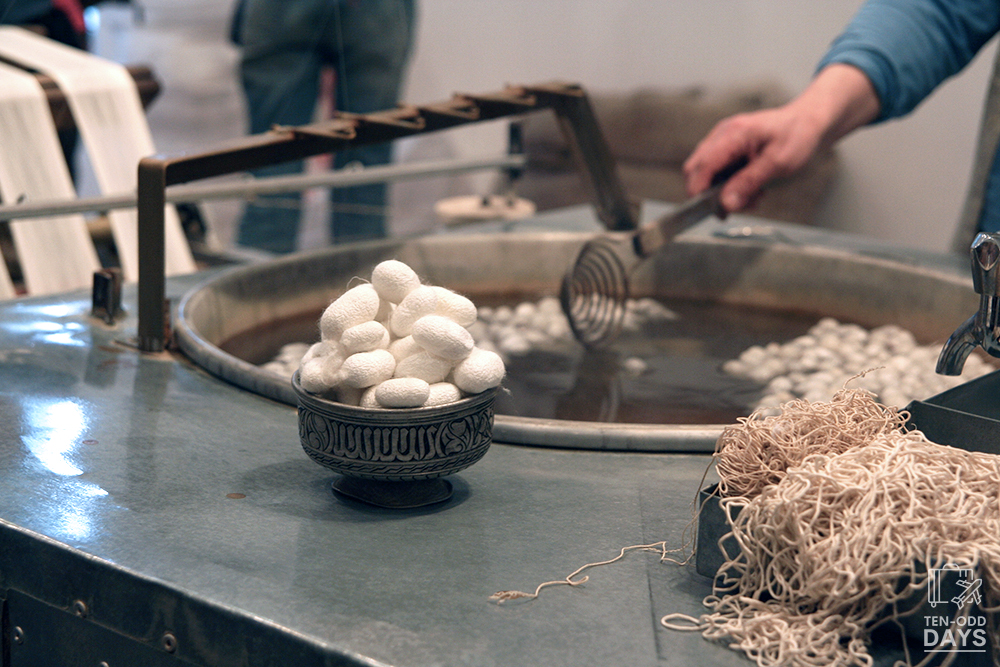
Another essential process of carpet making, retrieving silk strands from silkworm cocoons.
Really reminds me of cotton balls.
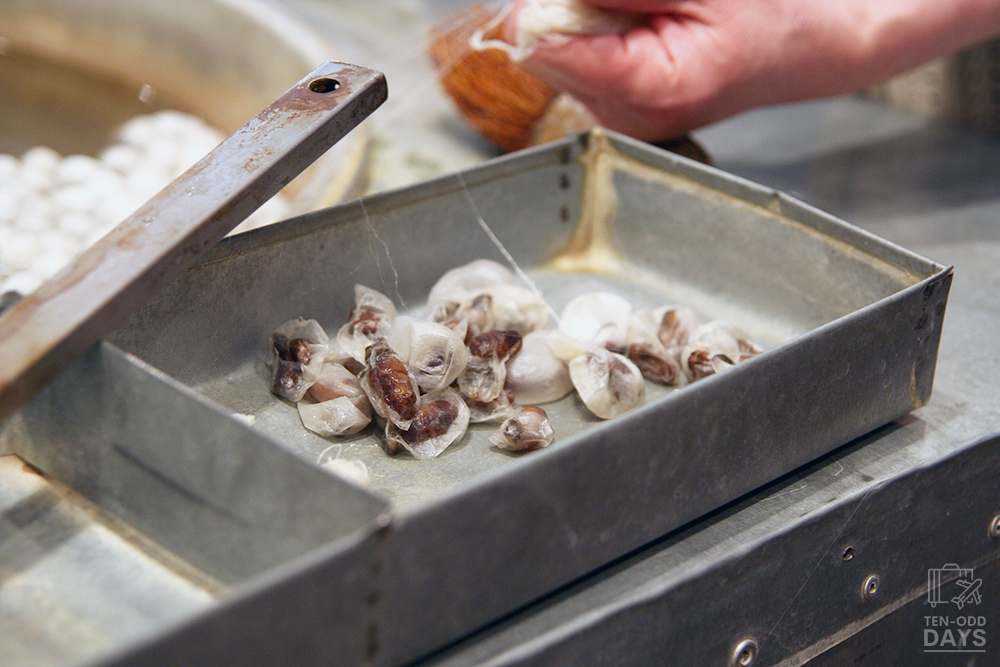
How the cocoons look like when the silk strands have been removed.
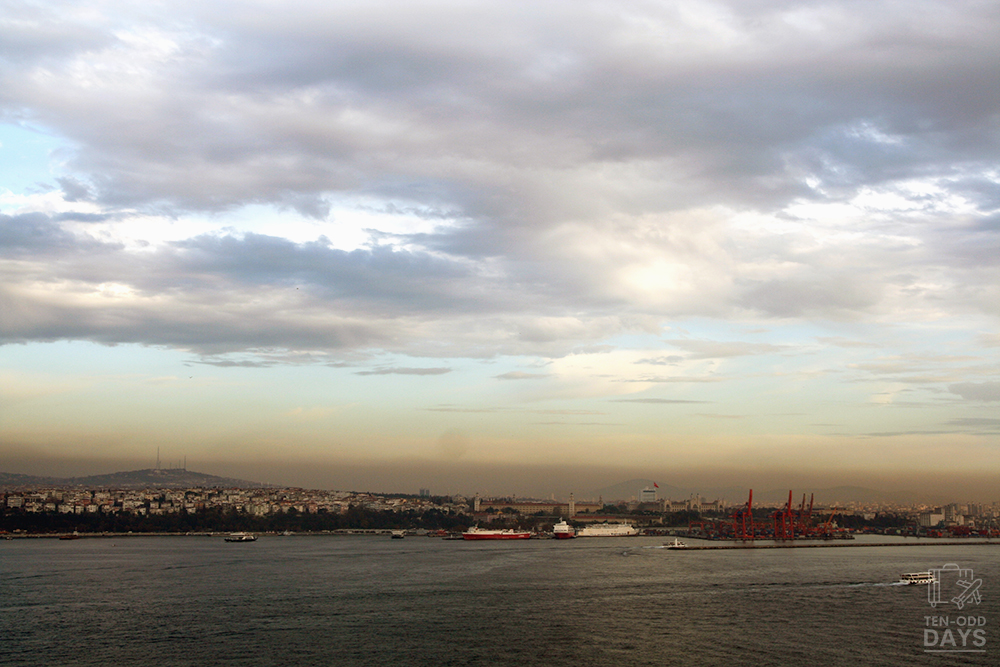
Panoramic view of Istanbul close to dusk.
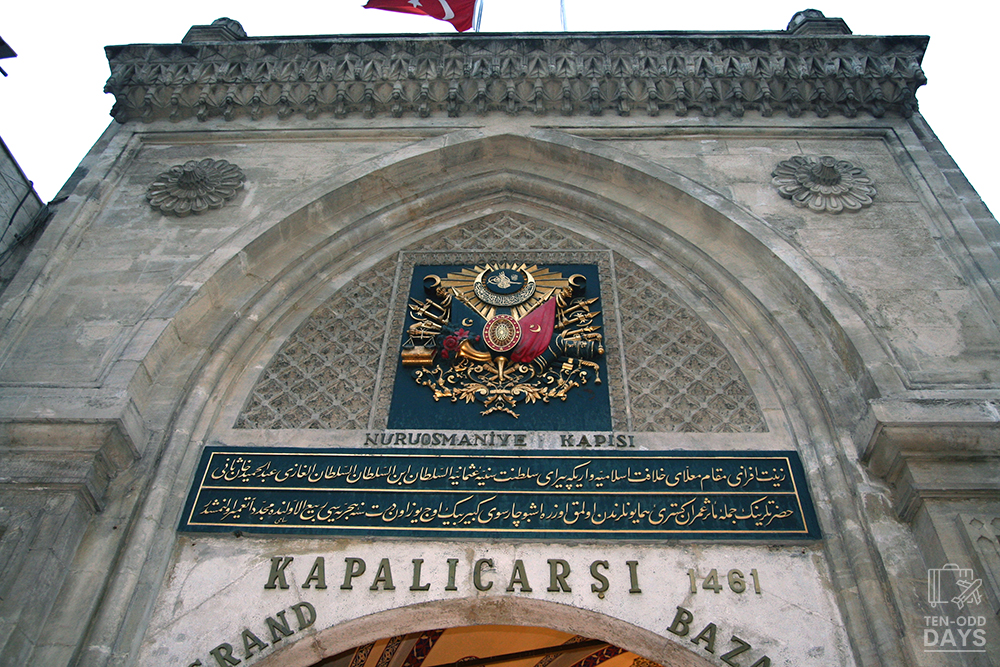
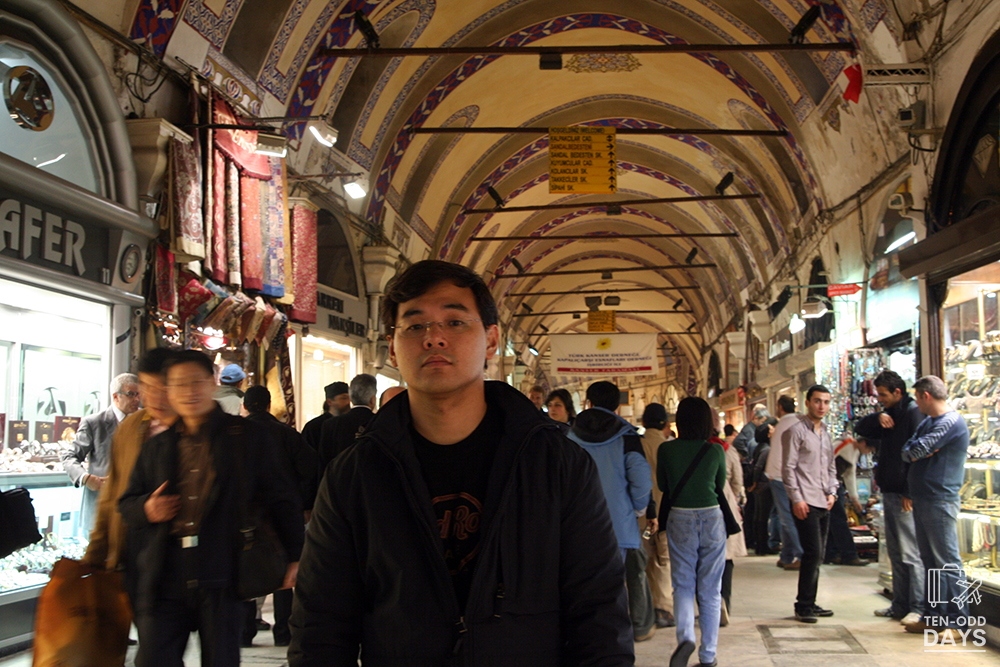
Entrance to Grand Bazaar in Istanbul, one of the oldest and largest covered markets in the world.
Over 4,000 shops within the Grand Bazaar, but nothing we could bring home without exerting too much effort.
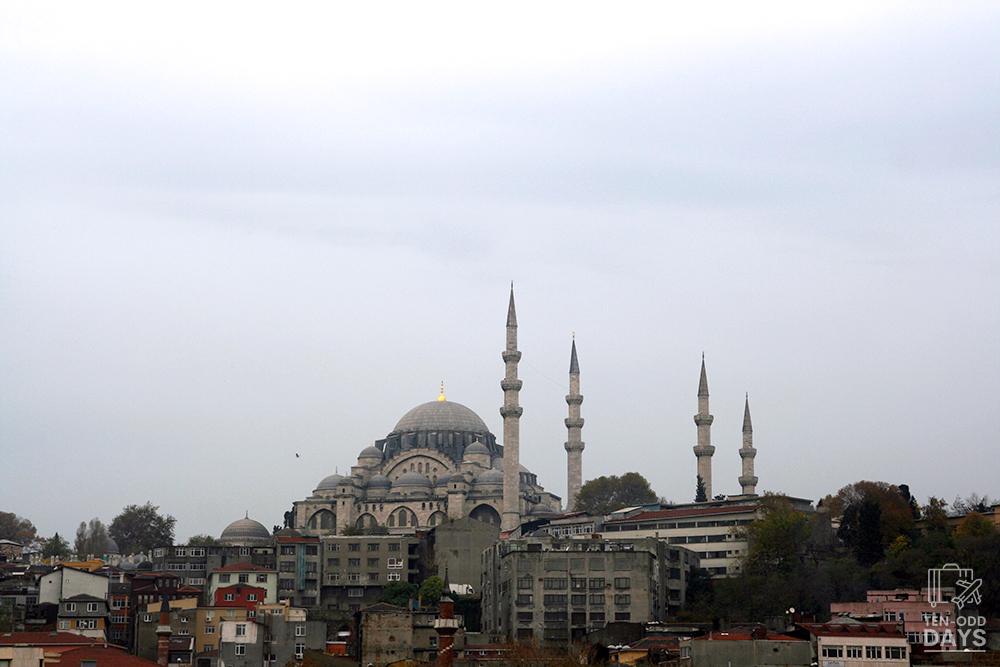
Hagia Sophia with its four minarets spotted in the far distance as we cruised down Bosphorus River.
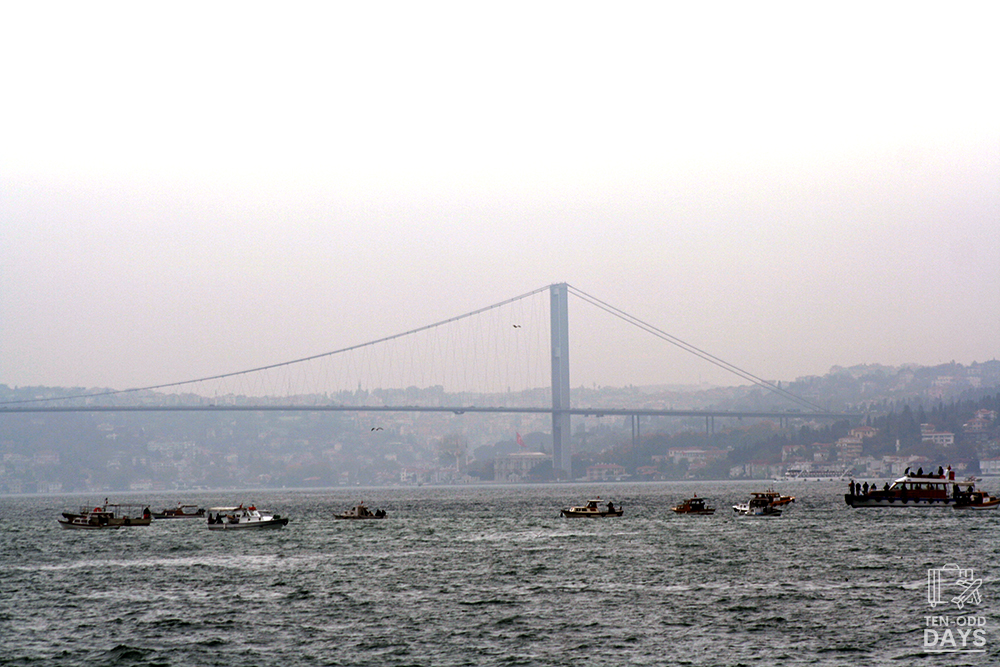
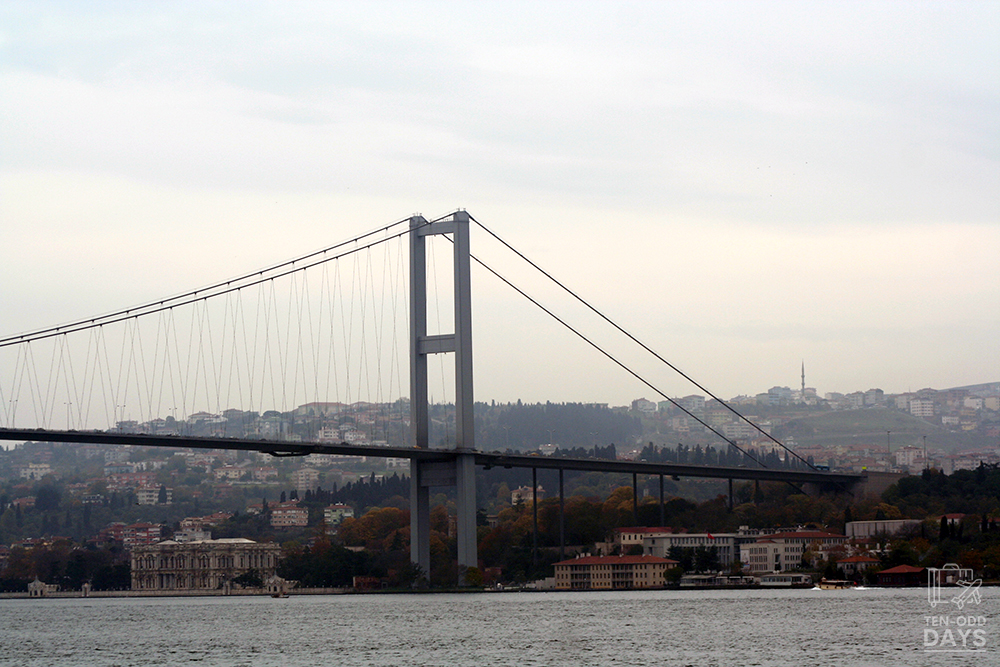
Bosphorus Bridge, the suspension bridge that extends between the Asia and Europe continents.
A closer view.
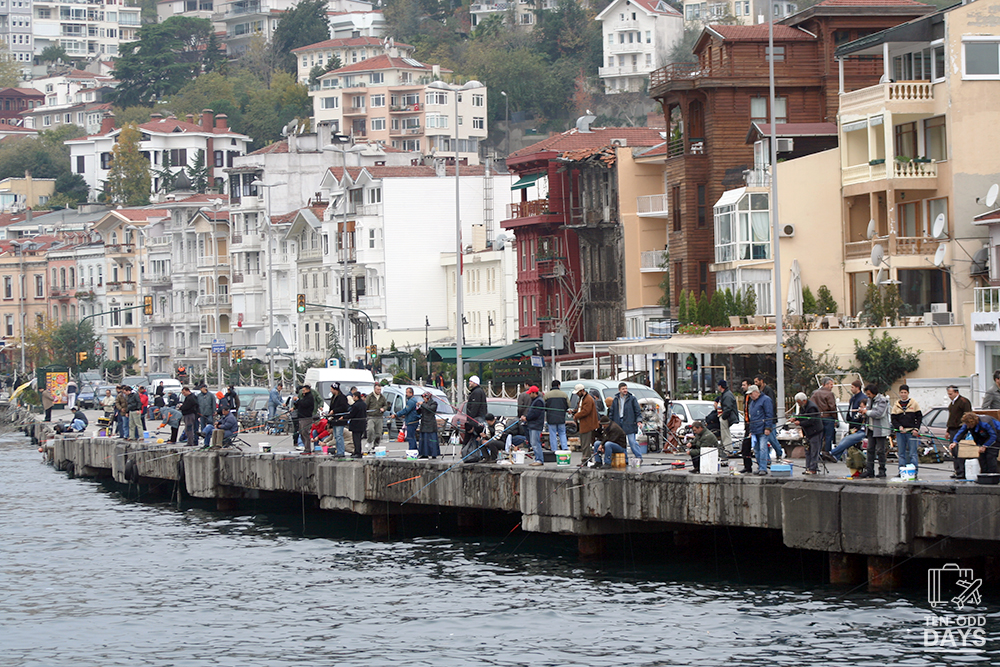
Along the banks of Bosphorus River, where locals fish and mingle.
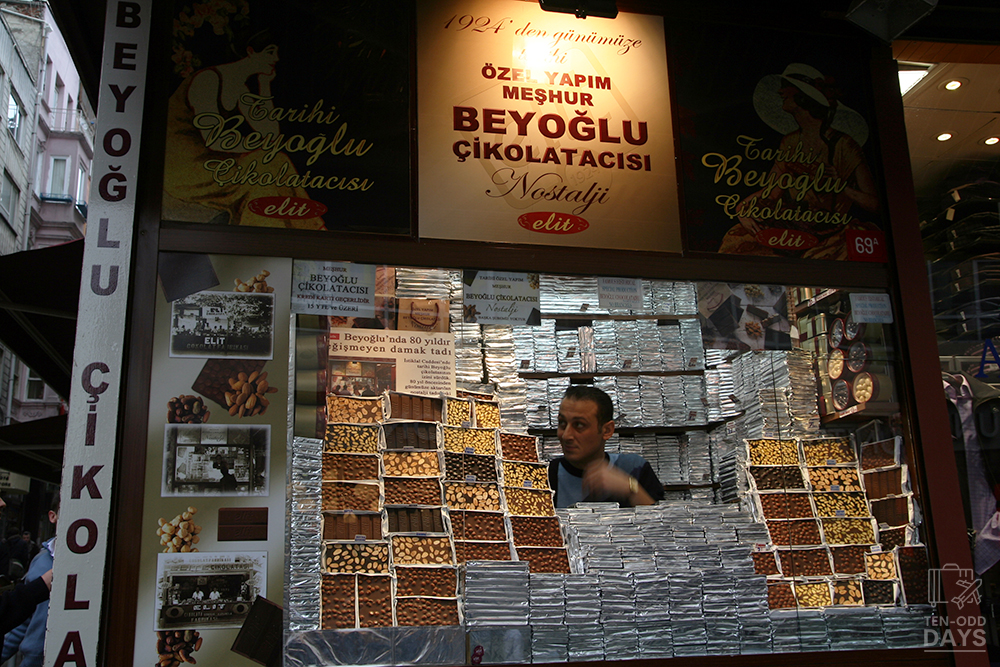
Came by this interesting little shop selling local ltos of chocolate.
I’ll admit that Turkey was not my desired vacation destination, at least not during the time we travelled. I wanted to tour Greece but the mister found the package to be costly, hence the next best option.
Despite this, the rainy weather and my bout of food poisoning that cropped up during the trip, it still was an enjoyable trip. Eye-opening and educational, especially the visit to the carpet factory and the mosques. Till today (2021, the year I’m writing this post 😳 ), I lament the fact that we didn’t take a balloon tour at Cappadocia. Not that we could. In the mister’s words, ‘There’s no toilet on the air balloon’. True, that. Even if I my condition had improved by then, the jitters of being in the air would have given me a tummy upset again anyway. It was a decision for the best.
Of the numerous posts I’ve written on this travel blog, I’ll say researching and writing on Turkey in particular Istanbul has been an exceedingly enjoyable and fulfilling task, in no small part contributed by my captivation with the Roman Empire. This pleasant discovery has rekindled my resolve to complete the unfinished parts of this blog before our next possible trip.
Did you get it right? Don’t fret if you did not. It’s a common misnomer to think that Istanbul is the capital of this country bridging Asia and Europe. Incidentally, it is Istanbul that straddles between these two continents. It is also Istanbul that has a long history of being the capital of the Eastern Roman Empire but no, it’s not the capital during modern times. Ankara is. Ask this question and I assure you eight out of ten persons will reply ‘Istanbul’. The ninth is either a native or has been to Turkey and knows the correct answer, while the tenth is simply good in general knowledge.
I’m no historian, and it’s virtually impossible to summarily dismiss Turkey’s entire history into a paragraph or two. I can only grasp the couple most important eras the country has been through: the Byzantine Empire and the Ottoman Empire. Being so strategically located, I can only say that Turkey has been through quite a bit of turmoil throughout history. Do bear with me as I try my utmost to summarise these two important periods in history.
The Byzantine Empire
The Republic of Rome was founded in 6 BC. It started expanding shortly after, but only moved out of the Italian Peninsula in 3 BC. For centuries following, the Romans were unstoppable in their quest to expand territory.
The Roman Empire was at its largest extent under Trajan in AD 117. By the 3rd century, the entire empire was deemed too large to be ruled by one single emperor. In AD 286, Diocletian split the empire into two along a northwest axis just to the east of Italy. Diocletian himself became the emperor of eastern half and made Maximian the emperor of the western half.
Fast forward to AD 324 when Constantine I was in reign. He built a new imperial residence in Byzantium (also known as Constantinople in late antiquity, and Istanbul in the modern world) and named it the new capital of the Roman Empire. That began the Byzantine Empire, which survived the fall of its western counterpart in AD 480 until the fall of Constantinople in 1453 to the Ottoman Empire, almost a good 1,000 years later.
The Ottoman Empire
Founded in 1299 by Osman I, the Ottoman Empire had its base just south to Constantinople. The taking of Constantinople in 1453 was the empire’s first step to growing into a powerful empire, expanding its might deep into North Africa, Europe and the Middle East.
Anatolia (also known as Asia Minor) which comprises most of Turkey as we know today, became part of the Byzantine Empire after the split of the Roman Empire into east and west. Notably, it was one of the first places where Christianity spread wide and far. By the end of the 14th century, much of Anatolia had already fallen to various Anatolain beyliks (something equivalent to lords).
Fast forward to Nov 1918 when Constantinople was occupied by the British, French and Italian troops following the end of WWI. A much weakened Ottoman Empire had no choice but to commence the process of partitioning the empire and that eventually led to the creation of a total of 39 new countries.
Turkey gained independence on 29 Oct 1923 after the Turkish War of Independence was won, at the same time, naming Ankara as its new capital.
Anakara is historically known as Angora. With a total population of 5.6 million, Ankara is the second largest city in Turkey, coming in behind Istanbul. It is famous for several things including Angora wool from Angora rabbits and mohair from Angora goats.
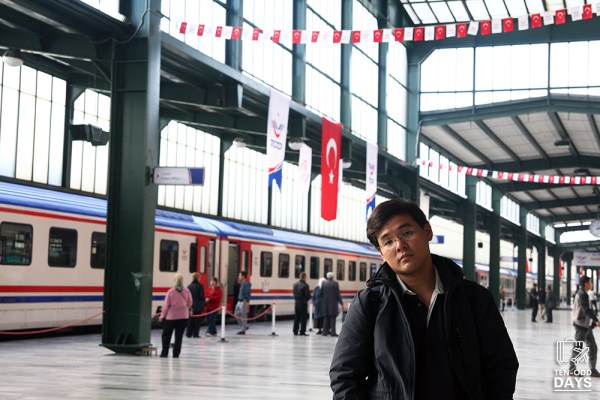
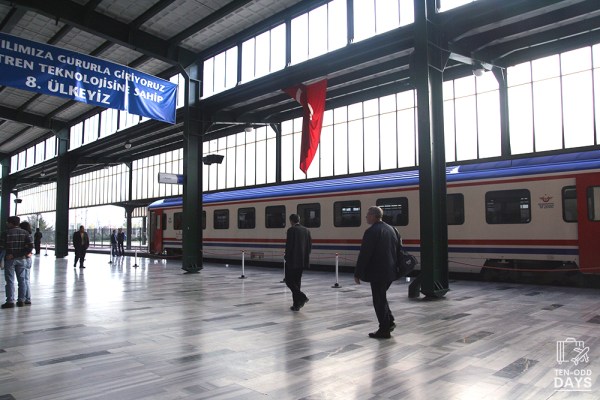
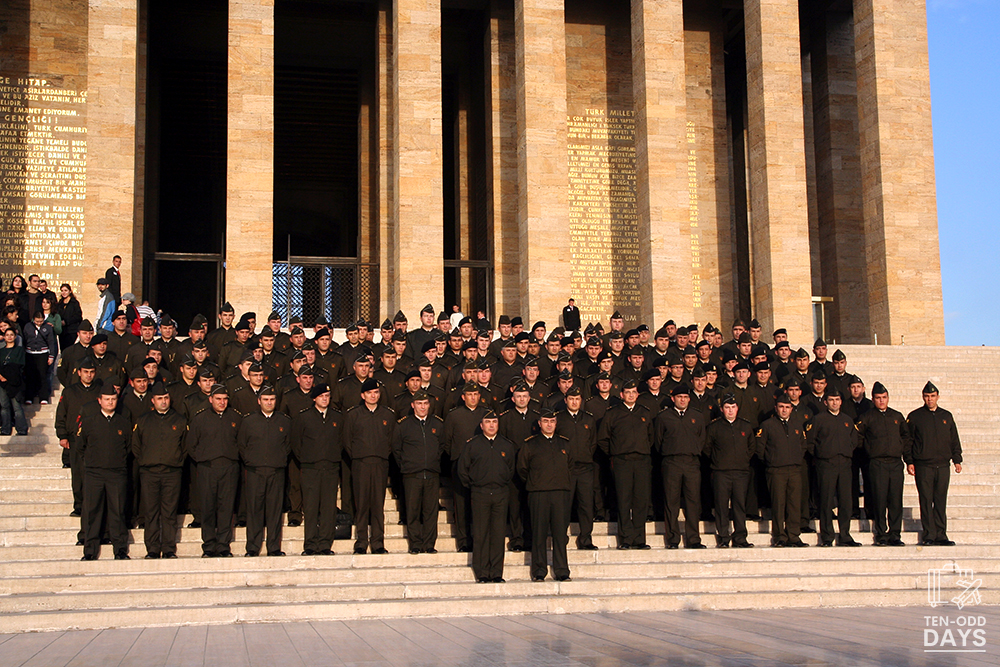
Our tour of Ankara was limited to only a train station nearby our lunch location and the mausoleum of Mustafa Kemal Atatürk, also known as Anıtkabir. After our lunch while waiting for our coach, we strolled to the nearby train station to take a look. I was genuinely surprised by how modern the station is, considering what a long history Turkey has. Train stations in Paris most certainly do not even remotely look like this.
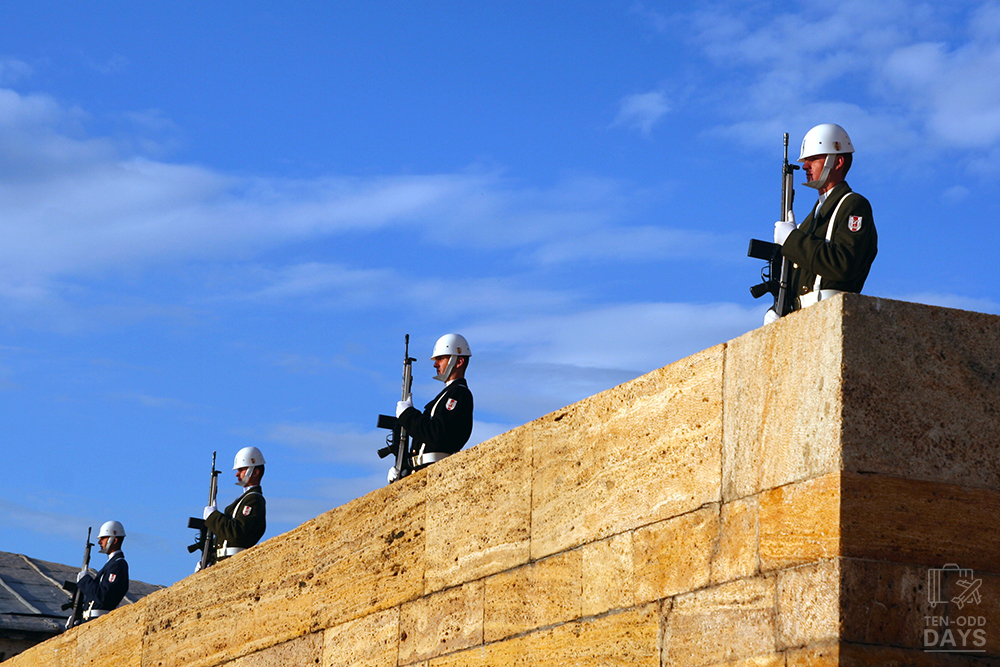
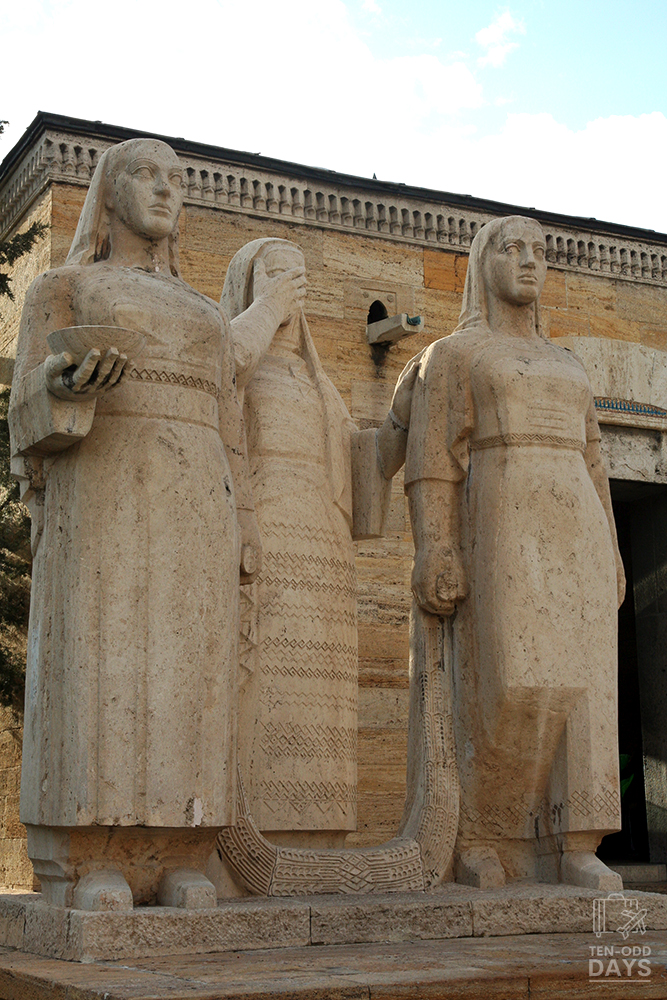
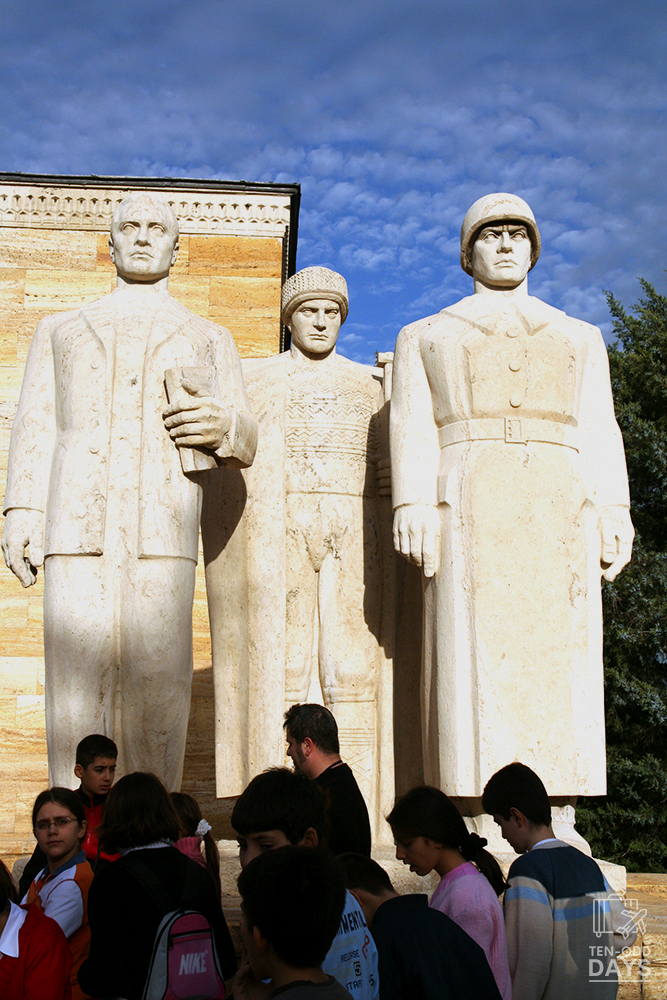
We entered the Atatürk mausoleum grounds via the entrance of the Road of Lions, and were introduced to the two sets of sculptures bearing great significance as they represent the population. The group of women sculpture ‘represents the Turkish women’s pride, solemnity and determination, even in the deepest grief of losing Atatürk‘ and ‘By the grievous expressions in the faces of all three statues, solemnity and power of will proper to Turkish Nation are expressed‘ in the group of men sculpture.
The country has great respect for Mustafa Kemal Atatürk, who was the leader that led the country to victory during the Turkish War for Independence. He also became the republic’s first president.
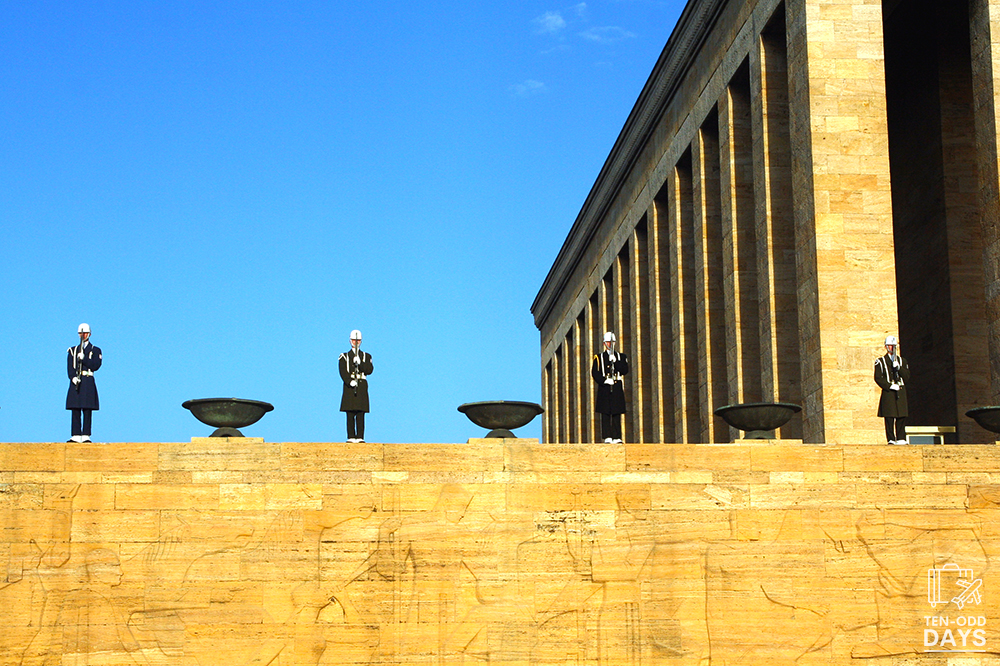
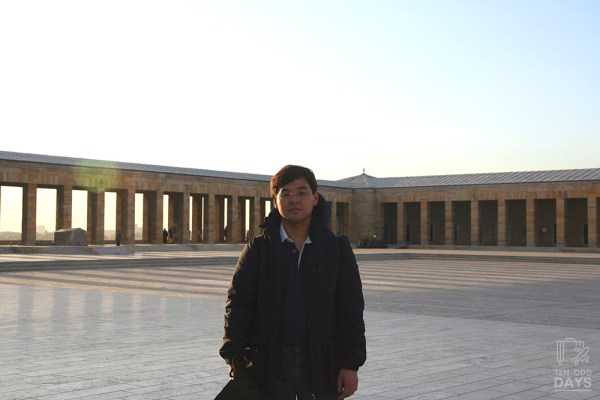
The solemnity of the site was acutely felt everywhere we went. We visited the mausoleum on the 10th death anniversary of Atatürk, six days after the actual day. There were people aplenty, especially in the building. We had no idea if the significant day ten days afore had anything to do with the crowd, but if I were to hazard a guess, I would say it probably played a part. That made our tour of the interior rather haphazard and quick since there were just too many visitors that afternoon. I think we spent more time enjoying the spacious plaza than indoors.
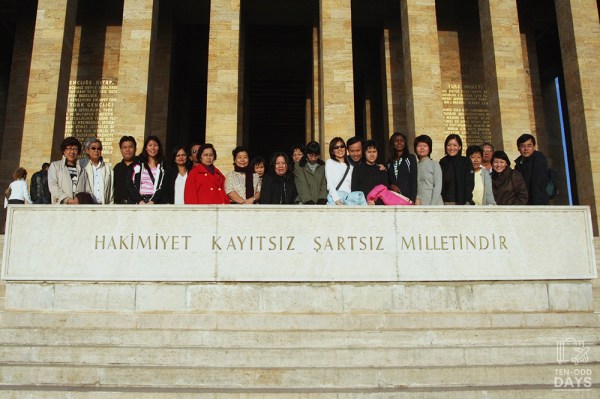
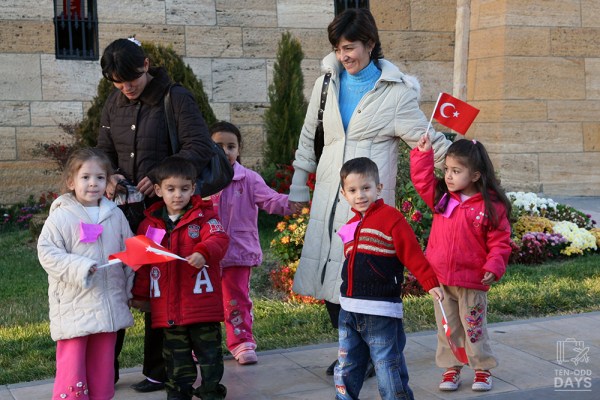
The only group picture we took on the entire trip.Young children having an excursion to the mausoleum with their teachers.
While waiting for our transport toward the end of our visit, a group of young Turkish children walked by, waving their flags enthusiastically. We found them cute as much as they found us… strange? 😆
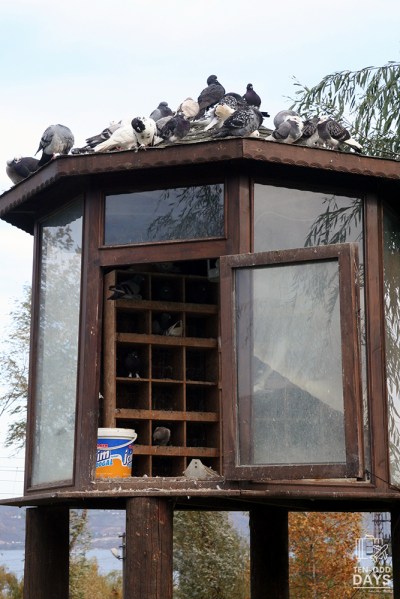
Enroute and we sighted a typical Turkish dovecote with pigeon holes for the birds.
From Ankara, we headed back to Istanbul, our first and final destination the next morning. It typically takes over six hours by coach, but since we already left Ankara last evening and stayed somewhere between these two cities, we took a little over four hours to arrive at Istanbul. Where we immediately began our walking tour, to my dismay.
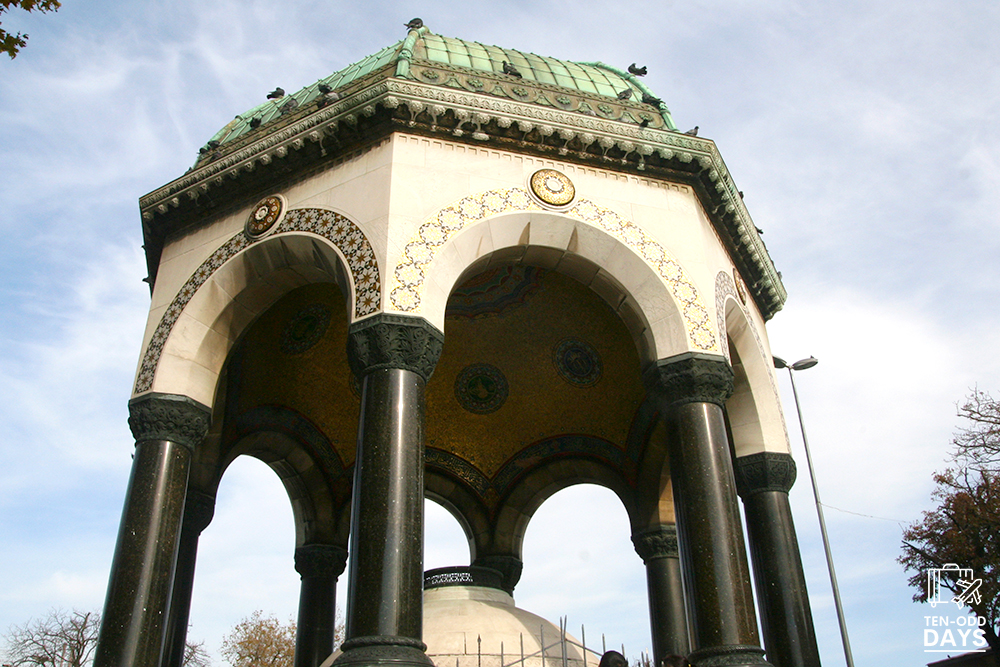
Our first destination: Sultanahmet Square, also known as the Hippodrome of Constantinople or Hippodrome Square. During the Byzantine Empire, it was a square where sporting events like chariot races were held and throughout the period, it was central to social activities being held in Constantinople.
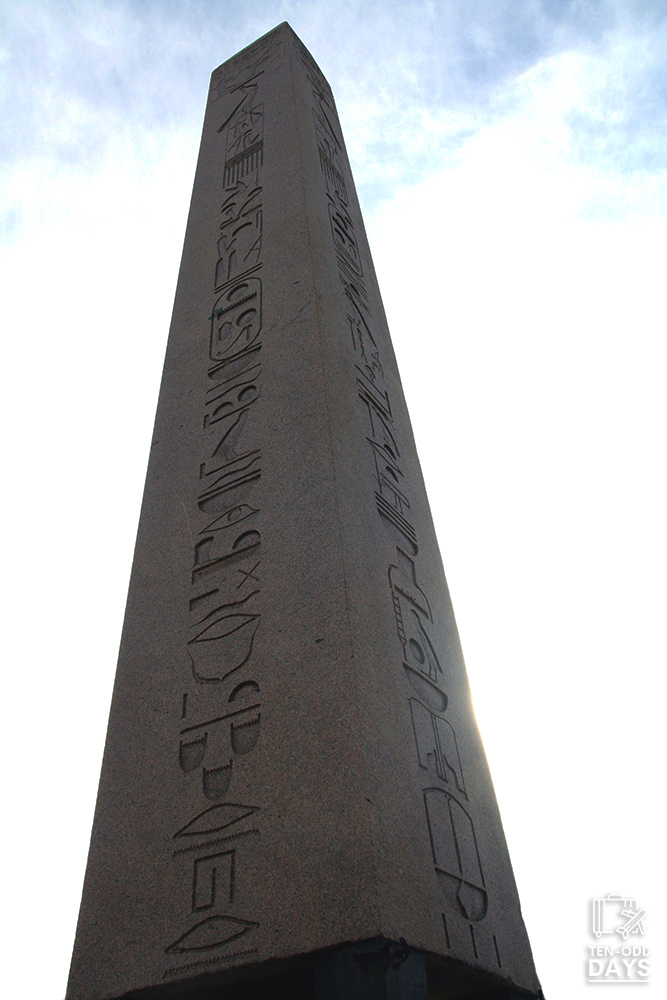
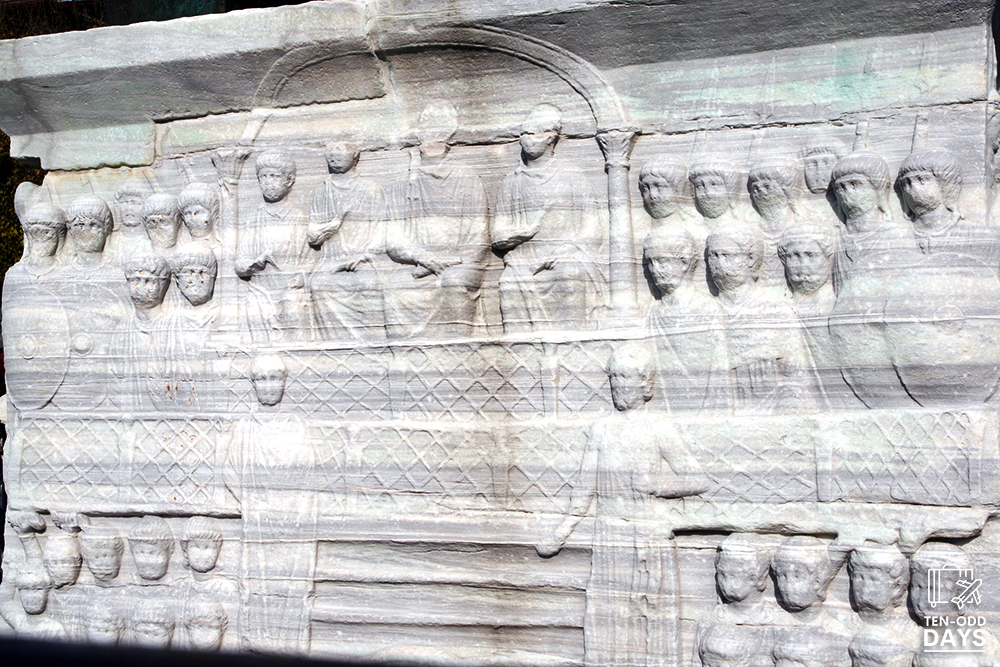
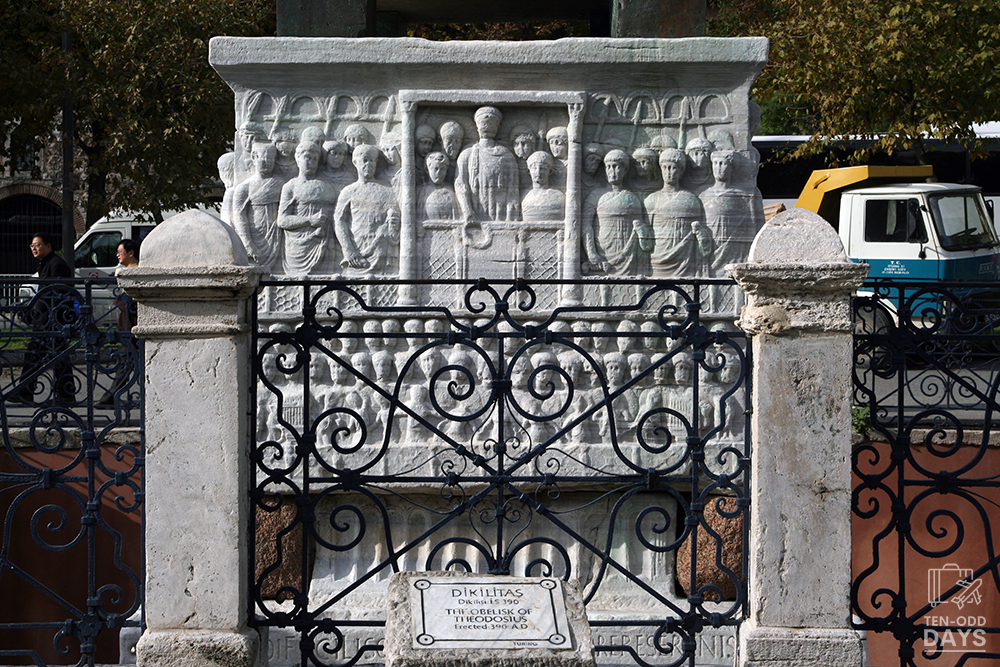
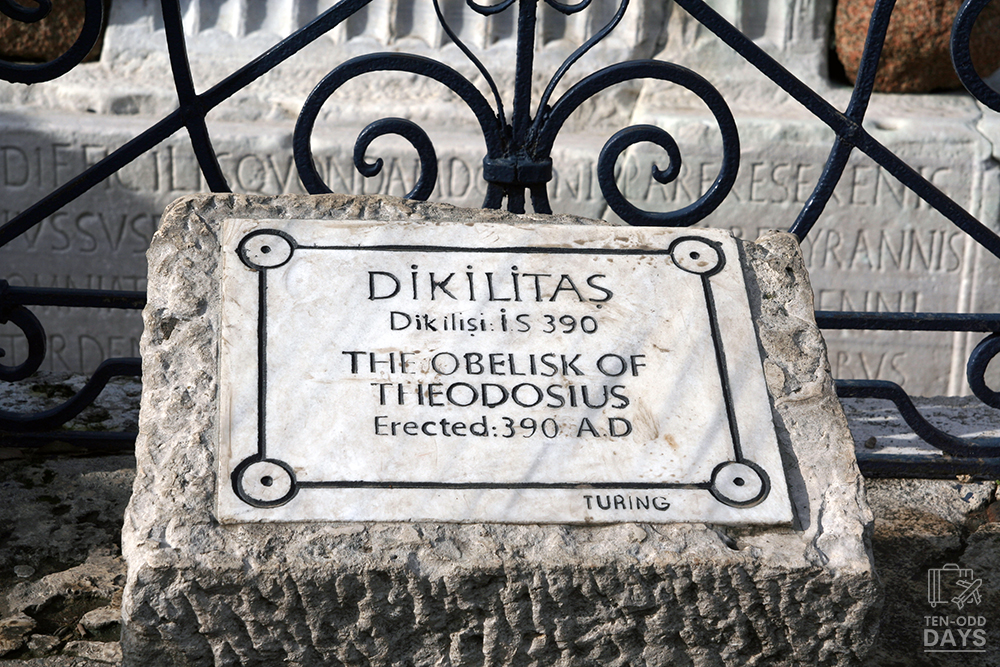
Constantine I was immensely proud of Constantinople, and it was evident from the way he and his successors spared no efforts in adorning the Hippodrome, including cutting an obelisk into three parts in order to transport it all the way from Egypt. The emperor who commissioned this move was Theodosius and thus the obelisk was renamed from Obelisk of Thutmose III to Obelisk of Theodosius.
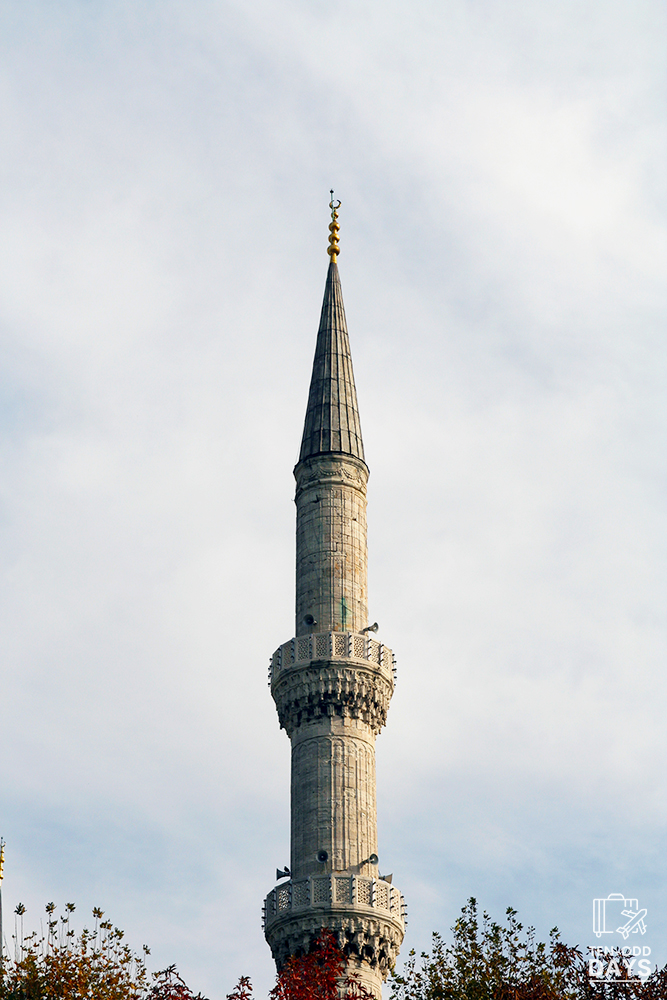
From the Hippodrome Square, we saw a tall minaret in the distance and were told that it belonged to the Blue Mosque, our next destination, followed by the inimitable Hagia Sophia. These two mosques will be covered in the next post; they are important enough to deserve a post of their own.
After the visit to Ephesus, we were whisked off to a leather apparel factory, which unfortunately took up too much of our time that we arrived at Pamukkale, our next destination, much later than planned.
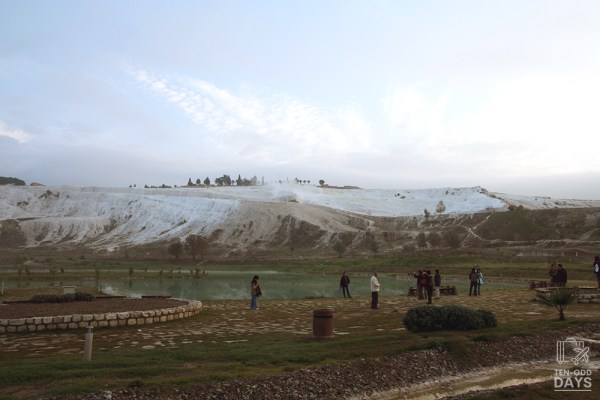
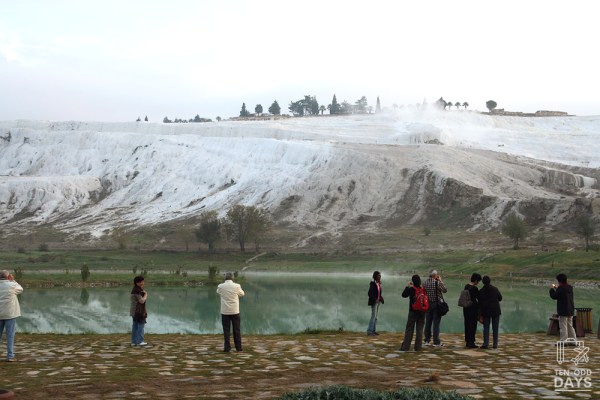
Pamukkale, meaning ‘cotton castle’ in Turkish, is a town in southwestern Turkey most well-known for its mineral rich thermal waters that slowly trickle down cotton-white travertine terraces. The most pervasive image of Pamukkale most people would have has to be white terraces with numerous mini craters filled with sky blue water. This was unfortunately nothing close to what we saw when we arrived close to sundown.
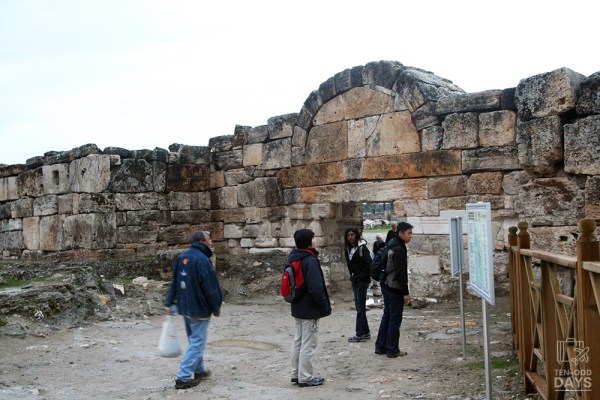
At the entrance to Pamukkale.
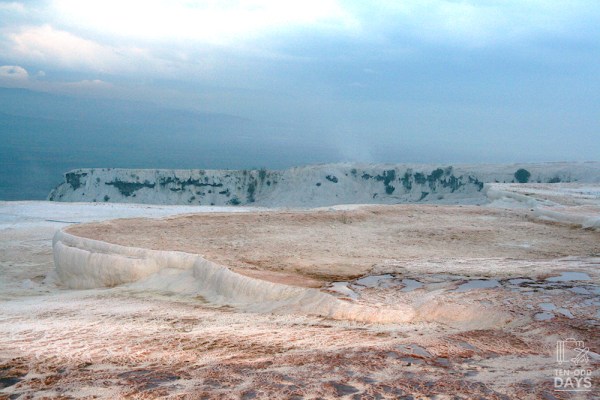
The white travertine terraces were, to our dismay, not white at all. Not even remotely close to white, to be honest. It looked like too many visitors to this site have trampled on and dirtied the once pristine white formations.
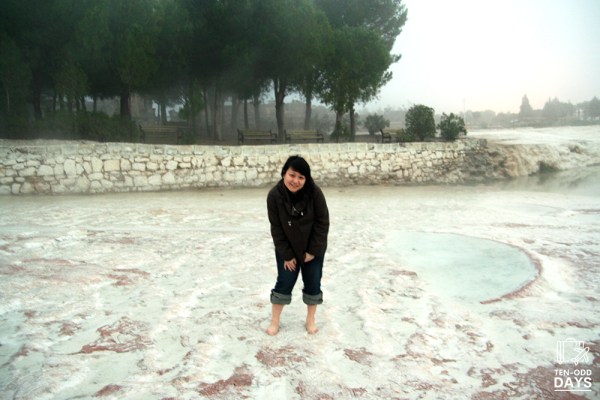
The picture above was heavily edited. Don’t be fooled by how bright it looked; it was almost pitch dark by then. Encouraged by our tour guide, we gingerly took off our shoes and walked around in the thermal waters to have a feel of it. Given how dark it was, we didn’t venture far from the designated pathway.
Since we didn’t get to see much of the site, we were promised that we would be brought back here again next morning for a quick look before continuing on to our next destination. Reluctantly but cautiously, we made our way back to the coach that brought us to our accommodation for the night.
And that was when trouble ensued. I started having the runs the entire night, together with stomach cramps. It wouldn’t be exaggerated to say that I’ve gone to the bathroom close to 20 times before we realised that something was very wrong. The mister sought help from our tour leader, who in turn got in touch with a local doctor to come look in on me. I went to the bathroom another ten times before he arrived, and gave me an injection to alleviate the symptoms. That injection cost us 100USD. 😮 At least it worked; the bathroom visits reduced sharply after the doctor left.
From there on, the trip went downhill for the both of us. For the next couple of days, I almost never got off the coach for sightseeing, sleeping my way through while nursing the bout of stomachache (which very much later my local GP told me it was for certain a bout of food poisoning) unless it wasn’t possible for me to stay in the coach. Many a times I had to coax the mister to go sightsee without me. He would hastily go down, take some pictures, and rush back to the coach to accompany me without lingering. I felt bad and wanted to get well quickly, but it took several days for my stomach to settle again.
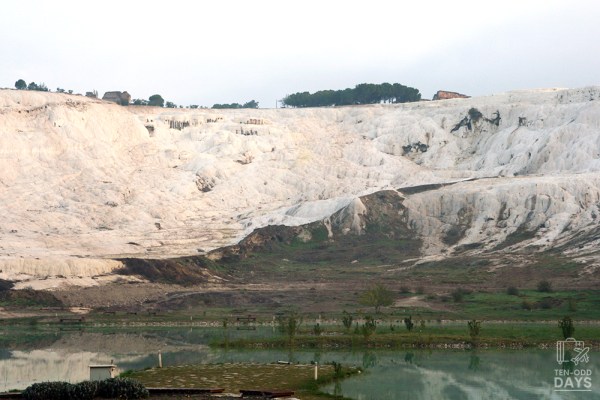
I think the group was rather disappointed that we only got to stop at the foot to take pictures of the terraced travertine instead of entering the attraction again. But there was a schedule to keep to, and it was the best our tour leader could bargain for. Kinda wished we didn’t have to go to the leather apparel factory.
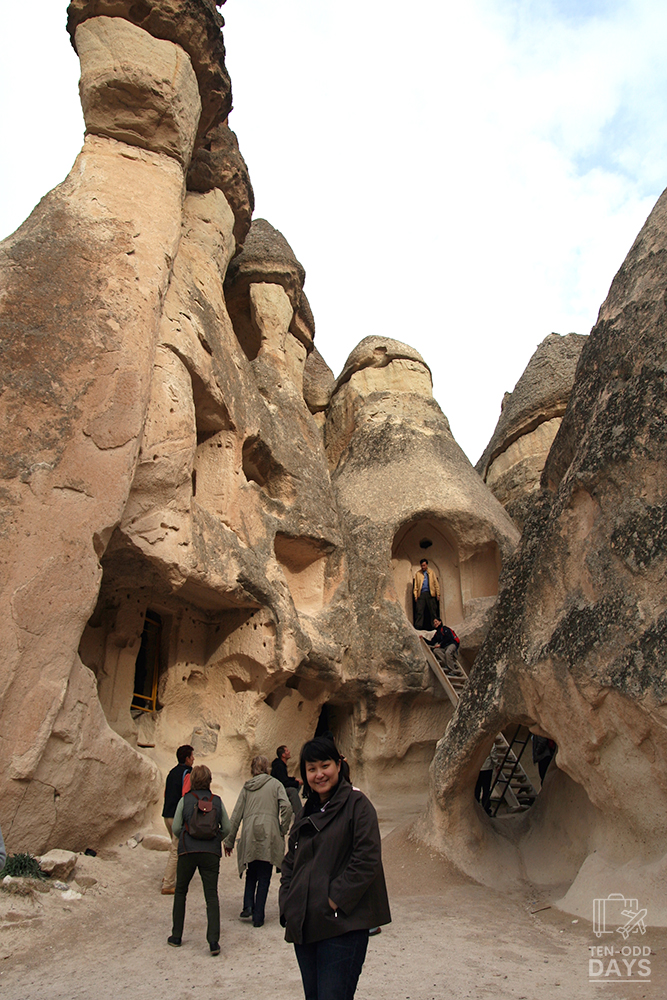
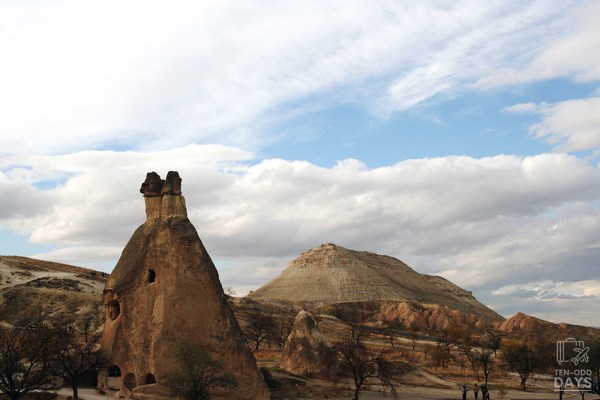
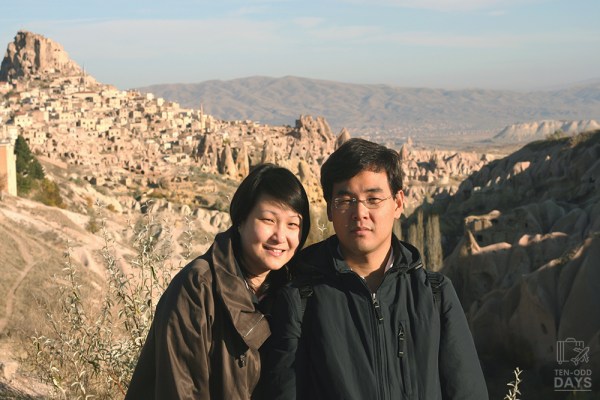
After lunch, we headed for Göreme, a town in the Cappadocia region known for the strange naturally-formed rock formations called ‘fairy chimneys’ and hot air balloon rides over the region.
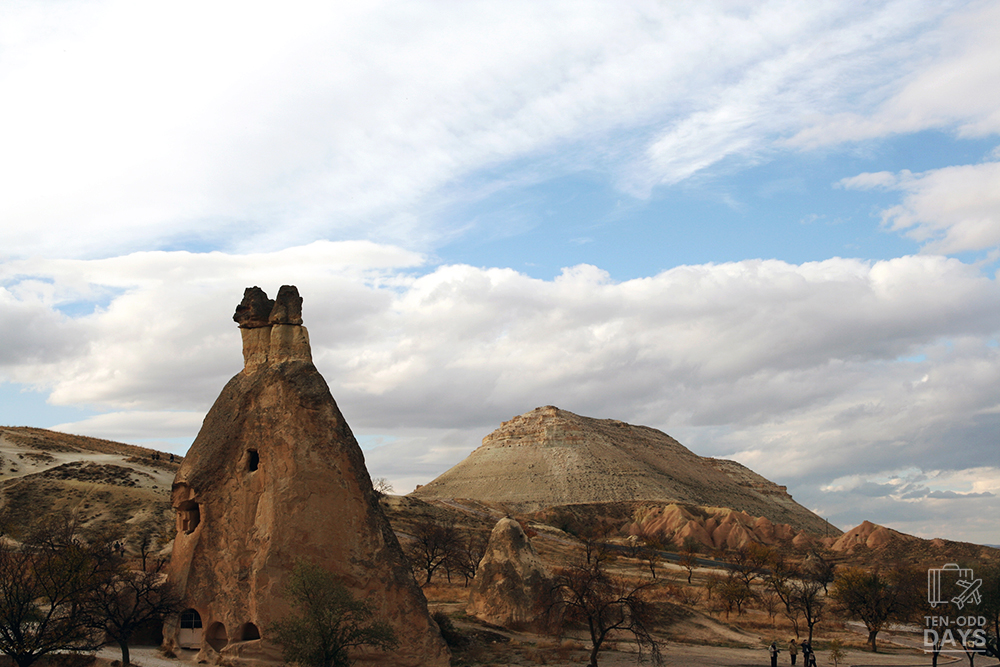
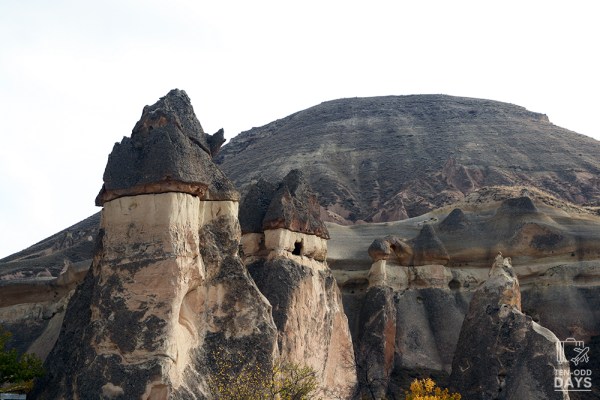
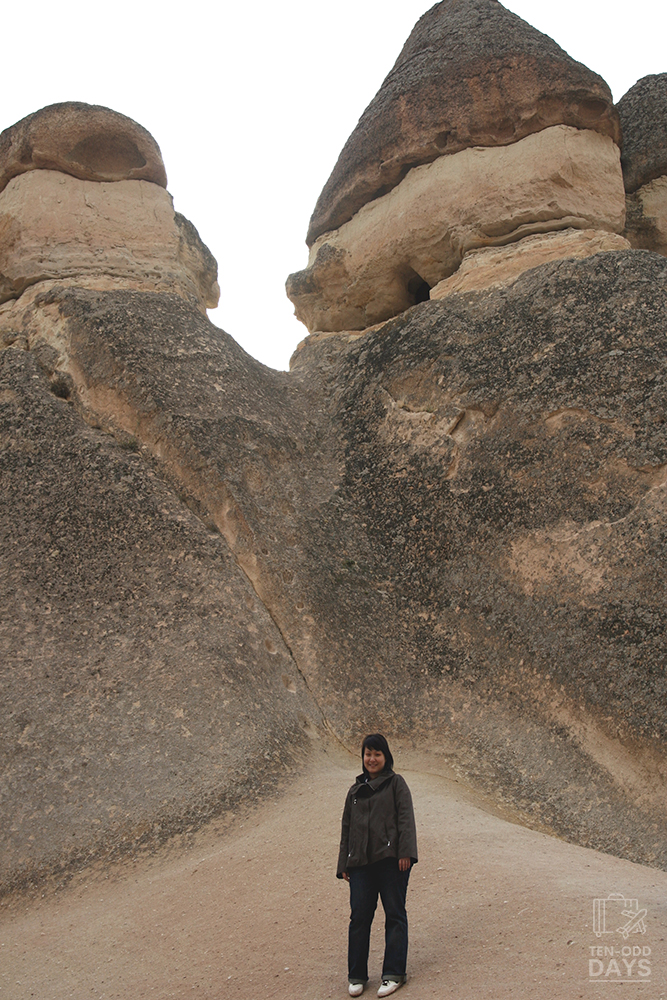
At first glance, the striking fairy chimneys looked really strange to us. Being the good student that I once was, I listened intently as our tour guide started explaining how the geologic processes that commenced millions of years ago first created this unique landscape. Then volcanic eruptions brought ash to this region, which settled and hardened into tuff. Tuff is relatively soft and porous, resulting in rather ingenious ways of using the interesting terrain, chief among which, homes. But this wouldn’t have been possible with simply tuff alone. Along with tuff, basaltic igneous rocks resulted from the violent volcanic eruptions also cooled and settled. Since tuff and basalt erode at different rates, million years of weathering resulted in the mushroom-headed tall columns that we see today. And it’s all natural, not unlike what we see in Meteora, Greece or Zhangjiajie, China.
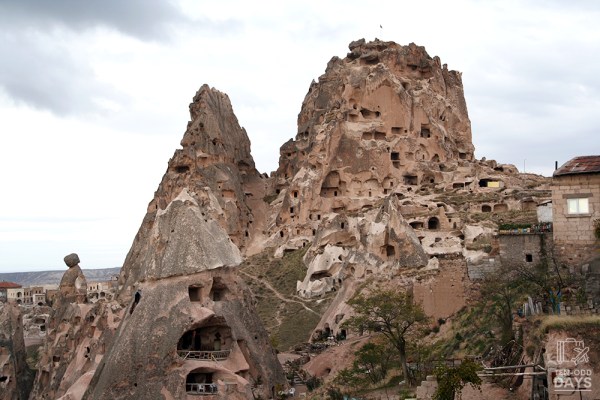
Cappadocia sat along the historic Silk Road trading route. Prior to that, it was also centrally located, bringing to its region centuries of conflict between warring empires. For that very reason, the town was raided, plundered and invaded several times over the course of time. Natives had retreated into the area, and chiselled into the rock to escape political turmoil. Later, it also became an area of refuge for fleeing Christians escaping from persecution of the Romans, then the Muslims.
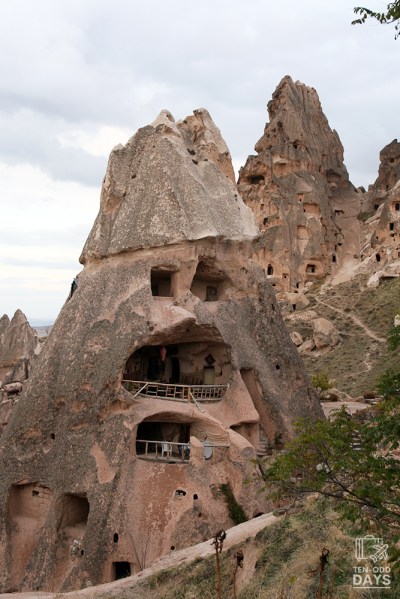
The niches chiselled into the fairy chimneys are such amazing work of art! They may not look much from outside, but these columns formed a network of living quarters, churches, stables, stores etc. like a small town would have. And if you look closely at the columns that have been preserved in this open-air museum, one can clearly see how the each room of each dwelling was being utilised.
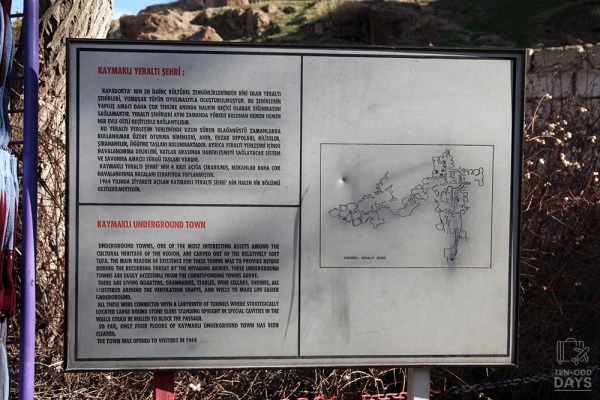
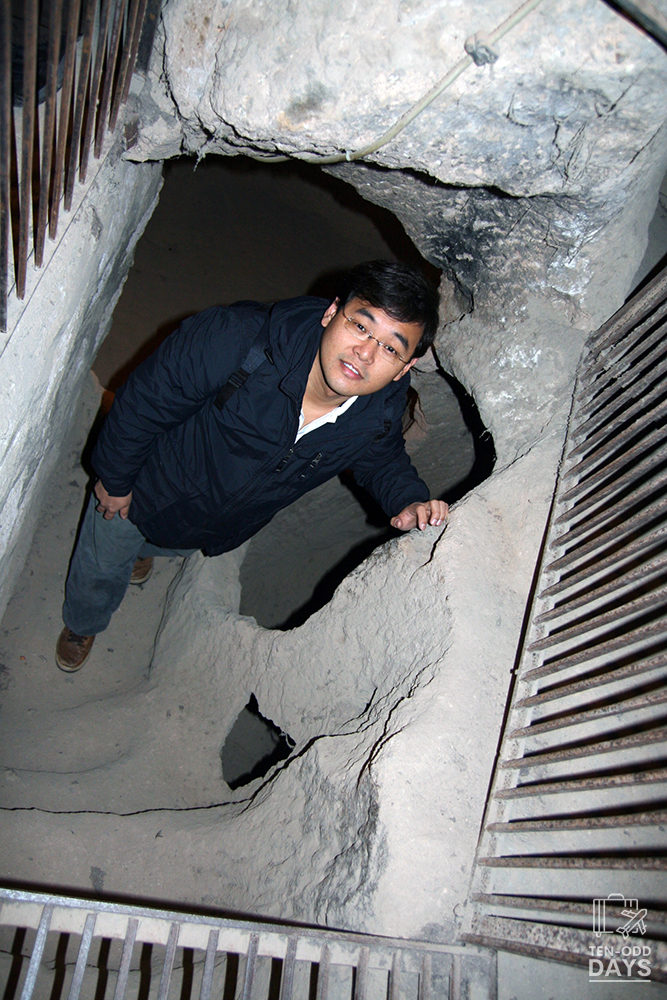
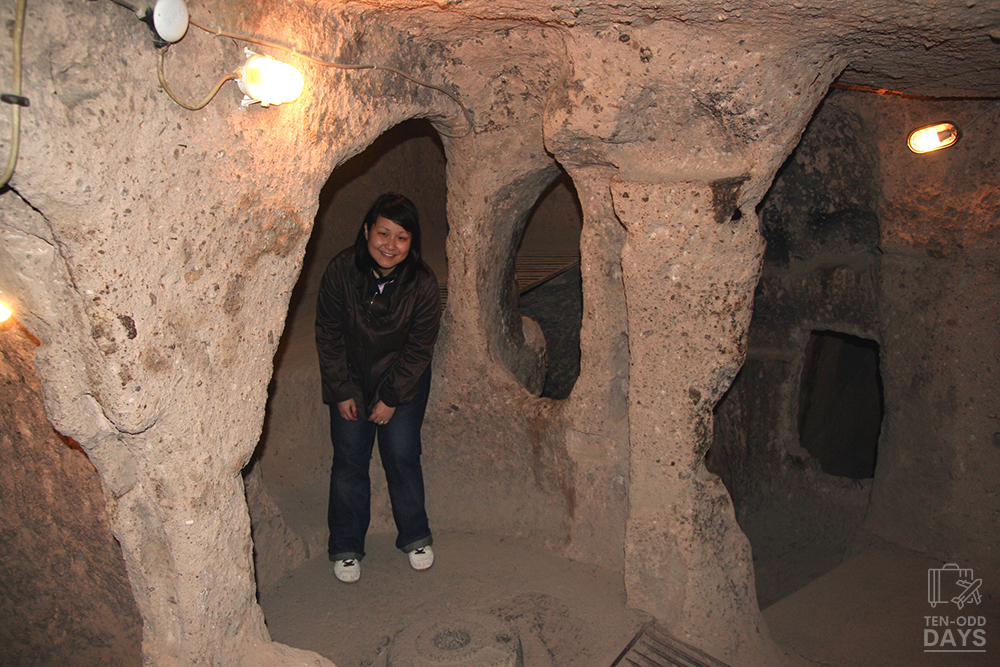
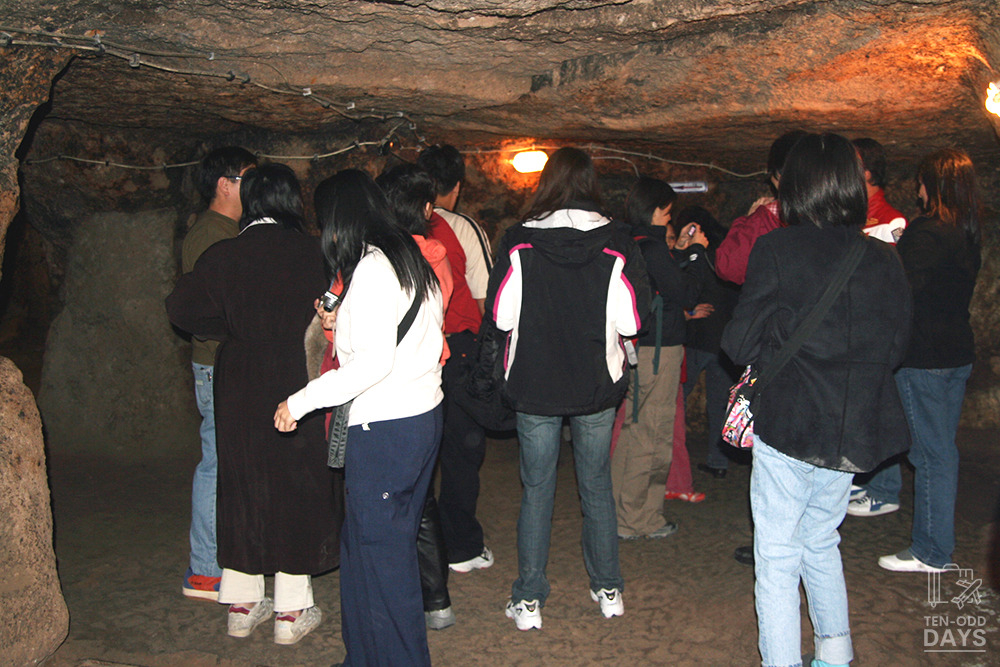
Of course, these houses were not sufficient to help the refugee Christians escape from their persecutors. Oftentimes, they also had to retreat into their subterranean hideout cities when they heard/saw hostile forces approaching. We visited one of several in the region – Kaymakli Underground Town.
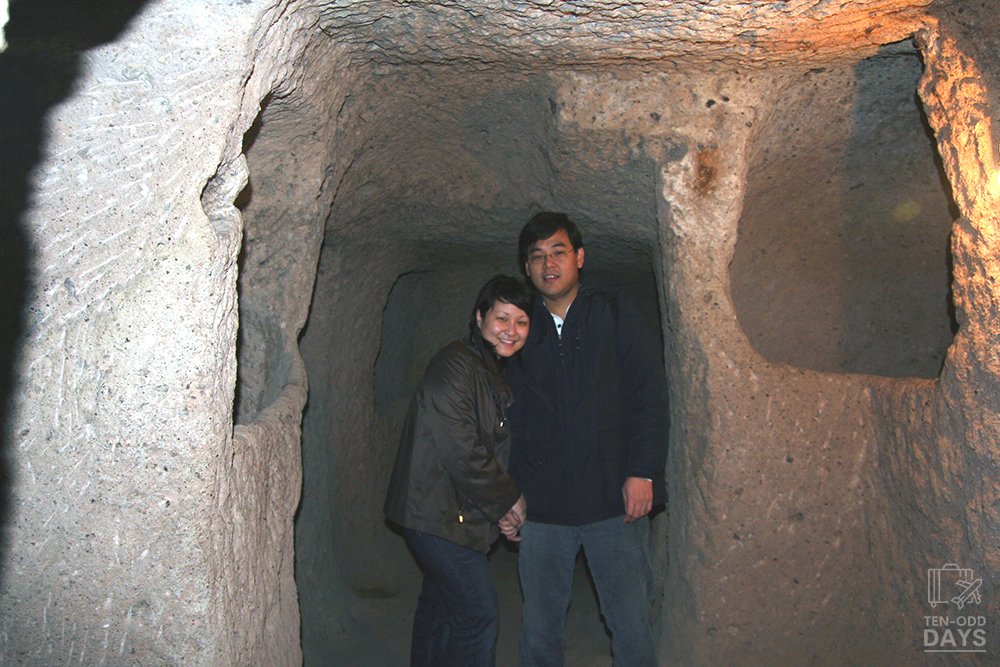
If Kaymakli was anything to go by, these underground towns were really not built for the clastrophobic or the giants that walk amongst us. Some areas were so small we could barely get through. It also reflected something that is universally true – grit and resilience in human beings should never be underestimated. In spite of the extremely harsh living conditions, life went on for the refugees. And in the face of adversity, they even built such remarkable underground towns! Nothing but admiration for them.
The last site we visited in Cappadocia before we left was to the Pigeon Valley. As the name suggests, it’s a valley where a vast number of man-made pigeon holes have been carved into the tuff. We have learnt throughout history, seldom did our ancestors do things out of boredom: the pigeons that lived in the valley in the past used to be trained as message carriers. In modern times though, this practice has gradually become archaic. Very few pigeons now still live in the valley although this stretch has become a rather popular hiking trail.
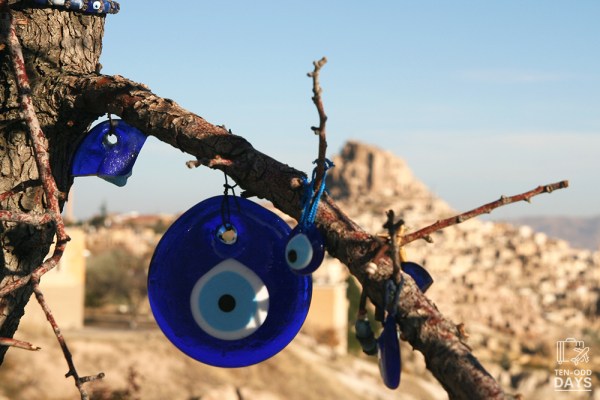
Throughout our tour of Turkey, we kept coming across this blue eye emblem. They come in the form of glass pendants, earrings etc. It is called the Nazar Boncuk, the evil blue eye. It’s supposedly an ancient talisman in the Middle East, that protects the owner/wearer from the bad energies caused by jealousy or envy toward the person. I truly wanted to purchase a small souvenir with the blue eye, but the mister insisted he wanted nothing of that sort anywhere in the house at all. He’s cautious (and perhaps superstitious) like that. And so, we left Turkey with none.
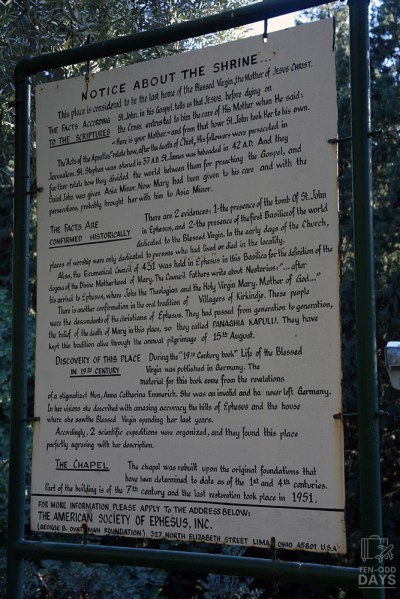
Ephesus (near Selçuk in modern day Turkey) was an important ancient landmark. Especially with respect to Christianity, since it was mentioned several times in the Bible. Even the tenth book of the New Testament was a letter from Paul dedicated to Ephesian Christians.
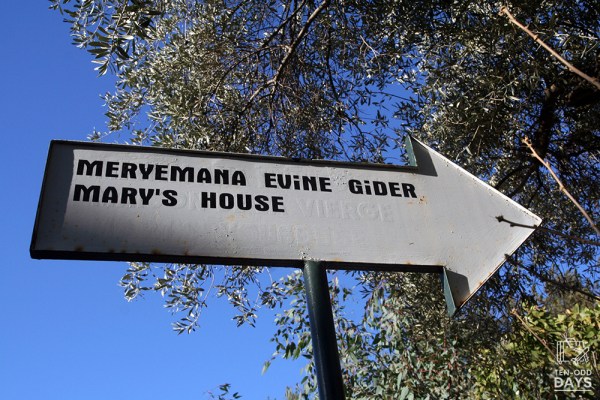
Given its significance, it was fortuitous then, that after traversing from the Istanbul Airport to the western coast of Turkey adjacent to the Aegean Sea, our first stop was to the House of the Virgin Mary. It was said that Mother Mary travelled to Ephesus together with St. John the Evangelist, whom Jesus Christ entrusted his mother to as his newly adoptive mother during his crucifixion, and it was here that they lived.
While the Catholic Church neither confirmed nor denied the authenticity of this house in which Mother Mary has lived and died, three Popes have visited this site namely: Pope VI, Pope John Paul II and Pope Benedict XVI. I would think the gesture alone speaks volume, to say the least, nevermind the official stance.
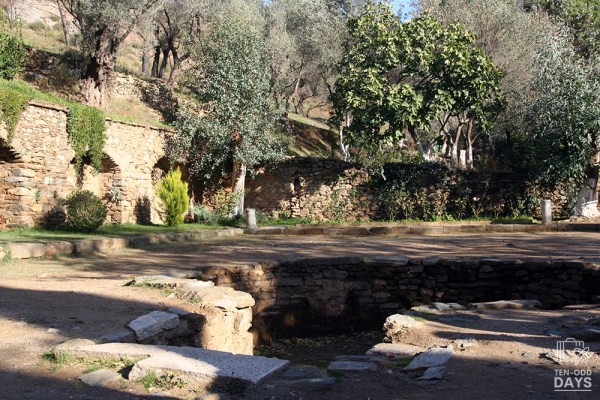
The ancient Baptismal font located near the entrance of the site.
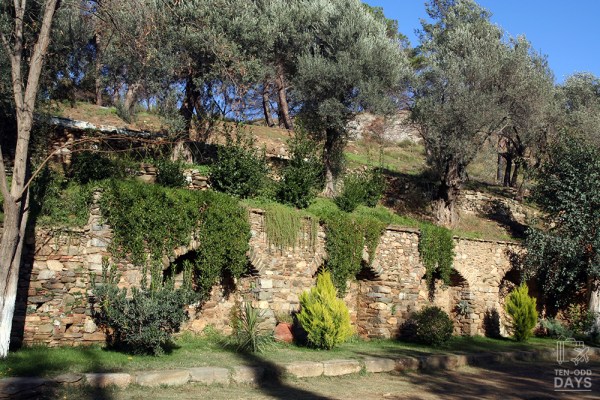
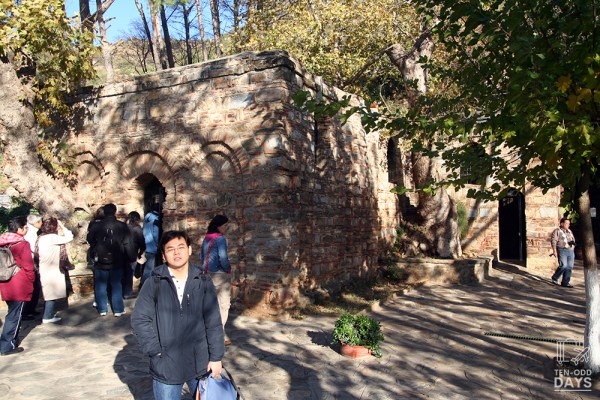
The House of the Virgin Mary was located a mere 9km away from the ancient site of Ephesus, and what greeted us in the early afternoon when we visited was a picture of serenity. Greenery surrounded the site, and we were rather surprised to find ourselves the only visitors to this rather significant religious site. And as with most ancient Christian shrines, the dried up baptismal font was located near the entrance and was the first sombre reminder that we have entered a religious site.
We walked a little way ahead to catch up with the group (we dawdled and lagged behind while taking pictures) and came to a halt as we patiently waited for our tour group mates to make their way into the nondescript stone house via a tiny doorway. It gave me a great opportunity to stray away from the group once again, to the chagrin of the mister.
None of the original furniture remained in the house, if my memory serves me well. The interior has been converted into a chapel, wherein by the time we entered, was almost void of visitors. I lit a candle, said a little prayer, and we made our way out.
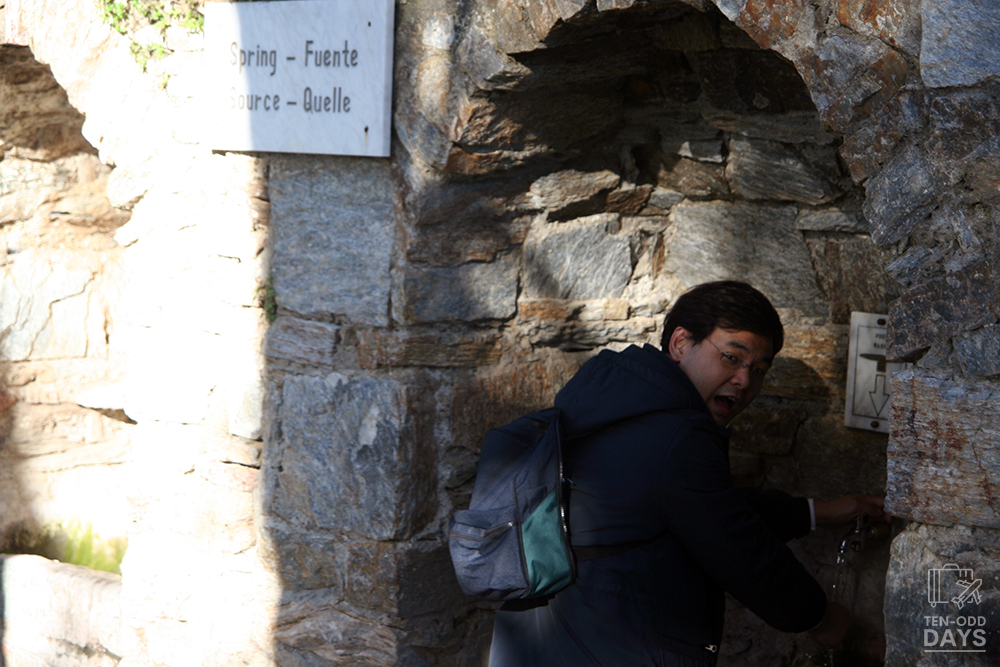
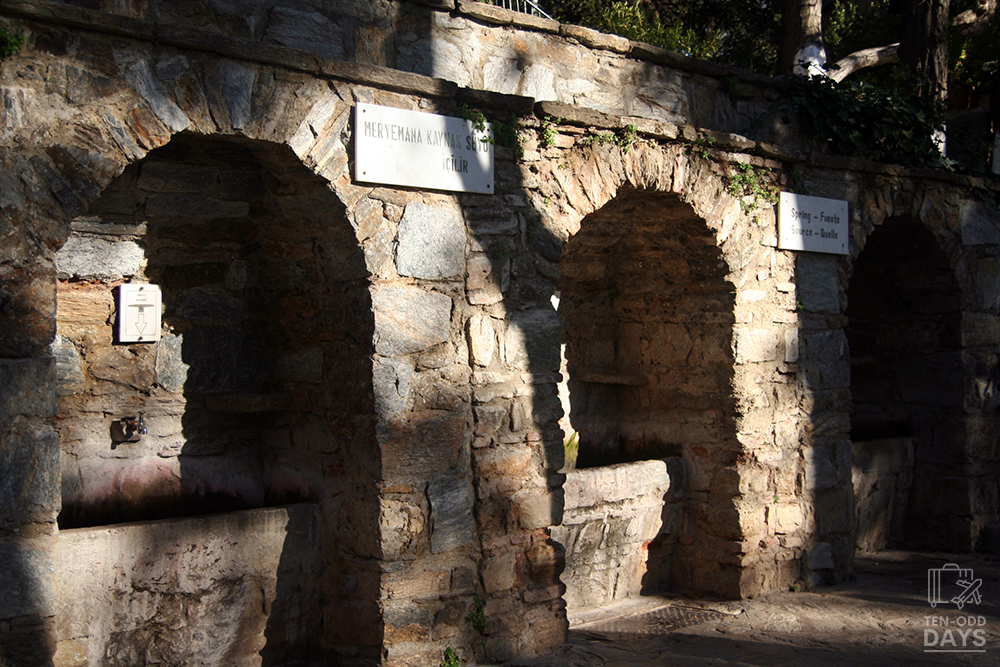
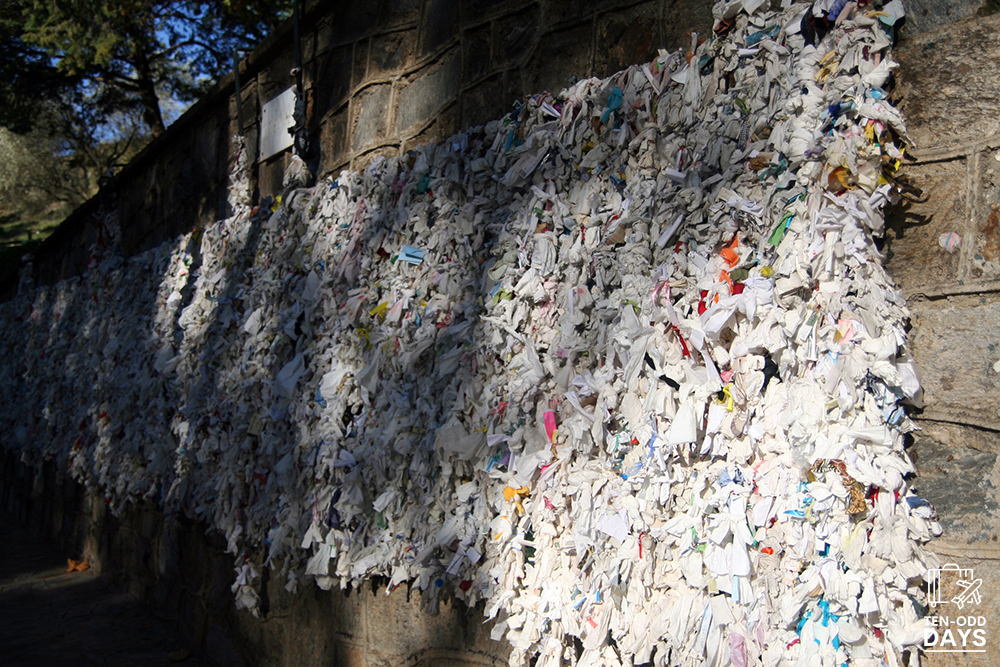
We explored the rest of the site, and came by the holy water taps and a wishing wall! There were three taps in total that released holy water. We didn’t know the difference between the three taps and randomly chose one like everyone else did. Water was cool and provided some respite from the afternoon sun, although in general the whole site was shady from the carefully pruned greenery that surrounded us.
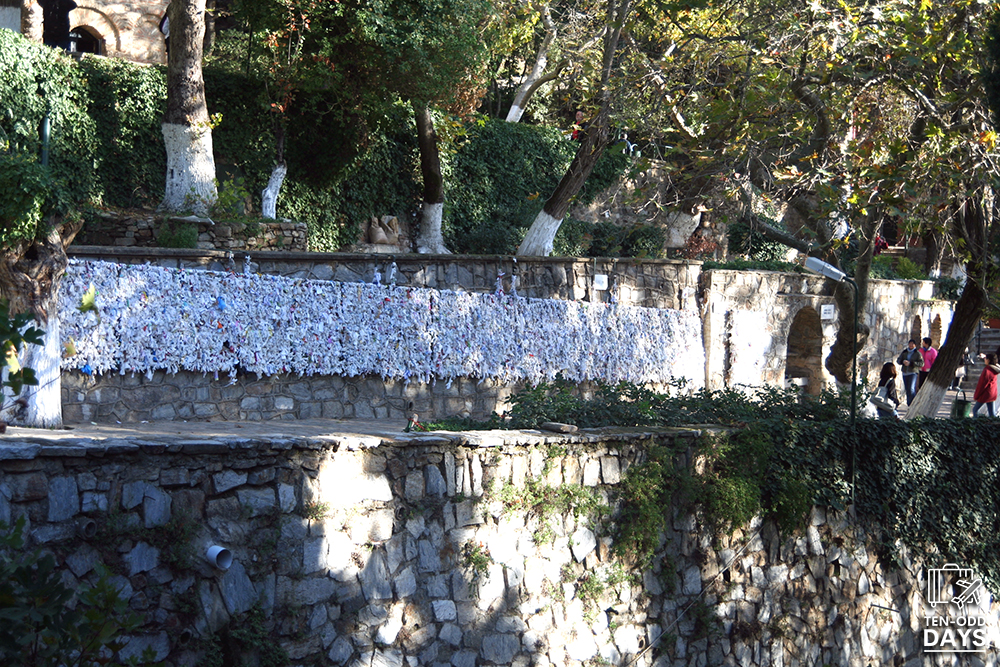
The wishing wall though, was impressive and a rather curious sight to us! We’d come across bridges and walls filled with love locks, or in Japan, Shinto shrines with trees tied with paper ‘bad fortune lots’. But this, a wall filled with personal possessions of wishes, was a first.
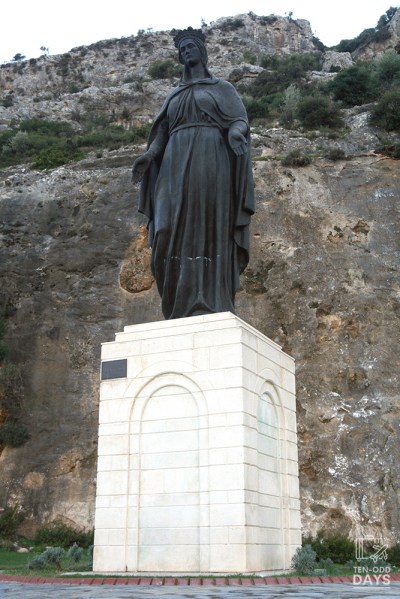
On our way back to our accommodation, we passed by this bronze statue of Mother Mary. To us, it really seemed like it was erected by the roadside, in the middle of nowhere. Yet I believe its location was not a coincidence, given its proximity to the House. We alighted from our coach, crossed the road to take some pictures of the statue of Madonna and Ephesus in the distance before embarking again, calling it a day.
In comparison to the tranquility we experienced at the House of the Virgin Mary, Ephesus was bustling with activity when we visited the following morning, despite the drizzle. It came across as rather strange that the former was skipped despite its proximity to Ephesus. We were glad we took up an organised tour that didn’t opt to skip it.
Ephesus was an ancient port city, and at a time, was populated with close to a quarter million of people, coming in a close second to most populous Rome. Excavations revealed that there was already an ancient human settlement in the area since the Neolithic Age. It went through numerous changes over the centuries that reflected a long human history and cultural traditions, from Hellenistic to Roman Imperial and early Christian periods.
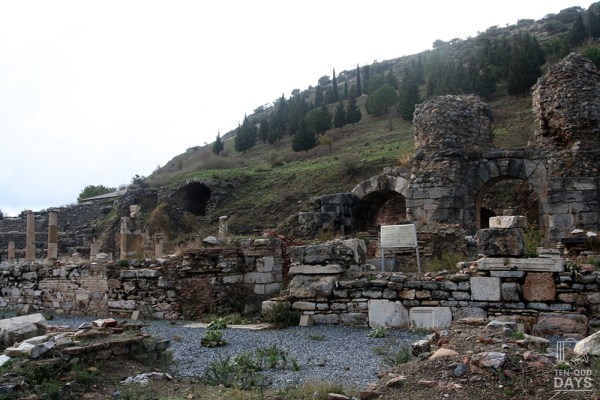
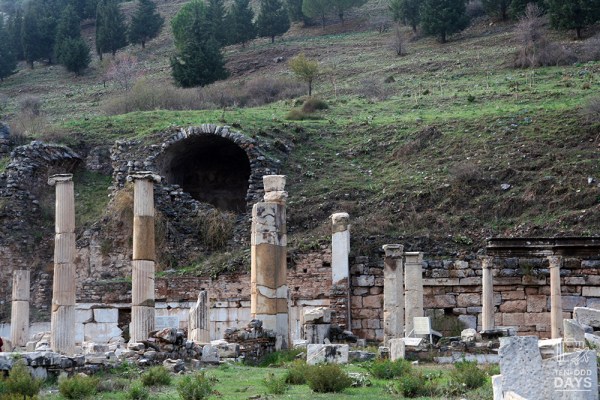
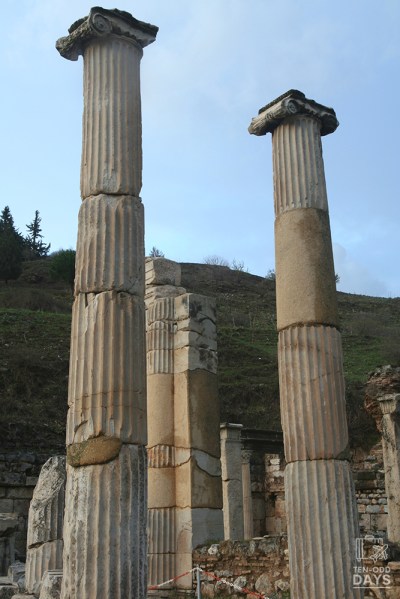
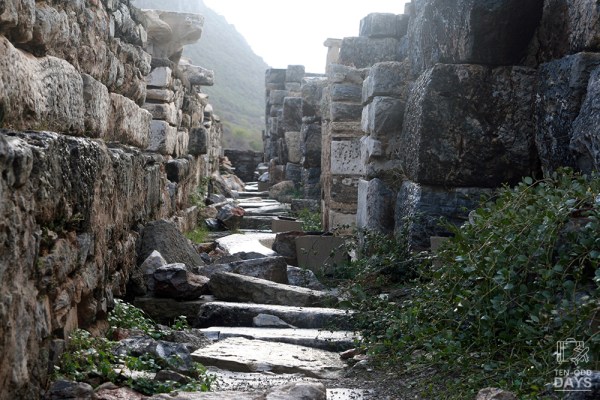
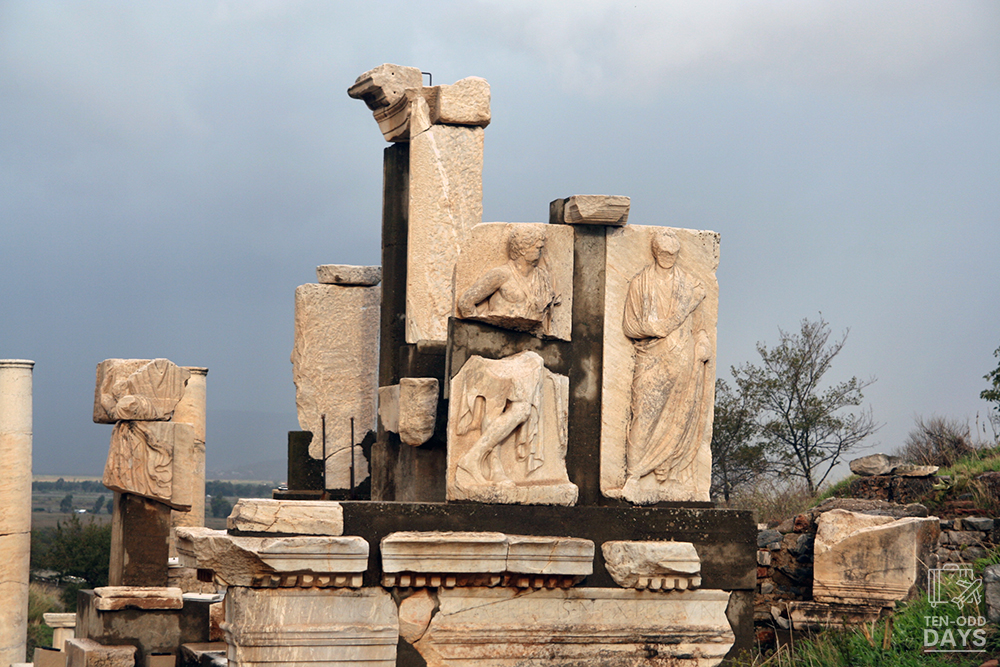
Piles and piles of rocks greeted us as we walked through the ancient archaeological site, and they would have been totally unintelligible to us if not for our local guide. To be honest, even with his explanation, we couldn’t quite visualise the past grandeur of this ancient site that was once deemed to be the most important Greek city.
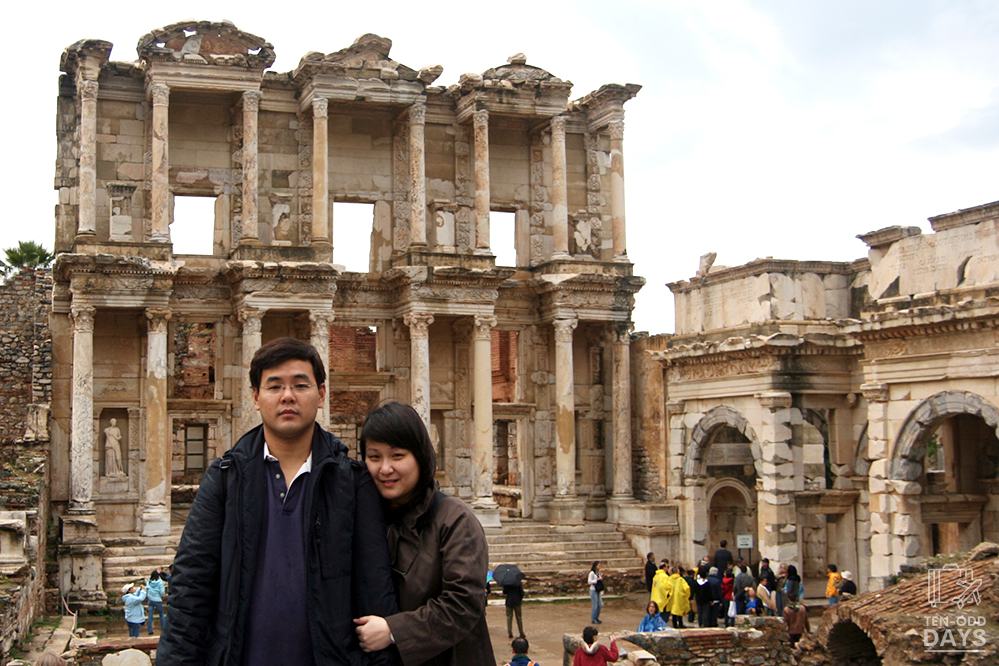
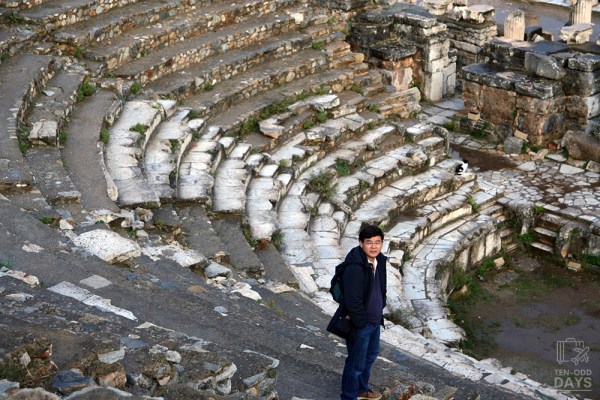
The mister was impatiently waiting for me to be done with picture-taking. Incidentally this picture turned out to be one of the most iconic pictures I’ve taken on this trip.
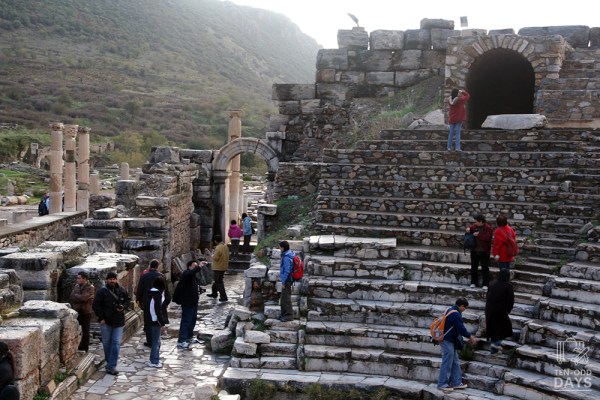
It was drizzling and we had to tread slowly over the slippery rocks, careful not to slip and fall. And finally, we came to a site that didn’t require too much of our imagination. All of us could tell that it was an amphitheatre of sorts, and true enough, that was the Odeon, a small theatre with a capacity of 1,500 spectators.
Back in 2007 when we visited (I’m really only writing this post in 2021, 14 years later), we were stepping all over the ancient theatre. It wasn’t disallowed. I wonder if things have changed now, in order to preserve the site. Degradation of archaeological sites due to natural causes through the course of time is a harsh reality all archaeologists fear and deal with on a daily basis. They really don’t need further destruction due to human negligence.
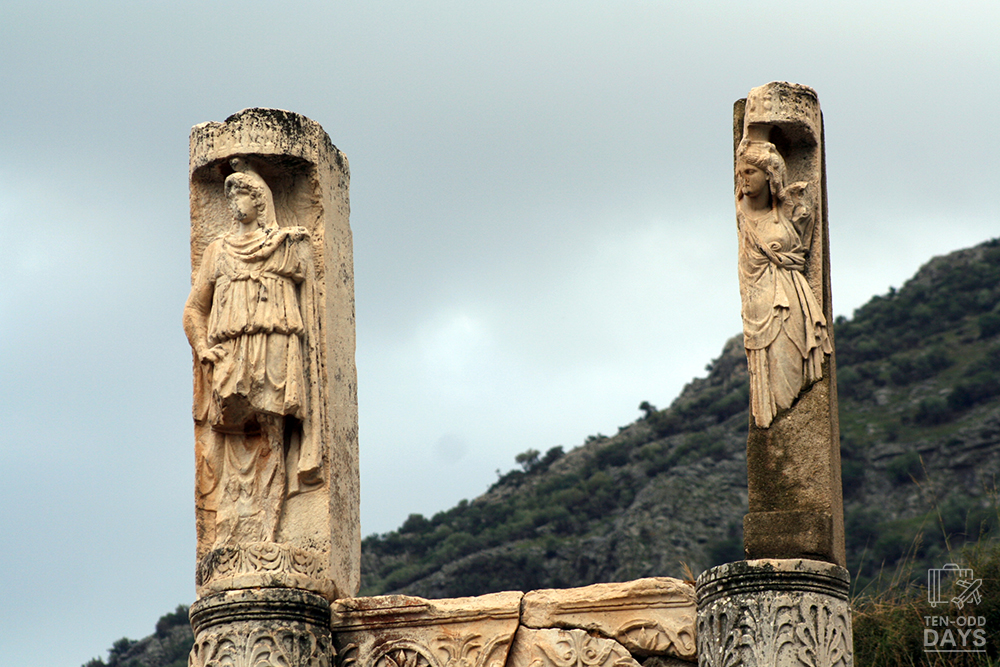
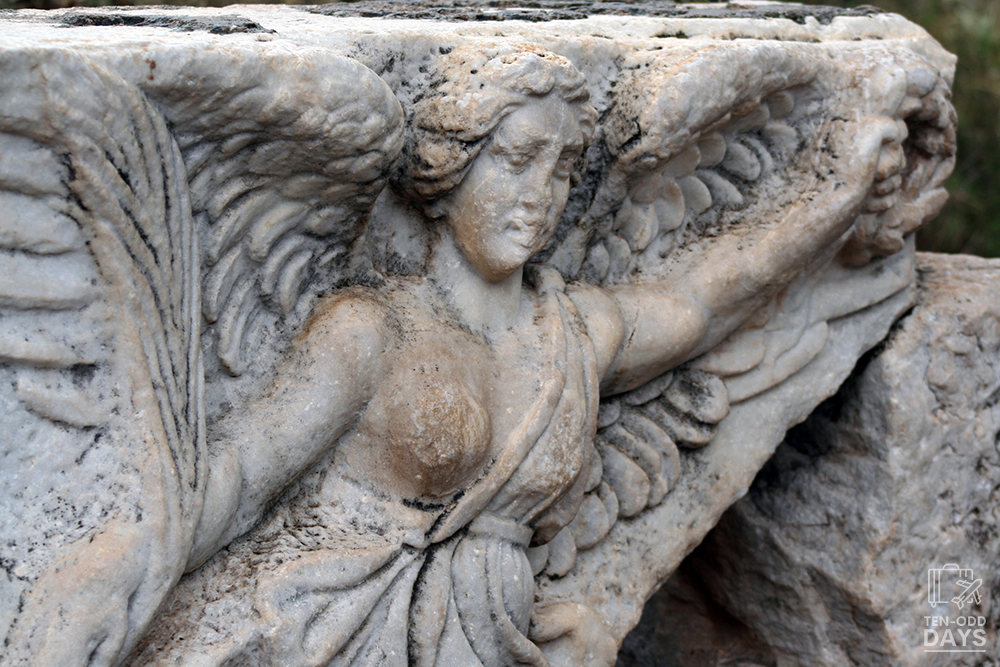
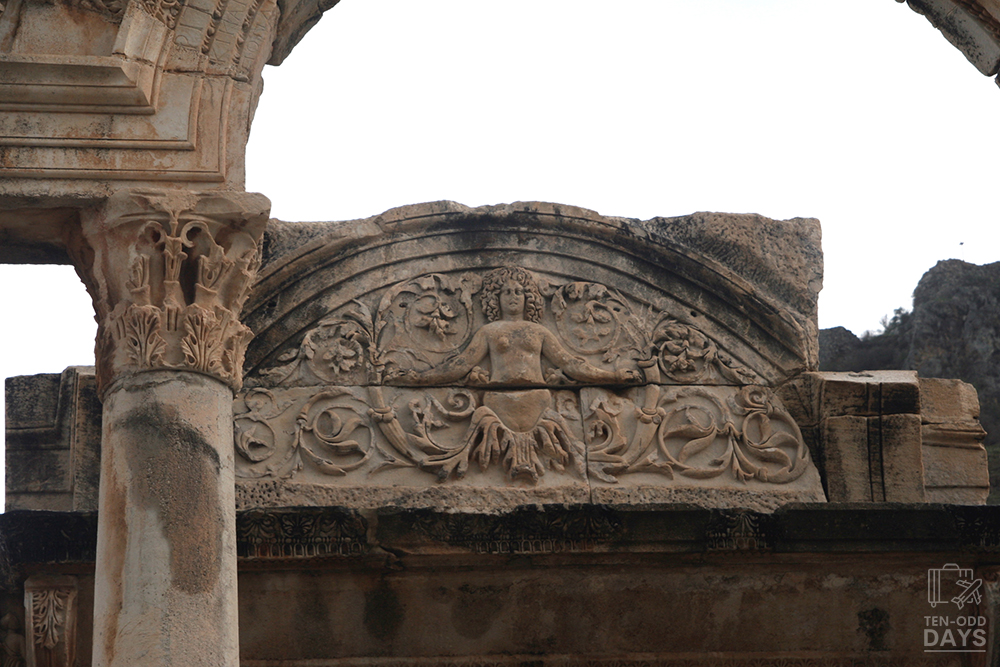
More ruins along the way as we meandered through the site. This round, more carvings and ornamental stones than random stones stacked on top of each other. In fact the white stone carving is one of the Greek goddess Nike who personified victory. Call me ignorant – I didn’t know there was a Greek goddess named Nike! 😮
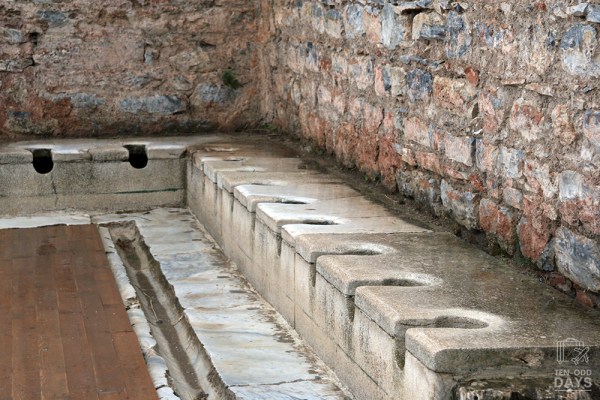
And if you think you know what this is, you are probably right. It was the public latrine and everyone recognised it at first glance. 😆 We discussed at length on whether we would use it. To be honest, I’m really not so sure… given a choice, I would rather go home.
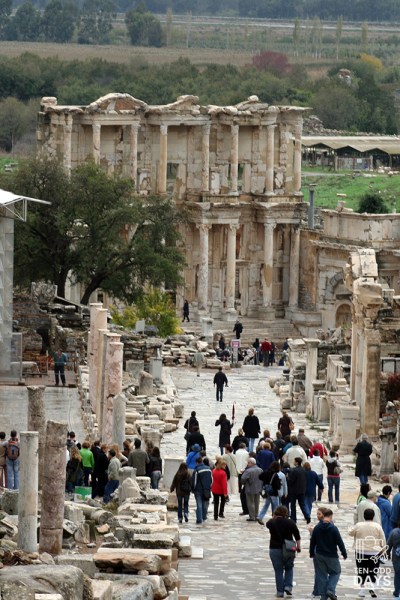
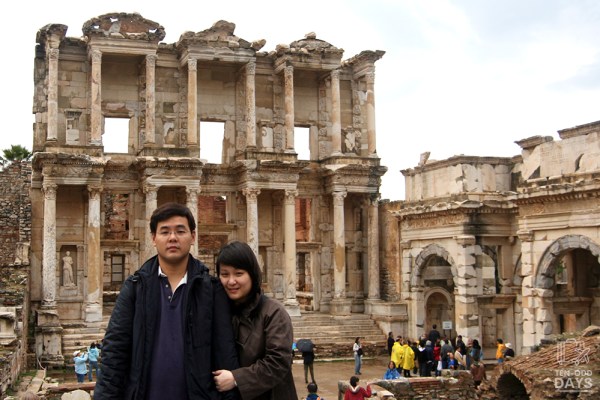
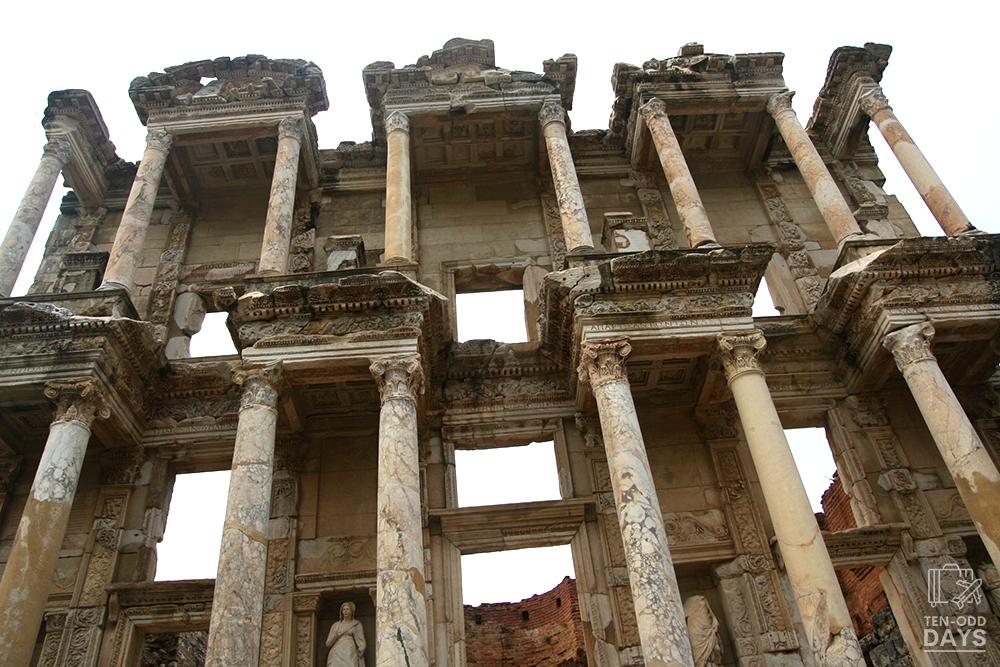
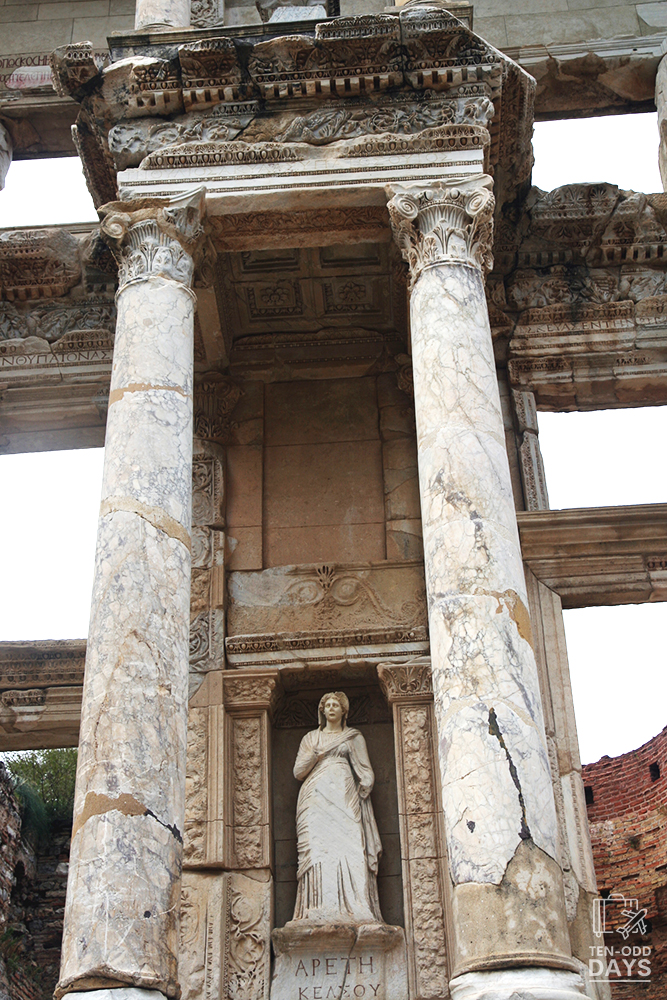
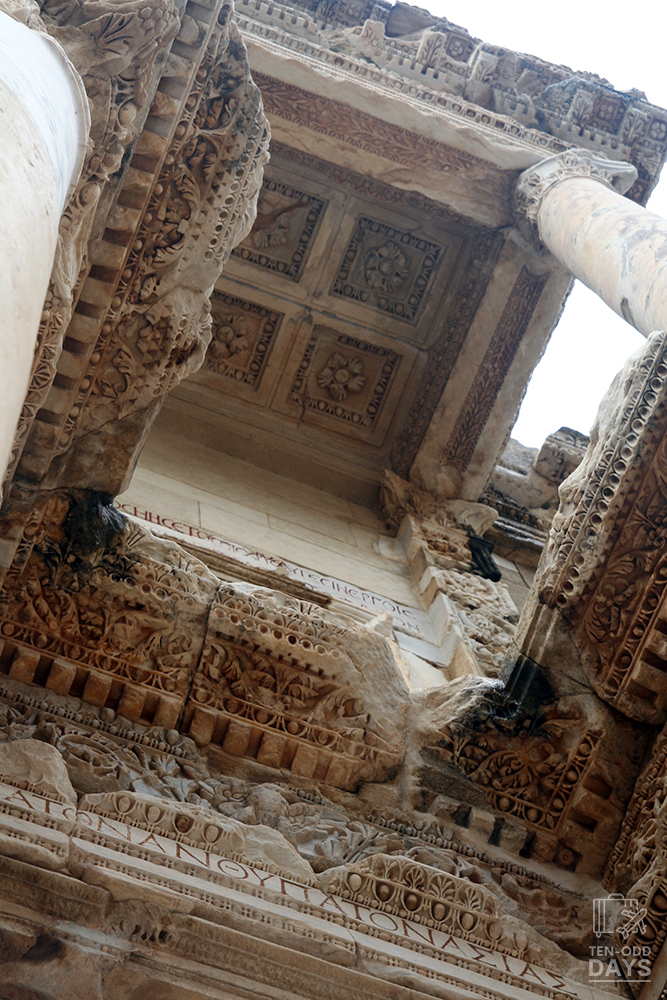
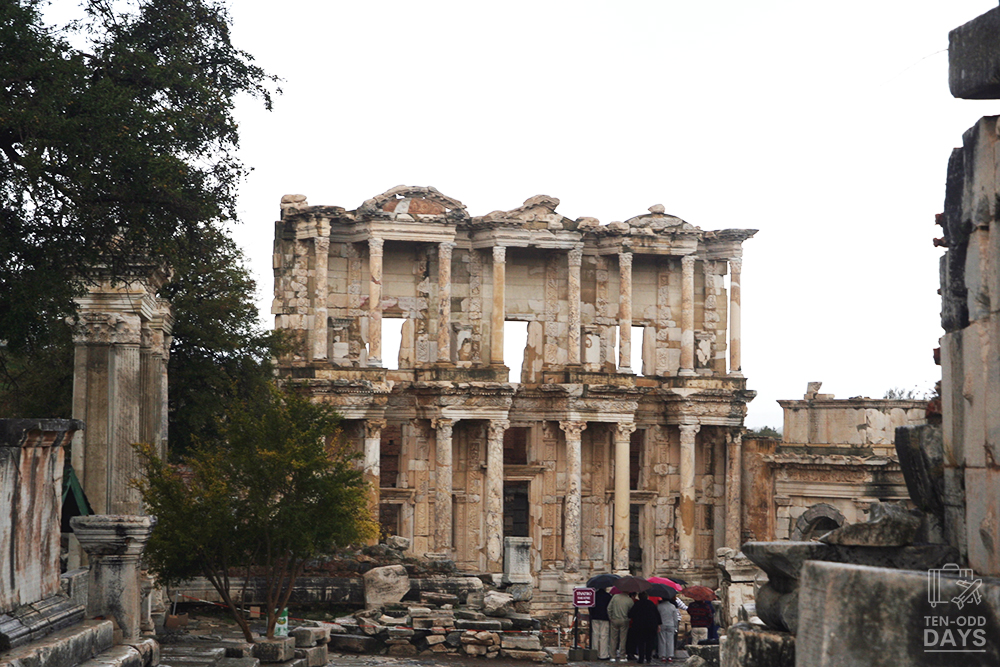
And at long last, we arrived at the Library of Celsus. This library was built at the behest of Gaius Julius Aquila, a consul in imperial Rome, in honour of his father. At its height, the library was believed to have contained a repository of as many as 12,000 scrolls and was said to be the third largest library in the Roman empire, behind Alexandria and Pergamum.
A fire or earthquake was believed to have destroyed the interior of the library and its contents in the 3rd century. The facade withstood the destruction, only to be destroyed during an earthquake a few centuries later. It laid in ruins quietly over the centuries until 1970 when a team led by a German archaeologist commenced a reconstruction campaign. Between 1970 and 1978, the facade of the ancient library was carefully reconstructed either from the pieces found at site or copies made from some pieces that were already acquired by museums. It was by and large a vastly successful reconstruction project, if you ask a layman like me.
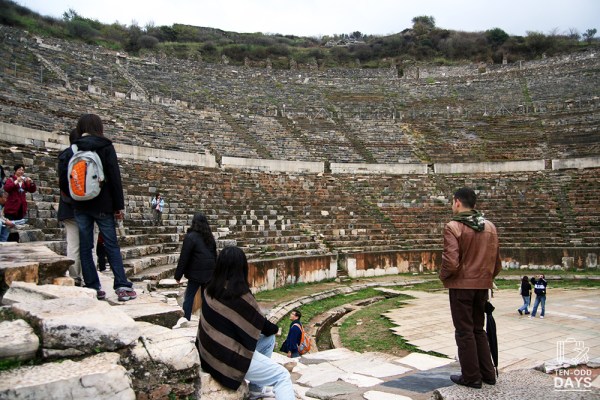
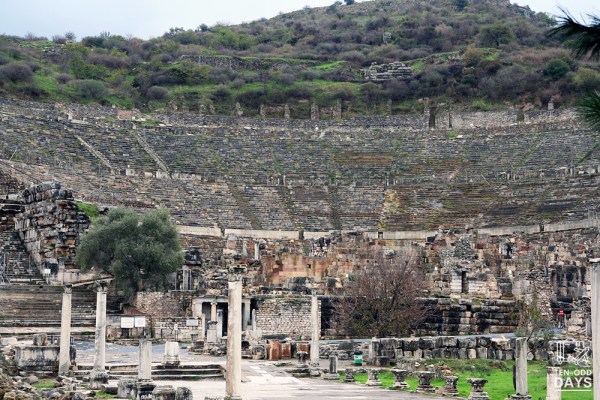
And the last monument we arrived at before leaving the archaeological site was the well-preserved Grand Theatre of Ephesus, first constructed during the Hellenistic period and later, to be modified several times during Roman times. When it was fully functional, this theatre could hold up to some 24,000 seated spectators. With the Grand Theatre as our end point, we had some time to explore the area. By then, crowd at the archaeological site had visibly thinned. We were quite possibly the last group of people to clear the site for the day.
Leaving you with a picture of how impressive the Grand Theatre looked from afar as we departed.
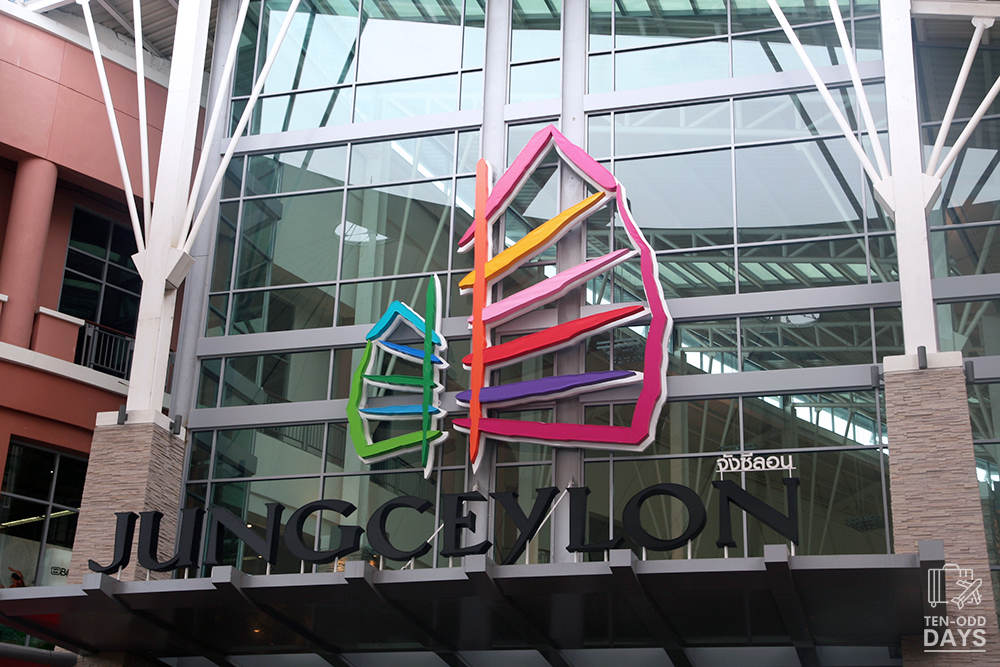
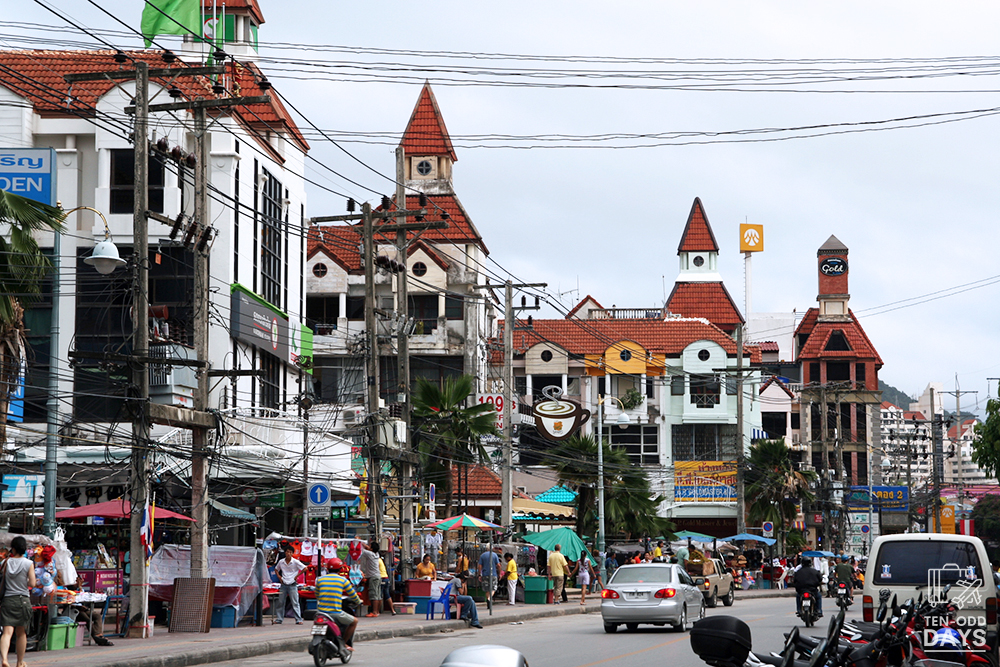
Phuket has changed a lot since we last visited. Several large shopping malls now replace the low-rise shophouses of the past. One of these mega shopping complexes is Jungceylon, which I’m fairly certain was not in existence that last time we were there. We were not really looking forward to shopping in Phuket (there’s nothing much to buy unless you are into sarongs, beach wear or swim wear) but we were running out of things to do in the day. Nights in Phuket were much more exciting and we had no lack of activities to occupy us.
It was a bright and sunny day. After shopping at Jungceylon and having taken lunch, we slowly walked our way back to Patong Beach. A long, sweaty walk but an interesting one nevertheless. Patong is a place that thrives at night, but is mostly sleepy in the day. We didn’t see many people, much less tourists, walking around. Most must have gone island-hopping or were sleeping in after a wild night of booze and fun. Not that we were complaining. Without throngs of tourists, we saw how the locals went about their daily lives without trying to be overly friendly in attempts to secure business deals. Less conditioned to be agreeable, more real.
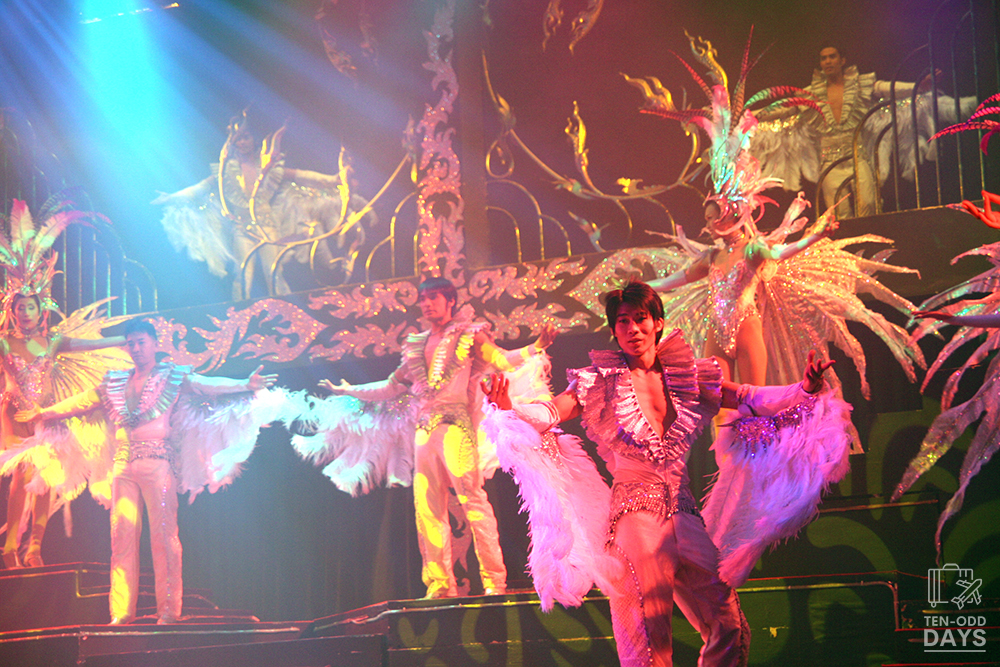
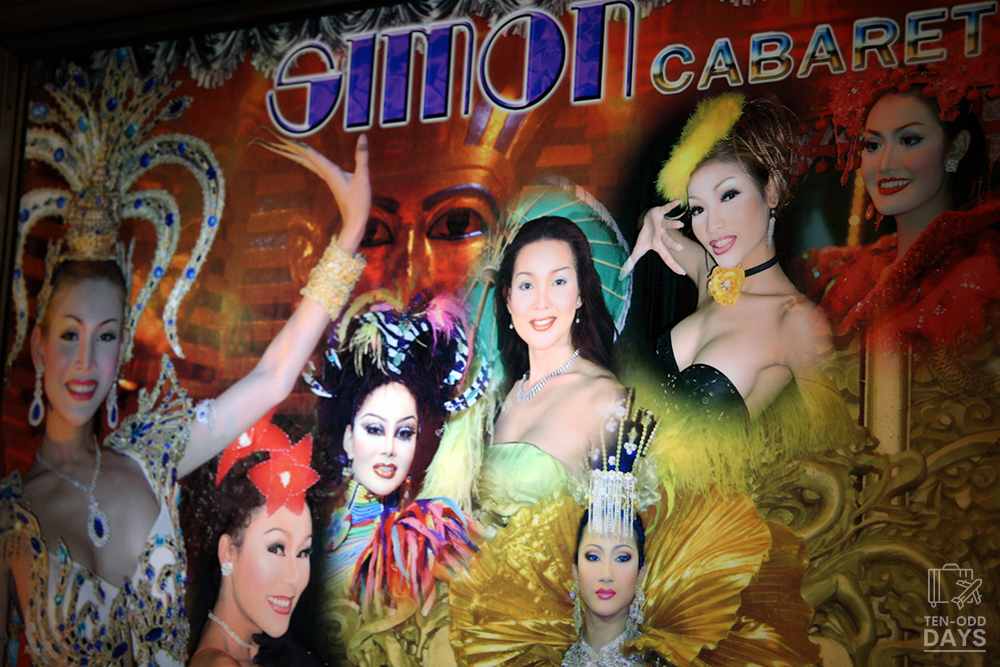
Come night time, we chose to go for a show at Phuket Simon Cabaret. In case you are unfamiliar with cabarets in Thailand, in general they tend to be catered for mature audience and the ladies in the shows are not born females. All of them. Especially the attractive ones. Most, if not all of them would have undergone sex reassignment surgery.
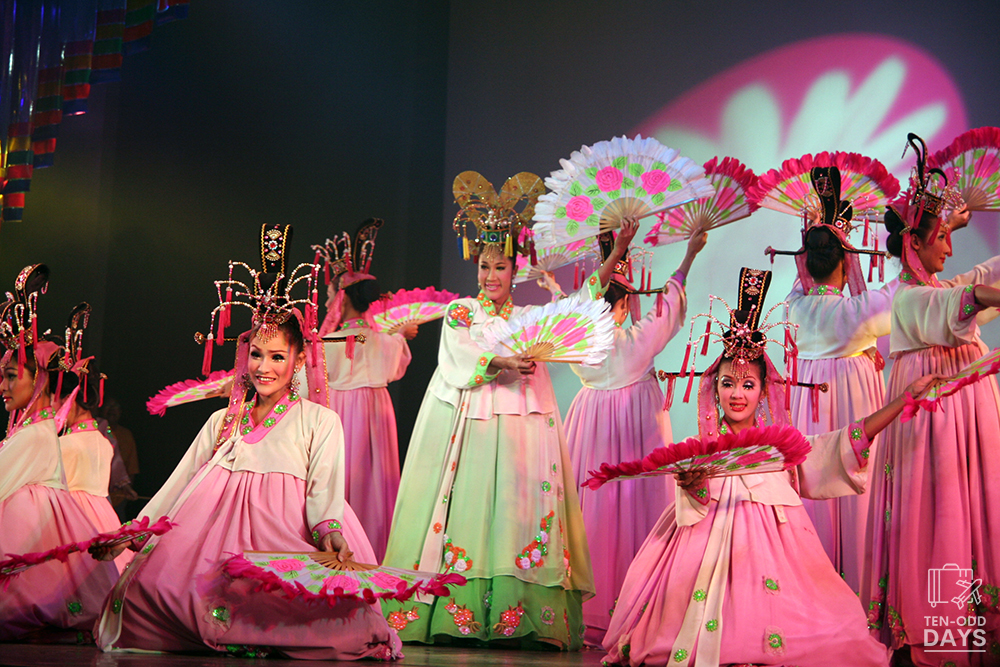
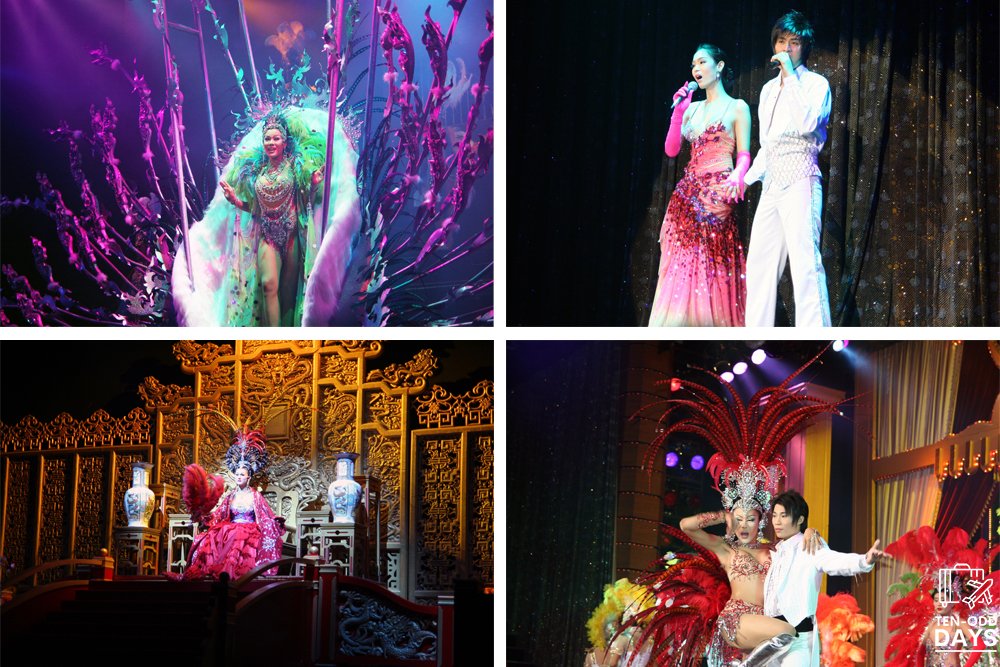
The show was entertaining (though cheesy at some parts) and throughout the show, I was simply amazed at how pretty some of the ‘ladies’ looked. But there were also some who just looked wrong. I don’t wish to make a stand on sex assignment surgeries here and now but I do think it is very sad if an individual chooses it so that he could be part of a cabaret as a performer just so to feed the family. It’s one thing to claim that you feel like a woman when you are born a man, but it’s an entire different issue when you are born like a man, feels like one, but forces yourself to become a woman due to circumstances. I suspect the latter happens more often than we care to admit. Or that there is simply a large concentration of men in Thailand who feel like they are women and want to live as one. Statistically this just doesn’t make sense, doesn’t it?
Whichever the case, these ladies have my utmost respect. They made their choices and are at least making a decent livelihood being part of a cabaret.
If watching cabarets is not your cup of tea (as I have realised is not mine), you would most likely not be interested in Tiger Shows as well so skip that. There are other family-friendly shows like Phuket FantaSea, which we had already watched on our last trip. Otherwise just go bar or pub-hopping. Or have dinner on a Chinese junk. And round up the night with a Thai body massage. Numerous options out there.
The last time we visited Phuket was 4-5 years ago, before the tsunami tragedy struck the lovely island off the South-West coast of Thailand. We had wanted to visit earlier but the opportunity just never presented itself. Not being huge fans of beach resorts (because the mister doesn’t swim and the missus is not a particularly strong swimmer) meant that given a choice, we would usually rather be elsewhere.
This is not to sweepingly conclude that Phuket has nothing to offer to non-fans of water activities, because Phuket is anything but. While we do not go on island-hopping excursions or spend our time sun-tanning by the beach, Phuket is our go-to destination for cheap and good seafood. It is invariably also our top choice when we cannot afford the time for an extended trip or don’t wish to spend too much on a vacation.
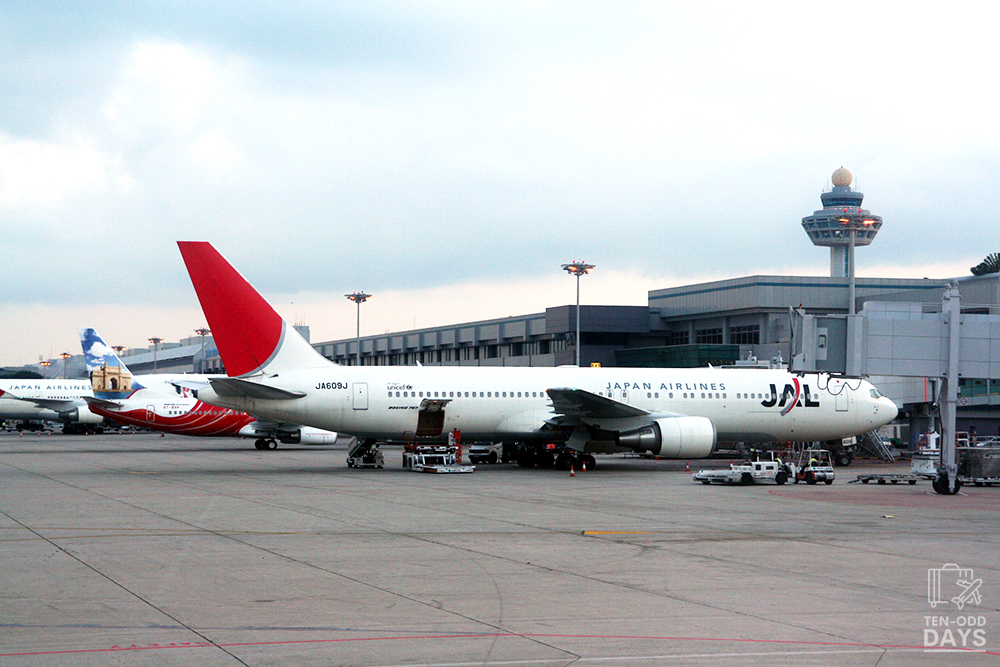
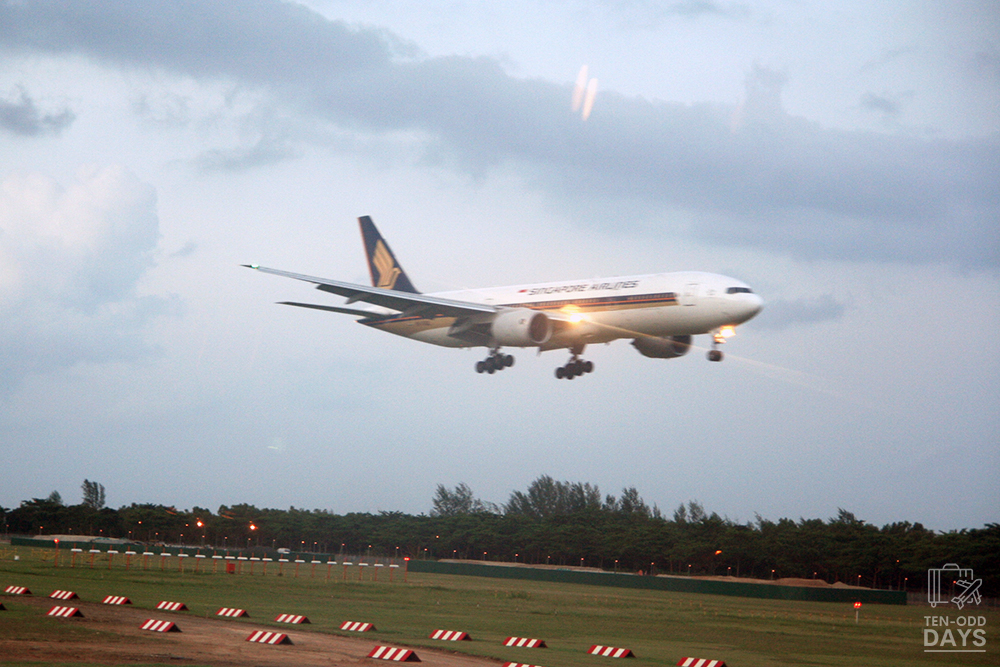
It was only our 2nd time on a budget airline. The experience hadn’t been too bad since given our small stature, we do not need much legroom. In-flight entertainment wise, we could most definitely do without for a short 2-3 hour flight. Longer than that, I think I will probably bore to death though. 😆
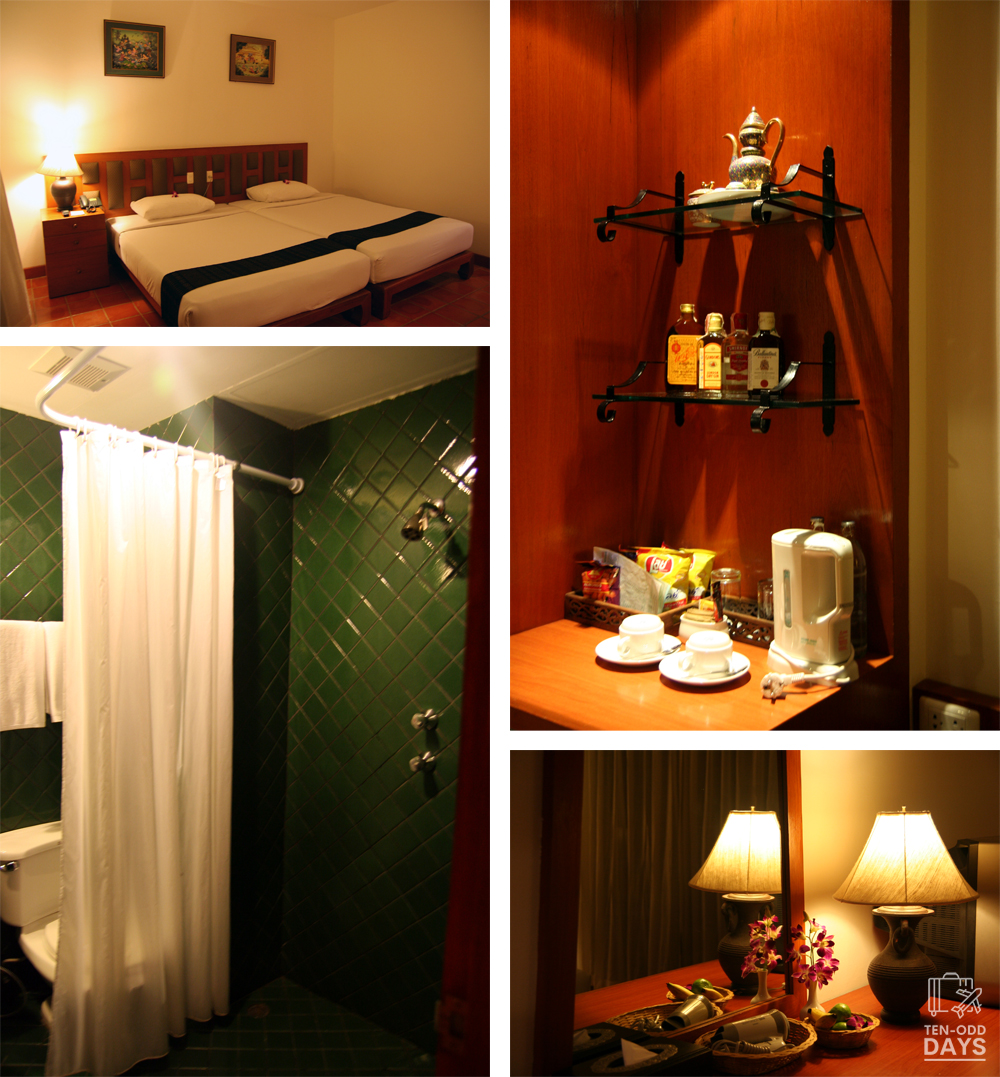
Instead of going for the reputable hotel chains, this time the mister took the suggestion of one of his colleague’s to stay at a hotel he frequents whenever he travels to Phuket (which is like once every quarter!). At first glance, the hotel room wasn’t too bad but it didn’t take me long to find out that there was an issue with the drainage system; the room almost flooded when I took a shower because the drainage was so slow. And I have to qualify that I’m not one of those ladies who takes a 30-minute shower. Needless to say, I was rather unhappy with the mister’s choice.
While I’m not sure if all other other rooms are the same, or if the hotel improved the drainage system over the years, suffice it to say that I would not return to this hotel. Can’t even if I had wanted to, because I cannot recall the name of this hotel even if my life had depended on it.
On to the things that made me happy on this trip – the food. You might have already realised from the other blog posts that the mister and I are quite the foodie. And surprise surprise, despite his fussy palate, the mister actually loves Thai food.
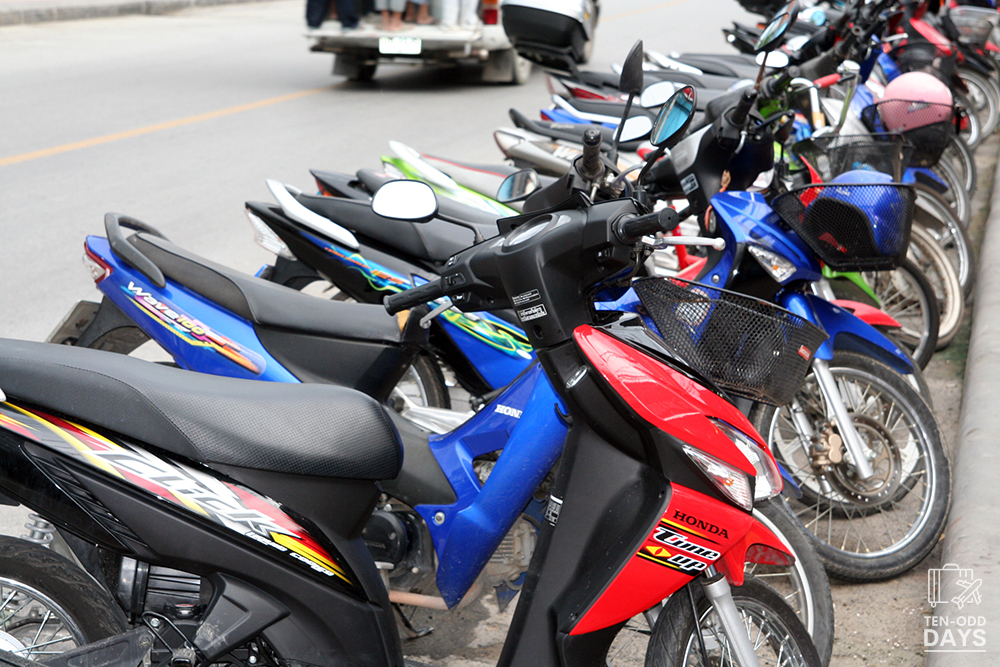
Patong Beach is always our choice because it’s the most vibrant of all the beaches in Phuket, it’s accessible and food is easily available. If you are one of those who prefer to stay in the luxury villas at the quieter beaches, it is still rather convenient to get to Patong Beach either by renting your own bike or car, or flagging down a tuk-tuk. As a general rule, we do try not to drive overseas and diesel-driven vehicles make me nauseous so as far as possible, we walk everywhere when in Phuket.
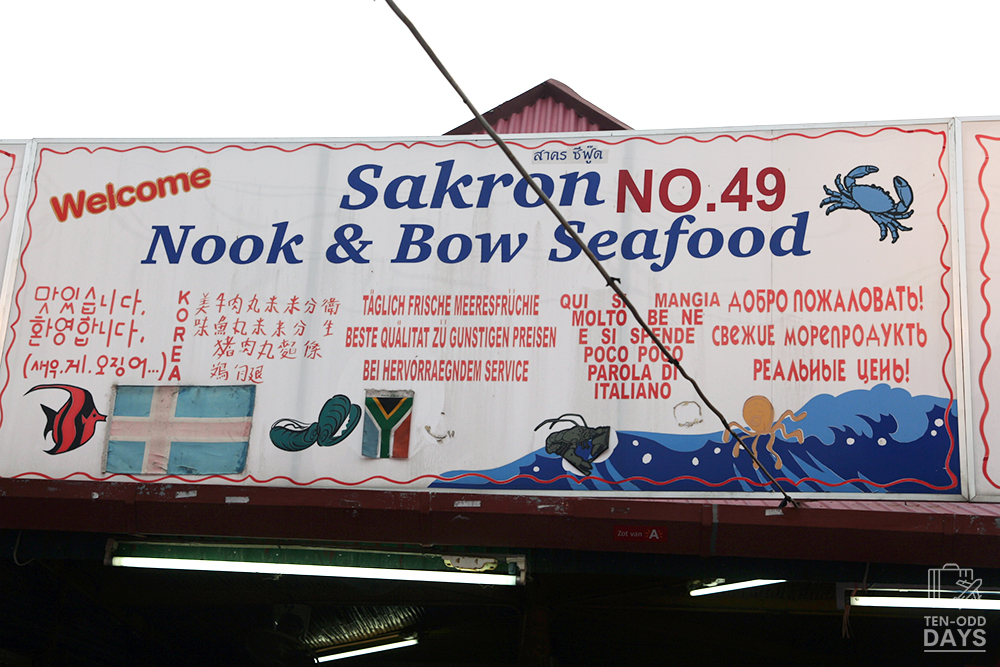
As for seafood, it is not necessary to spend loads of money patronising the expensive-looking restaurants along the beach. But we are way too careful to randomly choose and settle for a street-side stall. There are cheap and rather hygienic options one or two streets down (parallel to the beach), we discovered on our first trip to Phuket years ago. Collectively, it’s like a big food centre with about 8-10 seafood stalls and clearly demarcated tables and chairs for each stall. We’ve been returning to this place every single time we revisit Phuket and our stomachs were always fine after dining there so I guess they passed the hygiene test.
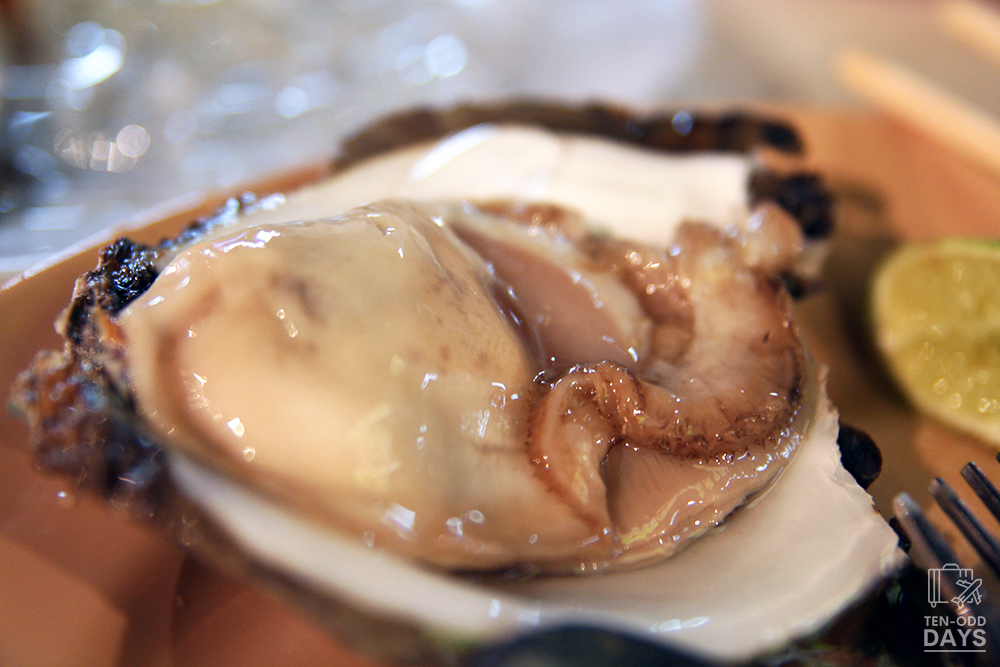
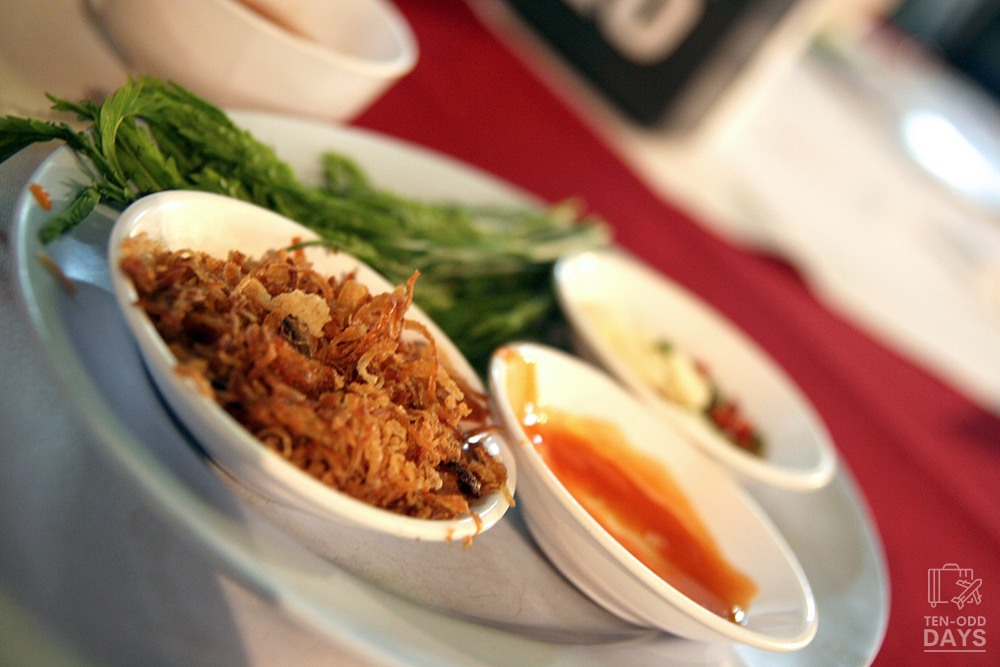
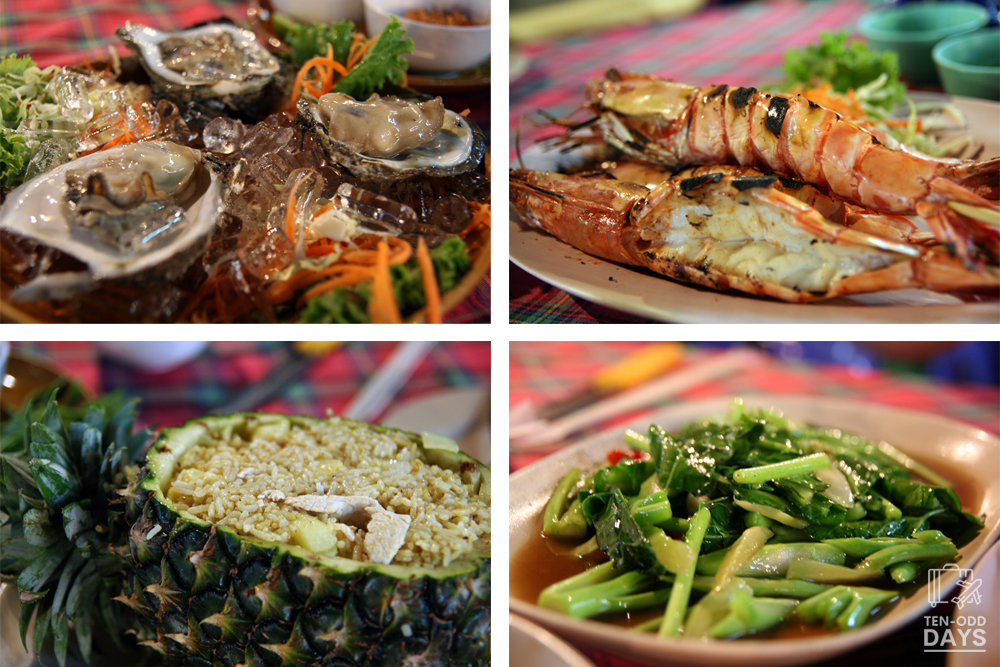
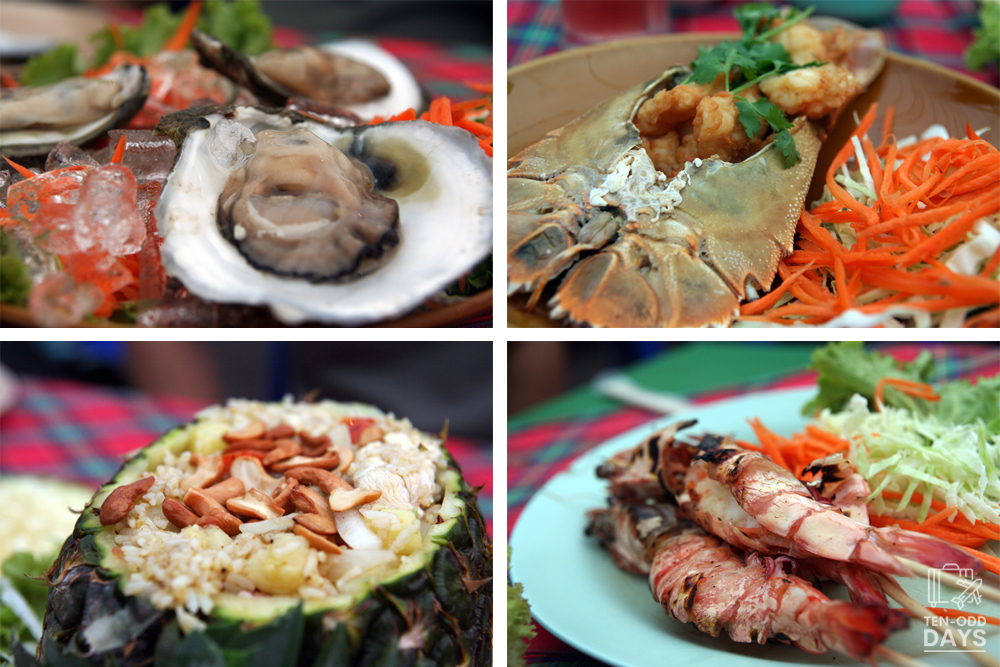
The oysters were as fresh as they could get. Perhaps not as sweet and succulent as the ones I had in France but they were close enough. The way the Thais serve their fresh oysters are quite different from the way I am used to; a plate of 4 condiments was served to us but we couldn’t quite figure how they go with the oysters. I mostly just slurp them up with the chilli sauce that most resembled tobasco sauce.
We went back to the same place for dinner twice more when we were in Phuket. Clearly we are not very adventurous folks. But in our defence, there are close to 10 stalls we could try. And there is a large variety of seafood available. Only that we ordered almost the same dishes every single time. We are boring like that.
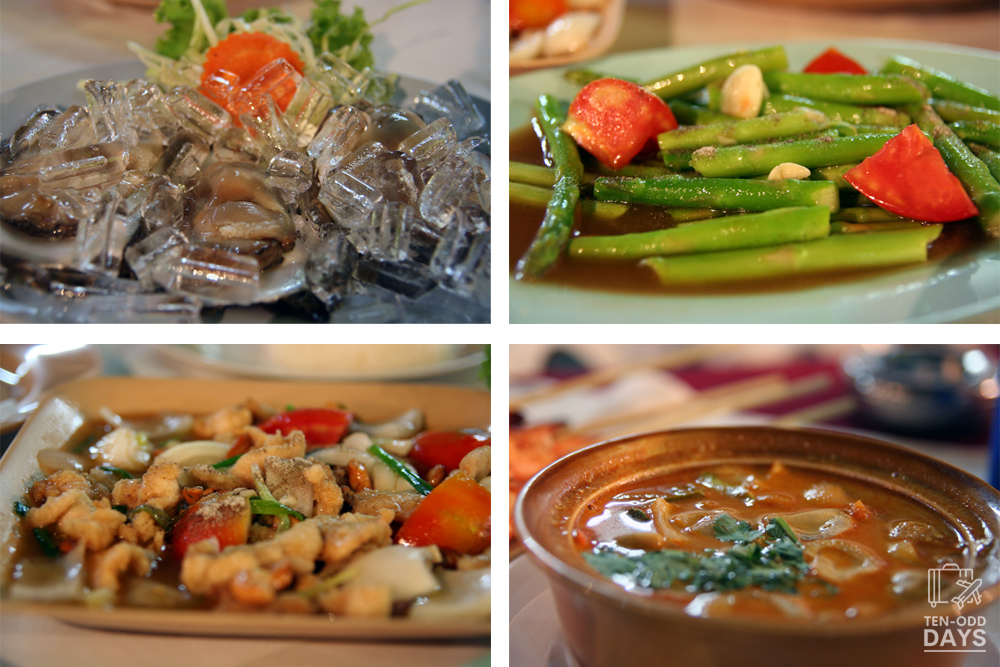
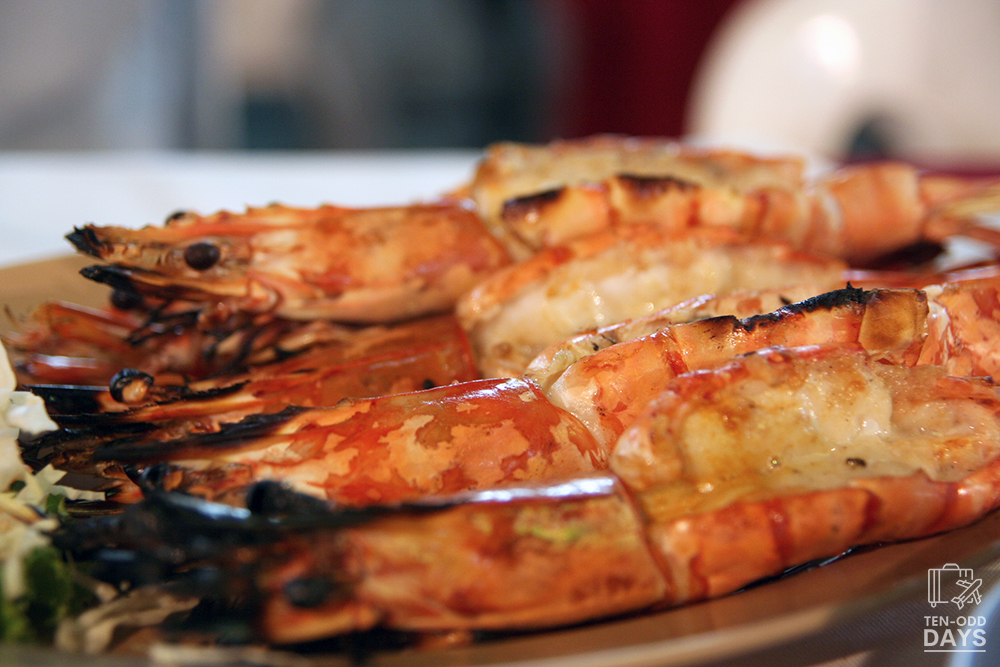
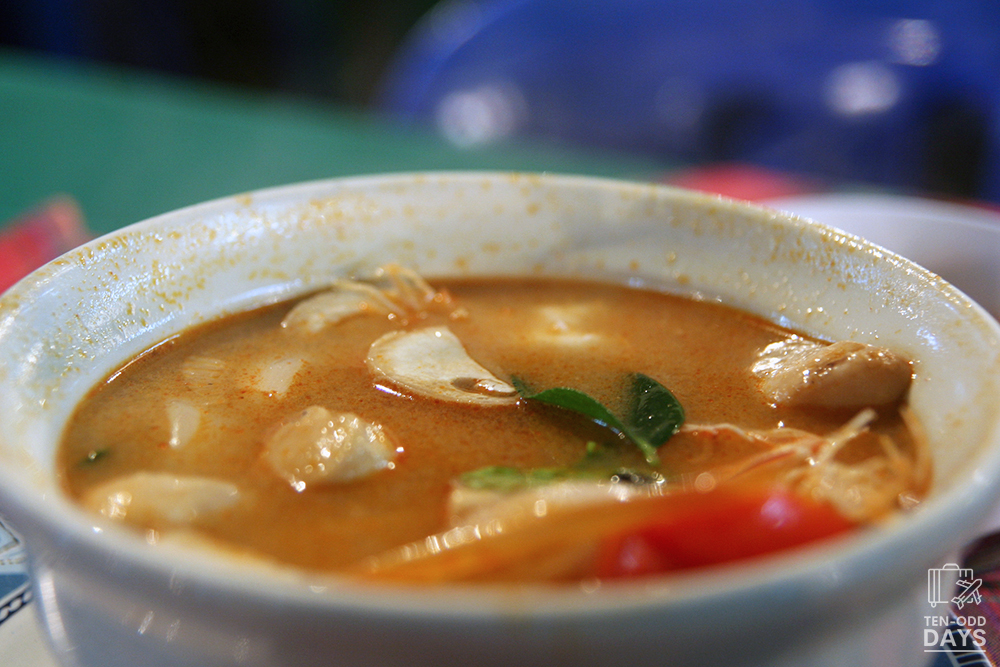
The second dinner at our favourite place, we had pineapple rice. And ordered the usual ‘suspects’ – fresh oysters, barbecued prawns, vegetables and last but not the least, Seafood Tom Yam soup. We learnt something about big King prawns: though larger their meat don’t usually taste that good in comparison to smaller Tiger prawns. The next day, we switched back to Tiger prawns. Lesser meat but tastier for sure. The soups… no complaints. They were as authentic as they could get. We don’t get such tasty Tom Yam soups in Singapore. Not even close.
We left the big birthday meal to the last night in Phuket. And since there really wasn’t much shopping to be done there, we used the money we saved to splurge on that dinner. Apart from the oysters, pineapple rice and Tiger prawns, we ordered something different – crayfish. I didn’t actually like the way it was prepared, and was quick to tell the mister that when the dish was served. But oh, I spoke too soon. The crayfish was incredibly tasty and delish. I loved it, probably even more than the fresh oysters. And I am pretty sure we ordered some vegetables because we really love our greens. Must have neglected taking pictures before we excitedly dug in.
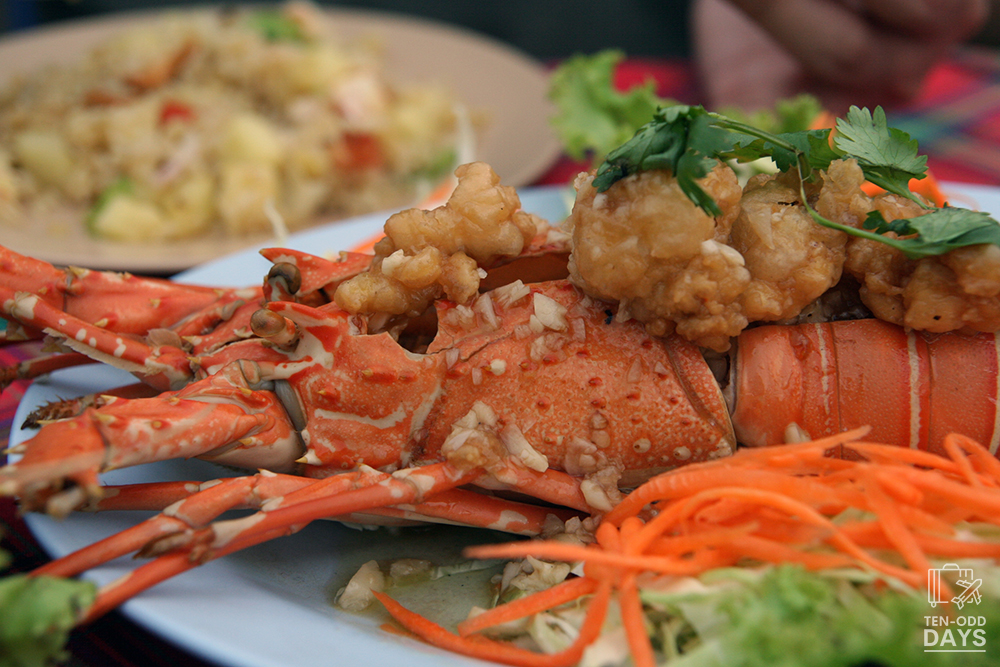
The star of the birthday dinner? This lobster weighing over 700 grams. This was supposedly the highlight but to be honest, I found the crayfish nicer than this. Good thing it didn’t cost us an arm and a leg. That’s why Phuket is our go-to place for seafood, with the exception of crabs. In my opinion, Singapore is still the go-to place for crabs. In my humble opinion, nothing beats our chilli crabs.
Without a doubt, the cities I am referring to are Nara (奈良市) and Osaka (大阪) respectively. Nara, formerly known as Heijo (平城), was Japan’s first permanent capital, established in 710. Due to its historic status, Nara is replete with historic treasures and cultural significance. It is also home to some of Japan’s oldest and largest temples. Unfortunately, given its close proximity to two more popular tourist cities (approximately one hour by train from Kyoto and Osaka), little attention has been paid to Nara as a result. More often than not, it is just a by-the-way side trip people make before/after Kyoto or Osaka. Nara does have a lot offer, especially shrines and temples. Just need to give it the due attention it deserves, I reckon.
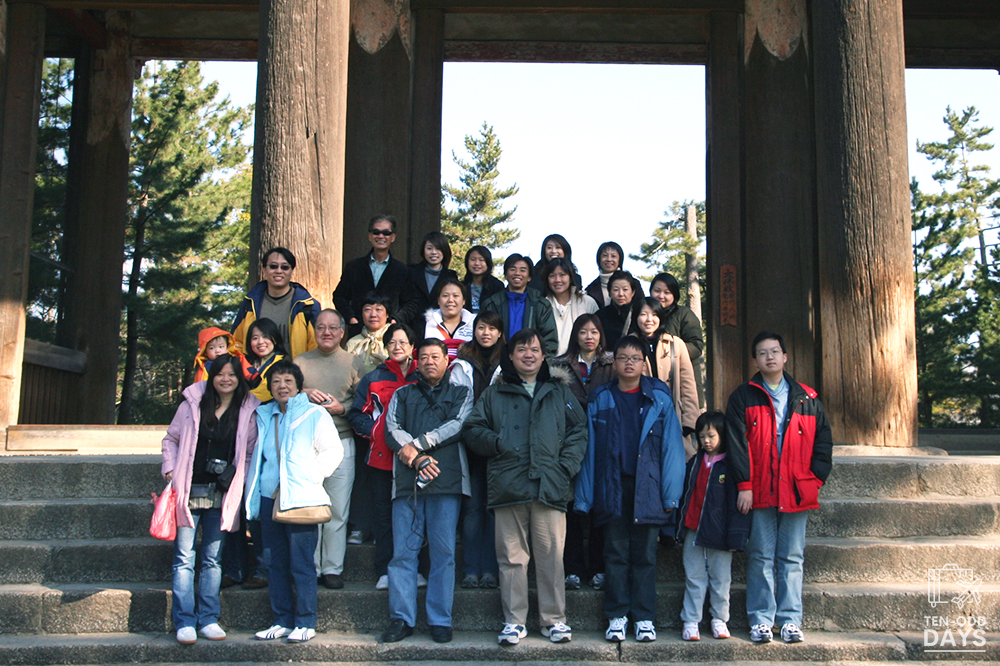
Here’s the whole lot of us taking a group photograph in front of the Nandaimon Gate (南大門) leading to Todaiji Temple (東大寺), one of the most historically significant temples in Japan. The gate, reconstructed in 1199 after a burndown in 1180, is in itself a rather impressive monument, not to mention humongous. There are apparently two statues by the side of the gate, guarding the temple (and since the gate is the gateway to the temple, it kind of makes sense) but since nobody explained that to us and we didn’t do any prior read-up, we didn’t really notice the statues. Oh well… part of the problem with guided tours is this reliance leading to false impressions that one will learn everything from the tour leader/guide.
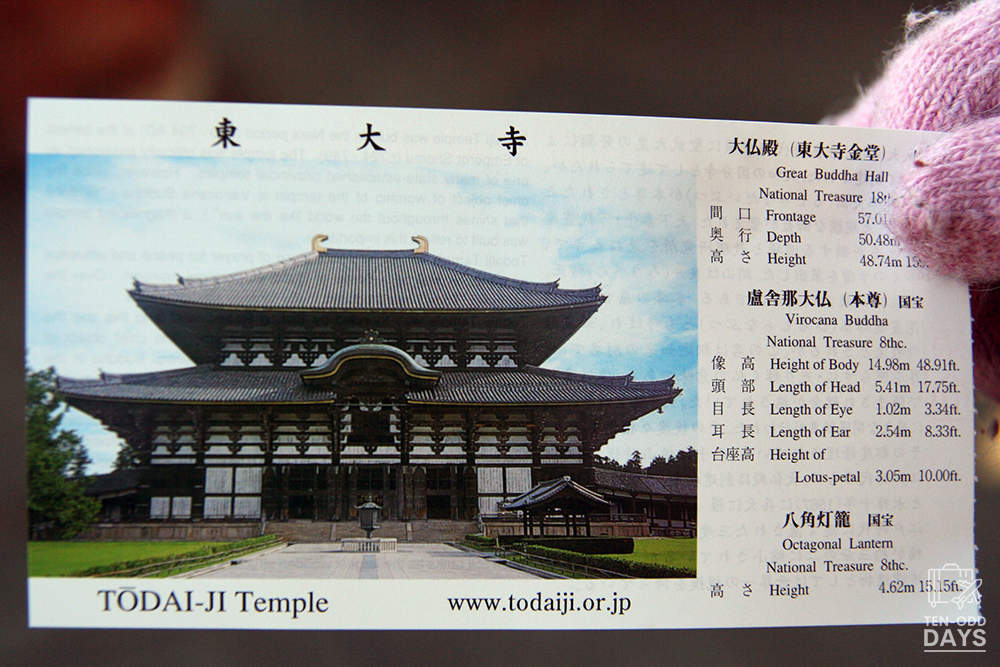
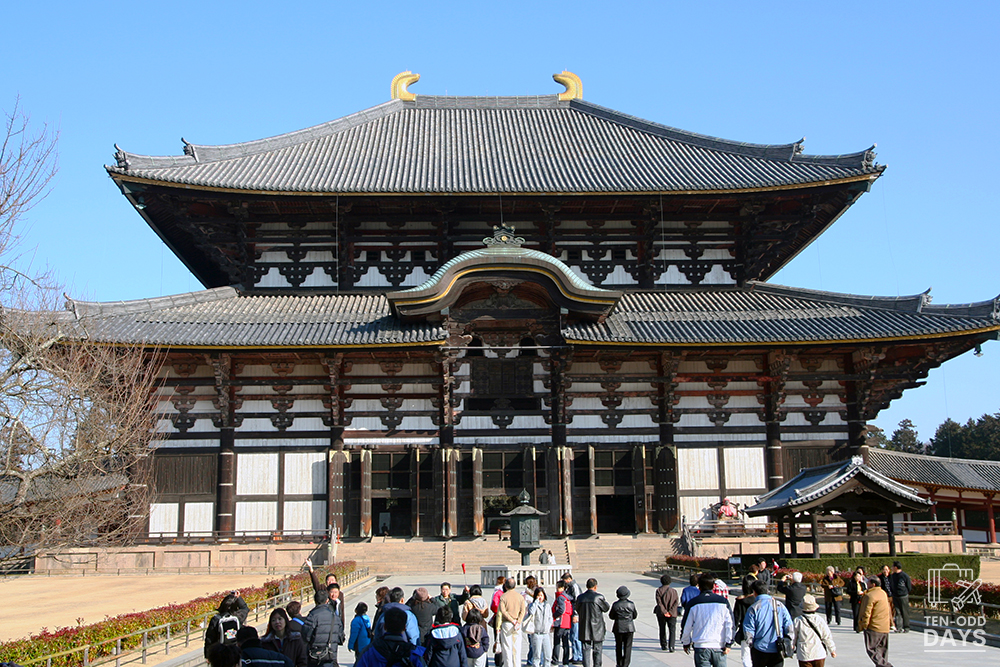
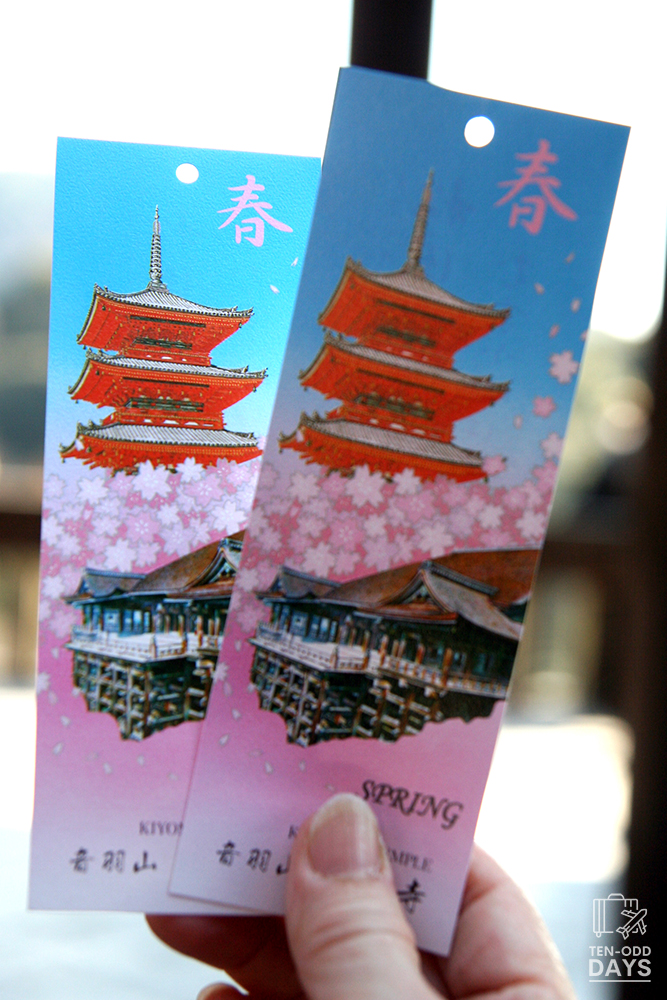
And then the Eastern Great Temple (Todaiji Temple) came into sight as we crossed the Nandaimon Gate. On a rather non-related note… may I just comment on how much I just love all the entrance tickets we’d received on the trip? Interesting, and very pretty. Shows that the Japanese take pride even in the smallest details.
One of the reasons why Todaiji Temple is as famous as it is lies in the the word’s largest bronze statue of the Virocana Buddha (大仏) in the main hall, measuring almost 15 metres in height. It was rumoured that this project nearly crippled Japan’s economy at that time due to the massive demand of so much bronze for the statue. While I do have some pictures of the statue, I find them non-impressive in general (and thus does no justice to the real thing) so there is no intention to post any of it up here.
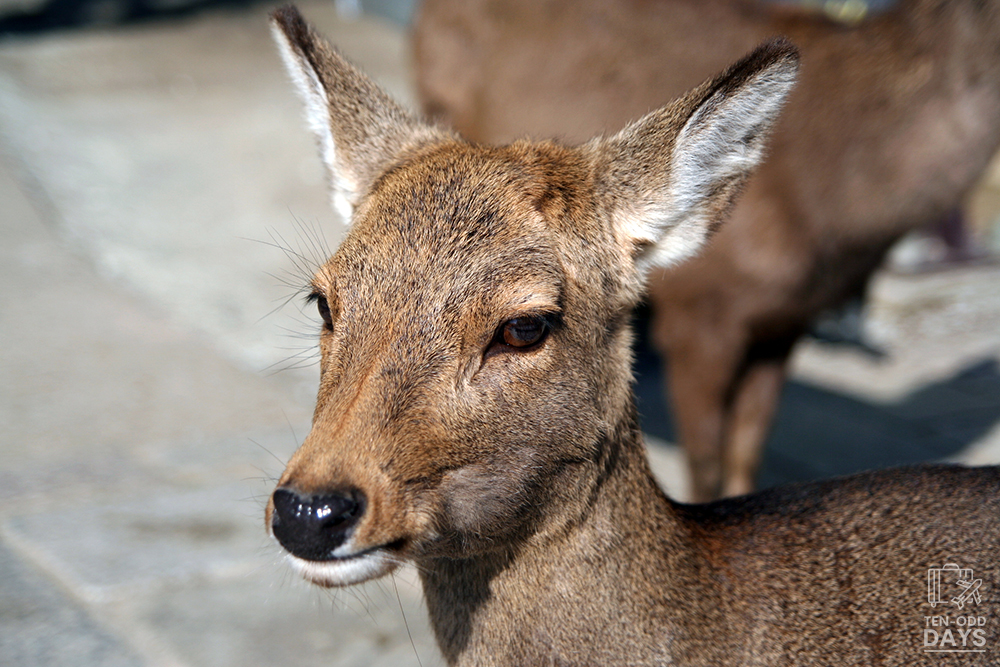
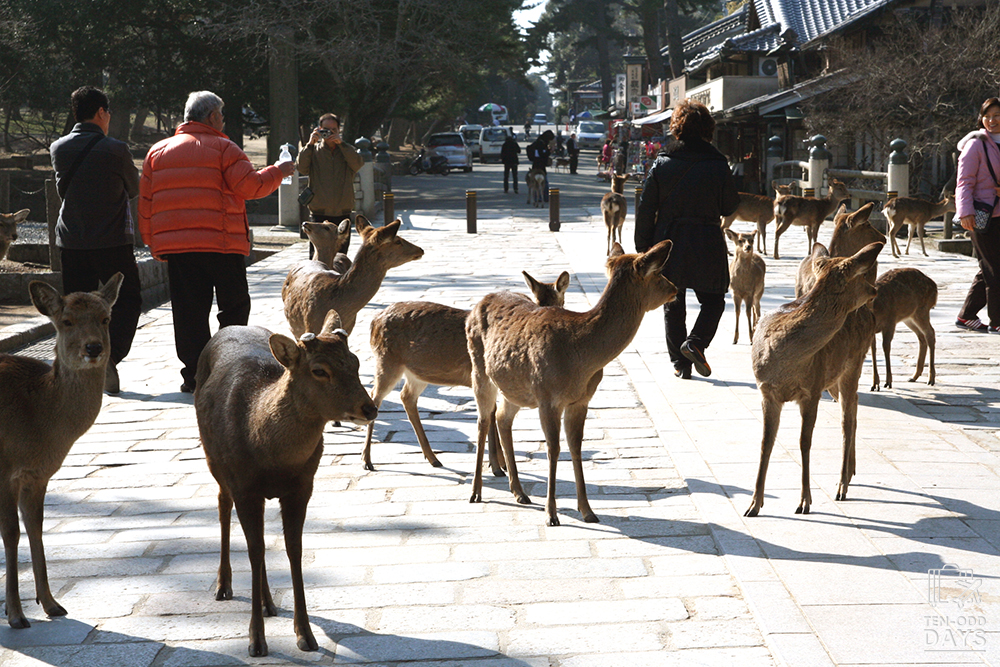
Sika deer from the nearby Nara Park wandered freely around the park compound. They are mostly tame but love congregating around new visitors to the park in hope of getting fed shika senbei (鹿煎餅). We didn’t purchase the deer crackers because although I found the deer adorable, they also frightened me senseless. I cannot explain why, because some of them are so small they are comparable in size to the golden retrievers we have at home. Perhaps that’s the reason why – my furkids go absolutely bonkers when I feed them, and they are domesticated. The behaviour of the deer would understandably be even more unpredictable. This was why, adorable as they are, I refused to feed them those special crackers.
Not that they were going hungry from my lack of participation in the random feeding. Most other visitors to the park were brave enough to partake in this touristy activity, and the deer population couldn’t be happier. I wanted to stay as far away as possible, just putting enough distance for me to take some pretty shots of them.
Next on, to Osaka the well-known City of Vitality. And we had a lot of ground to cover in the little time we had there it was crazy.
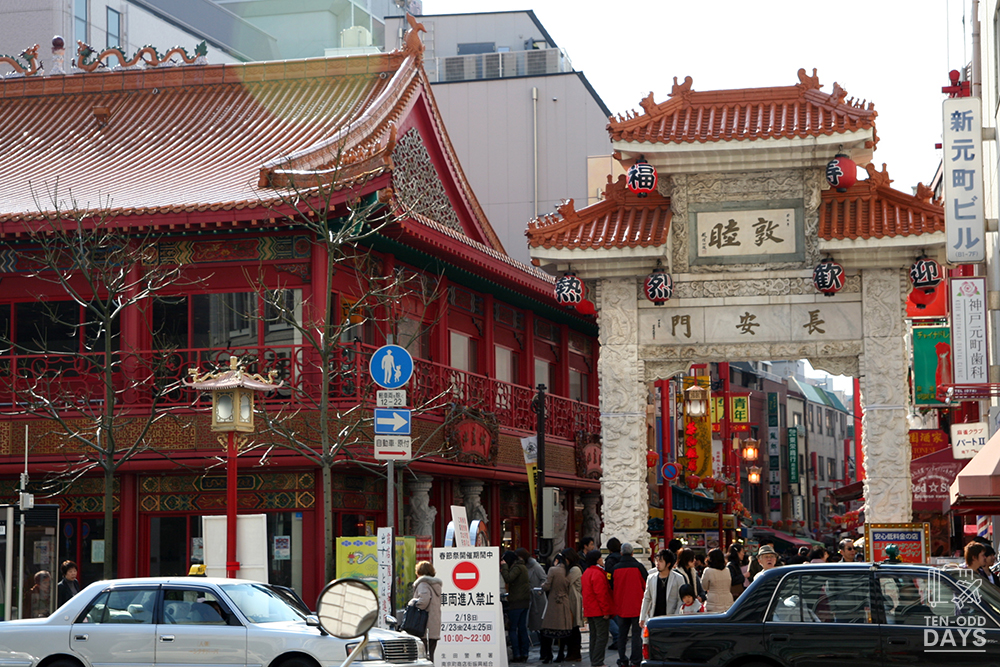
There’s just this thing about guided tours and chinatowns. I have no idea why they always assume that Chinese tourists like to see the Chinatown. Same question as to why they like to serve us Chinese cuisine whenever they could. To please the older generation of travellers I guess, because the mum wanted Chinese cuisine almost every other meal. I know I mentioned that I do like visiting overseas chinatowns in general, however they are hardly the first or only thing I want to see of a new city I go to. Especially not when Osaka has so many places to see and do, quite unlike Yokohama. But oh well, we needed to settle our own lunch and the tour agency must have figured that we would love to have some Chinese food in the Chinatown. Thing is, never expect food in overseas chinatowns to ever taste authentic, or the way you expect it to taste like. Why? This is not because they are incapable of replicating the food but rather that they would have had to tweak little changes to the taste to appeal to the palate of the locals i.e. the Japanese in this case. Same reason why I found the Chinese food in Everett, Washington so incredibly sweet. But I digressed.
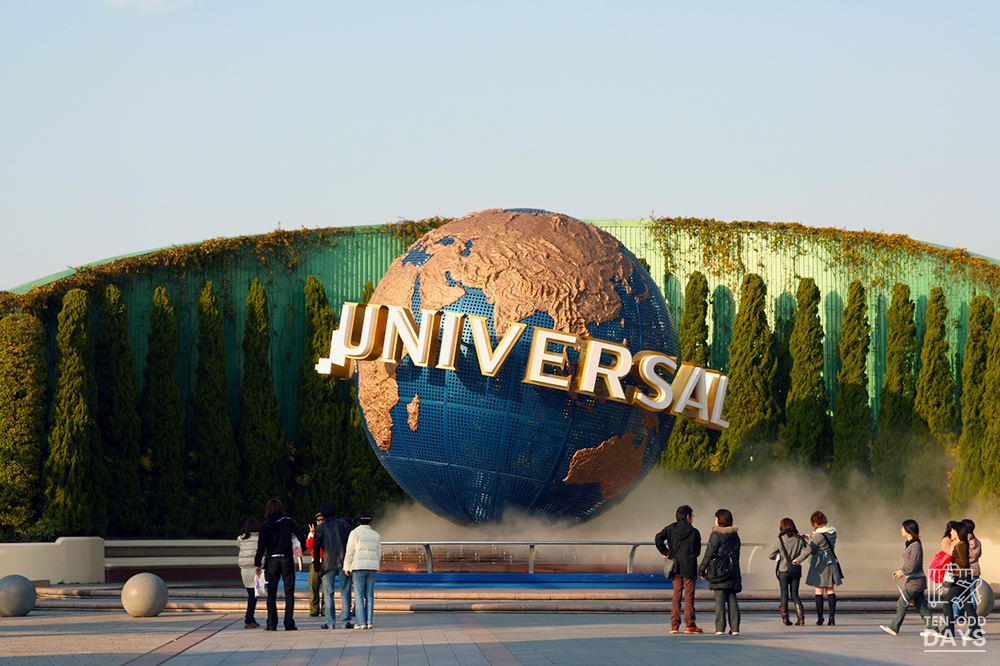
And then we dropped by Universal Studios Japan. Entrance tickets weren’t covered in the costs of the tour so some people opted to pay out of their own pockets to spend like, 1-2 hours in the park. The mum, little sis and I discussed over this and decided we didn’t want spend our time in yet another amusement park. Instead we opted to go shopping at a large shopping mall nearby. Can’t tell if we made the right choice or not but we were jolly happy doing some shopping whilst our tour mates complained of long queues in the park and how they ended up just browsing the merchandise stores. Don’t think we missed much eh? I would much prefer having a full day to explore the park properly instead.
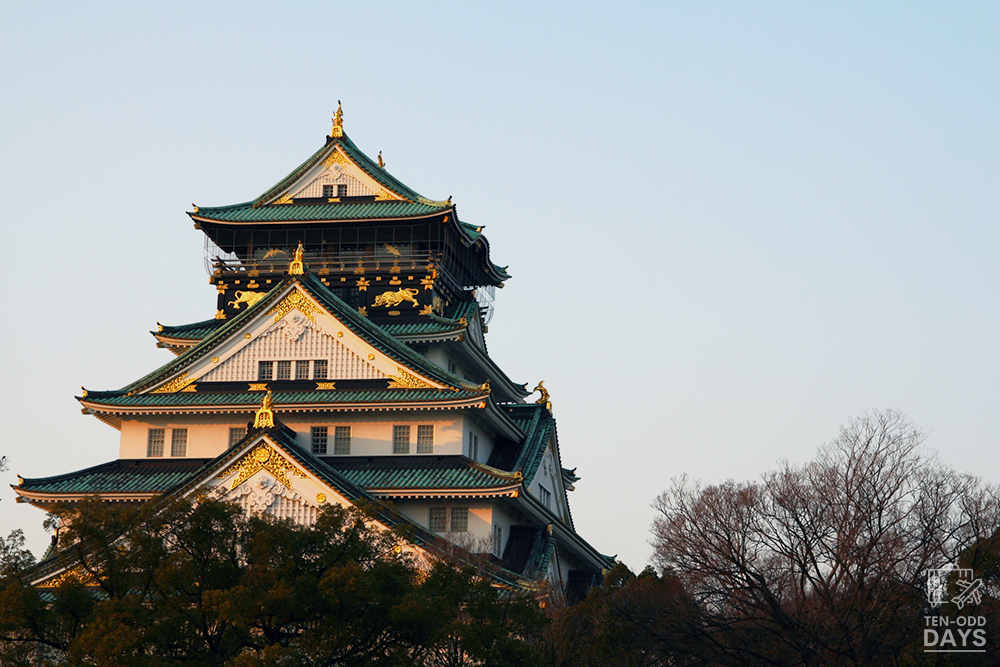
And our visit to Osaka would not be complete without a cursory visit to Osaka Castle (大阪城). Because the group made a consensual decision to spend more time at Universal Studios, we had less time at Osaka Castle as a consequence. It was near closing hour when we arrived, resulting in a mad rush to introduce us to this gorgeous castle. Quite a bit of drama behind this symbol of Osaka today but this is no place to discuss it. Interesting history nevertheless. And may I repeat again… gorgeous castle. Wished we had time to explore the interior including a visit to the museum.
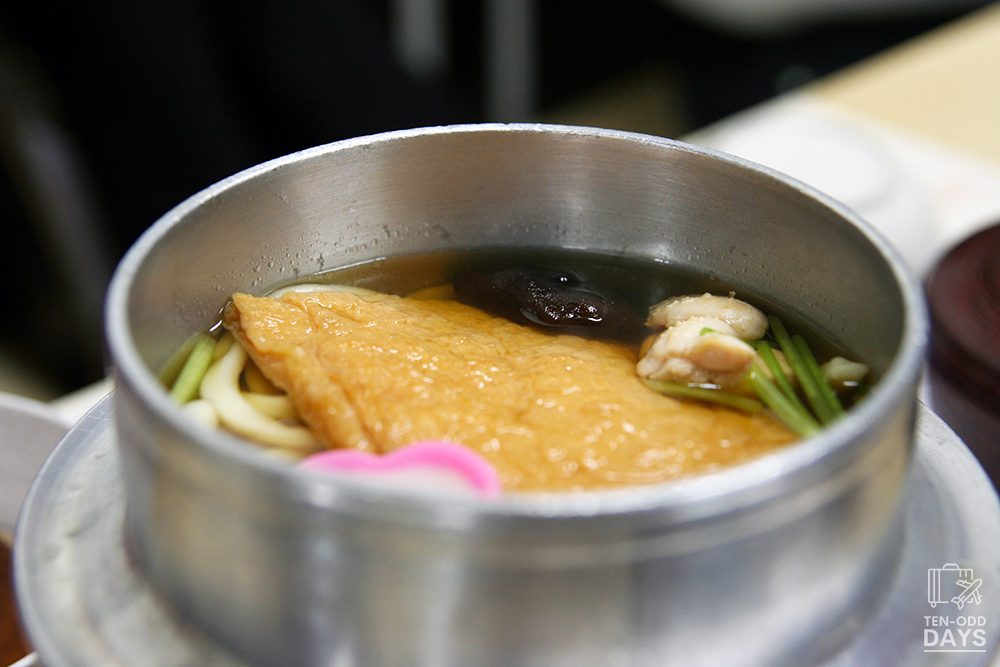
Good thing the castle park doesn’t close, or if it does, not so early anyway. So we had a chance to walk around, enjoy the scenery and take more pictures of the castle. And then we had a simple dinner at an eatery in the park itself. Simple, yet delectable udon.
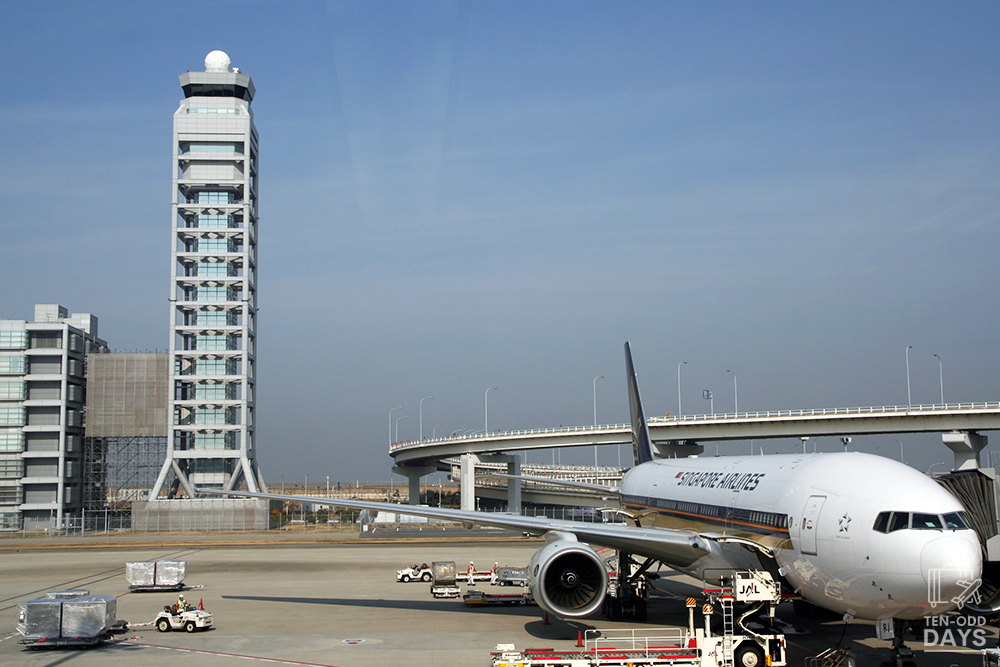
Finally it was time to head home. Kansai International Airport has an interesting control tower. Which I must take picture of, considering how a Singapore Airlines aircraft was also parked nearby. Picture perfect opportunity. And a great way to sum up a great trip. We didn’t learn very much of all the places we visited, but we sure saw a lot. It was also a good 7-day of bonding with the mum and the little sis. Truth is, I haven’t had much time for them ever since moving out after marriage so I cherish what little time I get to spend with them.
And Kyoto, the old Imperial Capital of Japan, was up next. Resources (from books to reviews from friends) reveal that Kyoto is one of the most, if not the most beautiful city in Japan because of its rich cultural heritage. They were not in any way speaking in jest. Kyoto, or what little I saw of it, is indeed an exceedingly beautiful city!
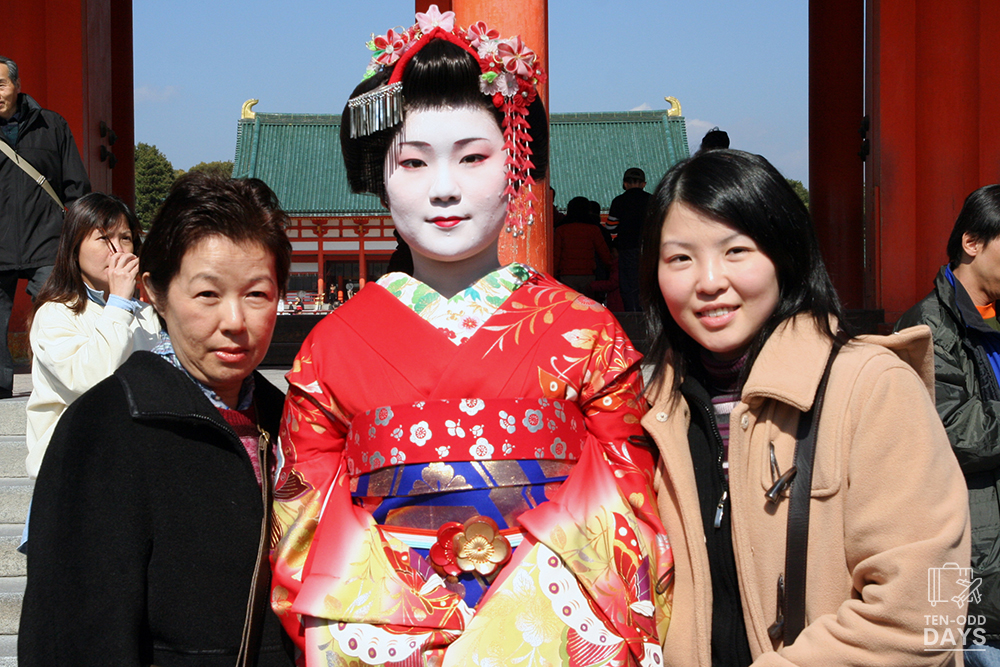
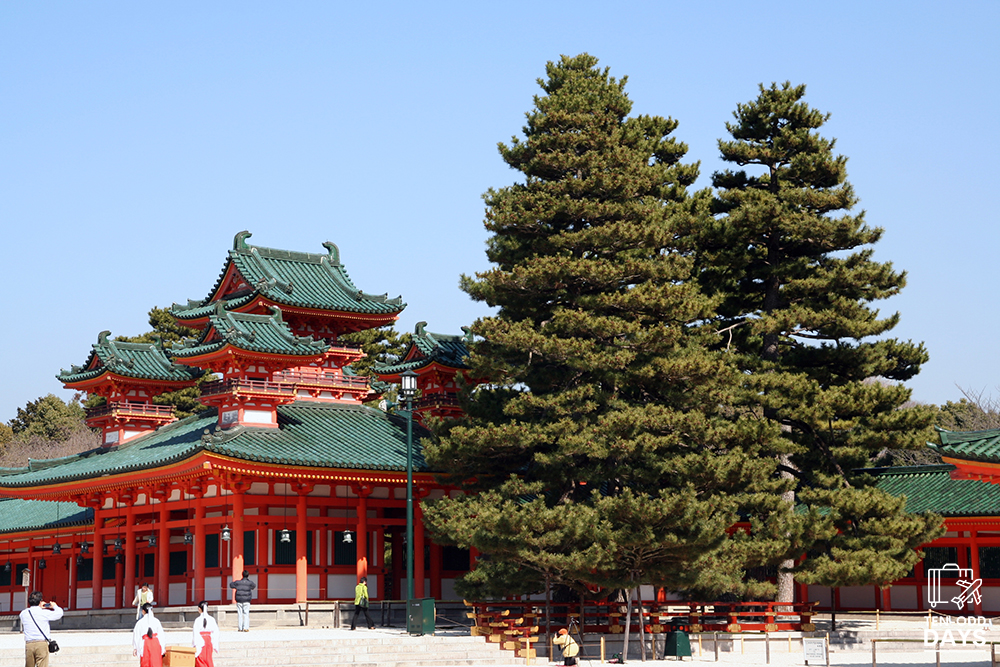
Starting the day off, the services of a maiko (geisha trainee) was sought in that she accompanied us to Heian Shrine (平安神宮), an Imperial Shinto Shrine for some unique photo-taking moments. I will readily admit that, like most other people, I know very little about the sui generis geisha culture beyond their glaringly obvious white makeup. Apparently this ‘escort service’ is a booming business for the geisha in Kyoto. Ensuring that the culture doesn’t die out completely, I guess. And it’s working. It’s just that I don’t envy them one single bit. There is no other way to put it across gently but they reminded me of… animals on exhibit in the zoo. Everyone jostled to take pictures with her, otherwise looked on curiously by the sidelines. I felt bad for her.
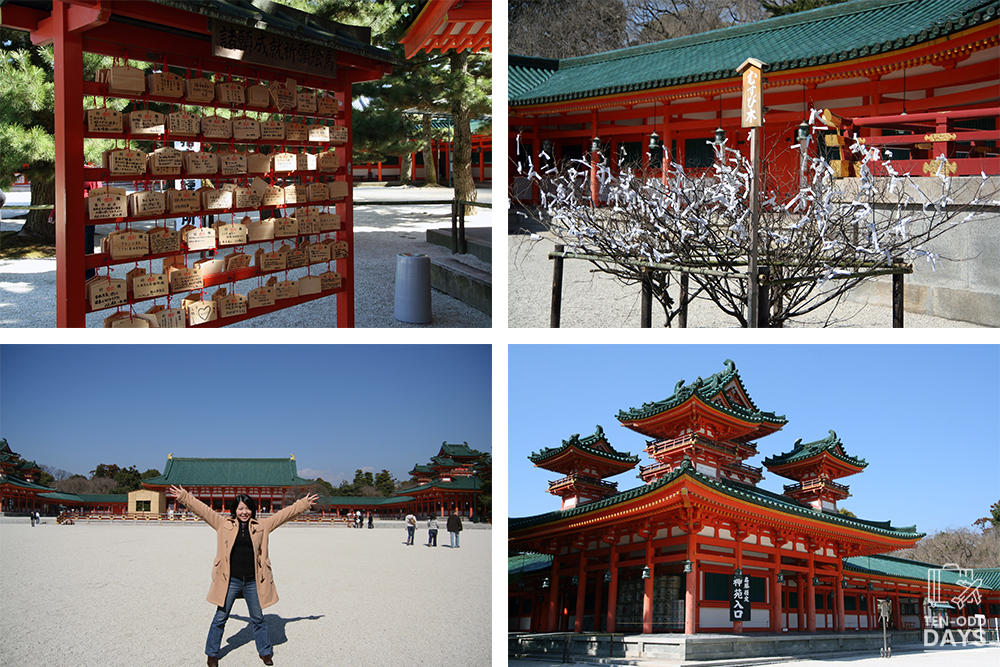
Looked beyond that and I started enjoying the beauty of Heian Shrine. Architecturally, it was an intricately alluring shrine with an expansive courtyard space. Couple that scene with a beautiful day and my favourite clear blue sky resulted in some of the most picturesque photographs taken on the trip.
Heian Shrine deifies both the founder and the last Emperor of the Heian Capital. Though not nearly half as famous or popular as Kiyomizu-dera (音羽山 清水寺), this shrine too serves as a major tourist attraction for domestic and foreign visitors alike. And as typical of Shinto shrines, devotees could write their wishes or prayers on Ema (絵馬) and hang them at designated racks. They could also receive random fortune lots (御御籤) by contributing a small token amount. All is well if the prediction turned out good. What if it were bad? According to Wikipedia, ‘when the prediction is bad, it is a custom to fold up the strip of paper and attach it to a pine tree or a wall of metal wires alongside other bad fortunes in the temple or shrine grounds. A purported reason for this custom is a pun on the word for pine tree (松 matsu) and the verb ‘to wait’ (待つ matsu), the idea being that the bad luck will wait by the tree rather than attach itself to the bearer.‘ The poor tree…
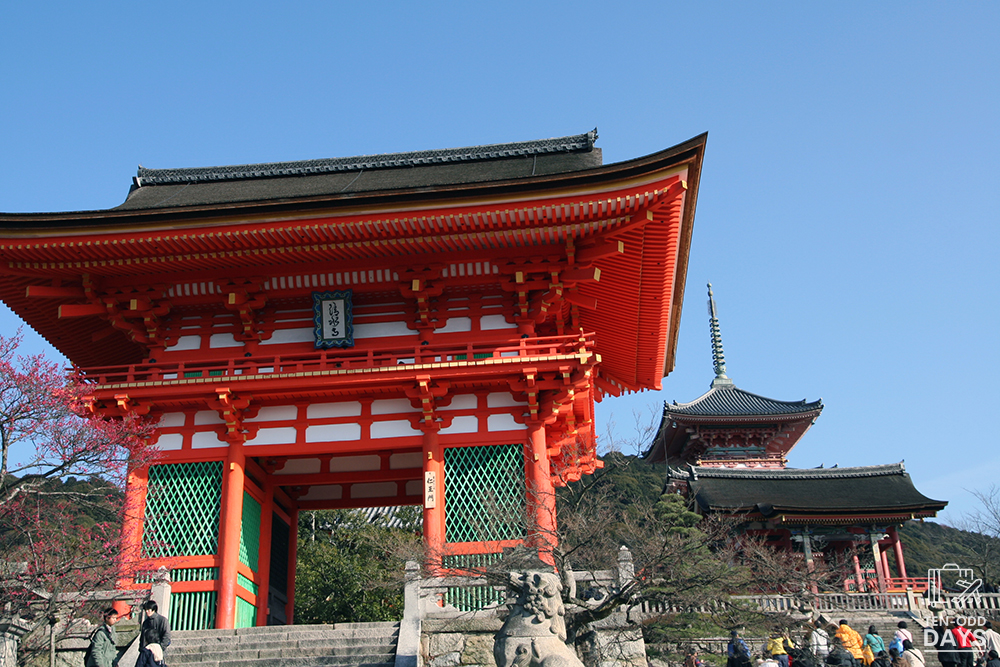
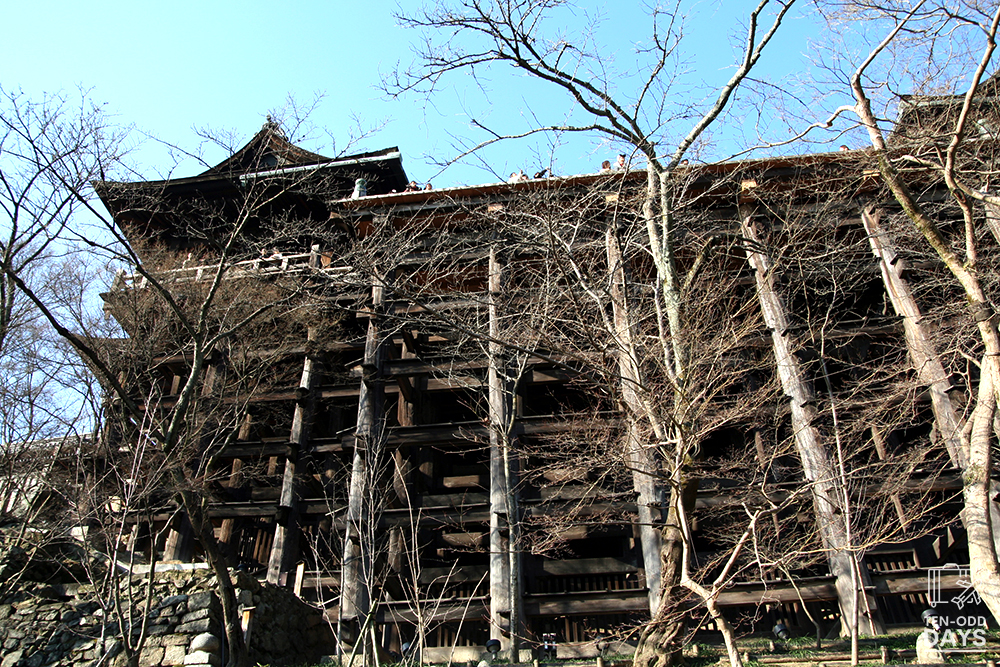
A visit to Koyto is not complete unless one makes a trip to Kiyomizu-dera, arguably one of the most famous symbols of Kyoto. This historic Buddhist temple located halfway up the Otawa Mountain was established way back in 778. The temple was burned down several times in history, according to the temple’s website. Exactly which part and which building, I’m not sure. Even if we take into consideration the newest part of the temple (which was rebuilt latest in 1633), that still makes it over 300 years old. Based on the what I saw of the temple, I say they are doing an extremely good job out of maintaining this UNESCO World Cultural Heritage Site.
There are two famous places within the temple – the Main Hall and the Kiyomizu Stage. Personally I try not to take pictures of the interior at places of worship because I find it disrespectful on so many counts. I do break this rule once in a while when I find the interior so overwhelmingly beautiful I have to take a picture to remember it by but in general, yup… that’s a principle I live by. And so, I do not have pictures of the famous Eleven Headed and Thousand Armed Kannon Bodhisattva. Furthermore the picture I have of the Kiyomizu Stage is of an uncommon angle, I would say. Most photographers shoot it from above (you will have more than enough examples to peruse if you google) but for some strange reason, I shot it from below. Blame it on my fascination with buildings and structures – I have to say that the Kiyomizu Stage, which is the verandah of the main hall built over a precipice, was intriguing. I stared at it for a very long time trying to figure out the construction method. No nails at all, that bit I deduced. Fascinating. The mum had to drag me away after some time because we had other places to go to. 😆
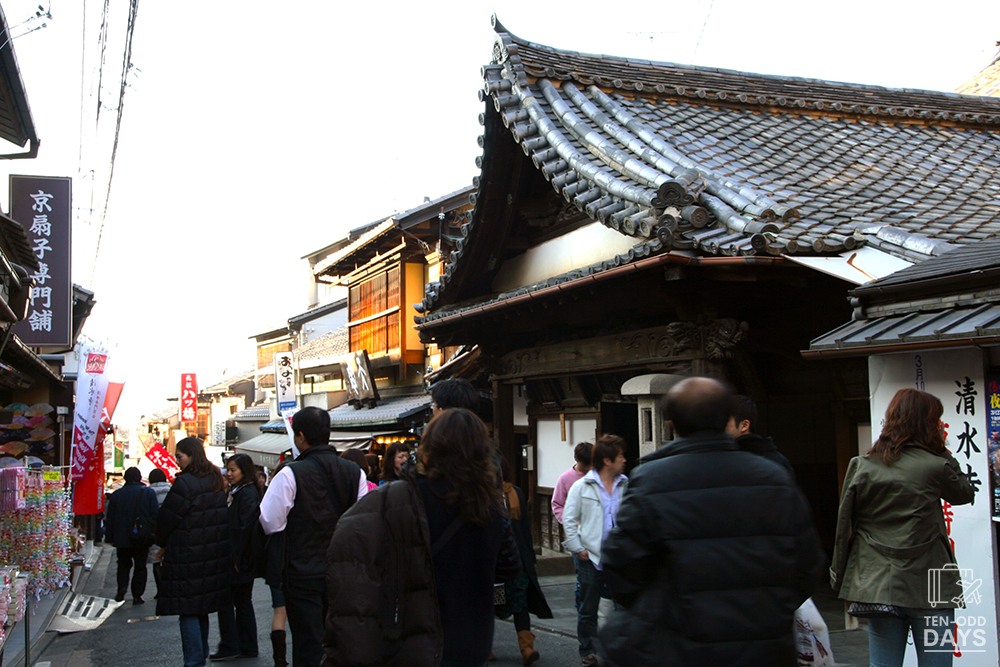
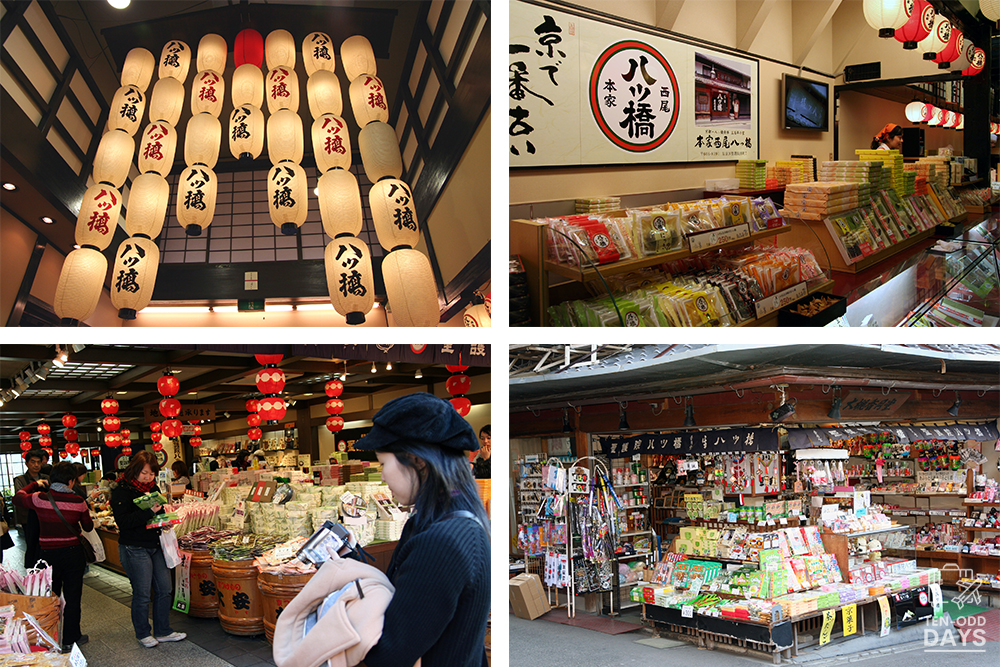
And then it was time for shopping! Not quite the usual type of shopping that other women love. The women in my family like tidbits and knickknacks, and Higashiyama District has everything to offer in this respect. The district is in total just about two kilometres long but we sure took a long time to clear this short distance.
We shopped for Omiyage (お土産), stopped every few steps to look at the food offerings, and ended up eating a lot including waffles and ice-cream. A perfect wrap to our overview of beautiful Kyoto.
(In actuality, this post was written in Apr 2013, 6 years after the trip. In this duration, I have revisited Japan several times, on an average of once every year, but I never did once revisit Kyoto. It is in the pipeline but just not yet. Reliving the memories from this particular trip makes me want move the plan ahead to revist and explore Kyoto in further detail. This is a city that has so much to offer.)
After a quiet and peaceful night sleeping at an Onsen Ryokan in Hakone (箱根), we left early the next morning in search of the elusive Fuji-san (富士山), otherwise more commonly known as Mount Fuji. The plan was to have the coach bring us up to the Kawaguchiko (河口湖) 5th Station for a closer view of the active stratovolcano, also the highest mountain in Japan. And if luck would have it, we might even get to walk a bit of the Yoshida Trail. Our tour leader did however pre-empt us that the trail might be closed considering that winter just passed and it might still be unsafe for trekking up the mountain.
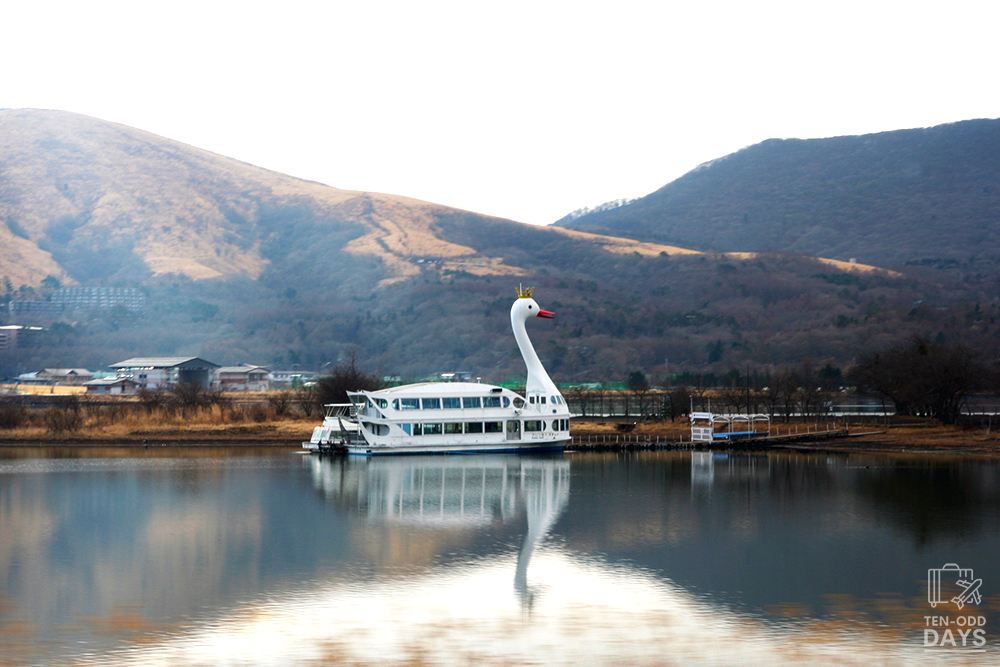
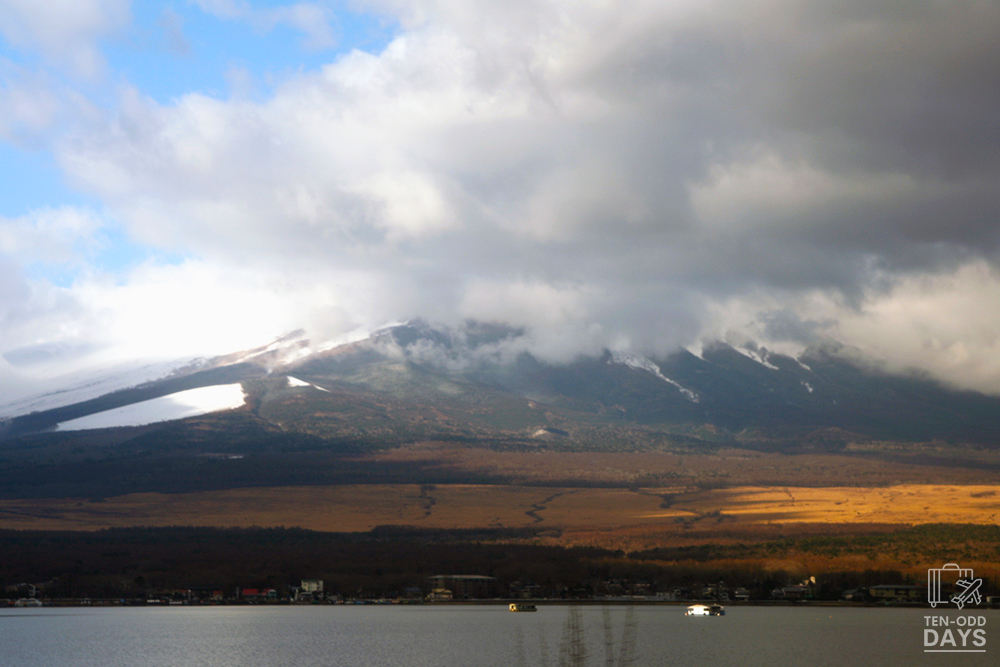
To get to the Kawaguchiko 5th Station, we passed by Lake Yamanaka (山中湖) and came across one of the legendary Swan-shaped pleasure boats. It was an overcast, otherwise good day with great weather. In other words, nightmarish conditions for me, the amateurish DSLR photographer.
Of the Fuji Five Lakes (富士五湖), Lake Yamanaka is the largest. And on a clear, cloudless day it offers a splendid view of magnificent Fuji-san. Except that it was a cloudful day when we visited. Not one to be daunted by a tiny, little failure I tried shooting Fuji-san again and again that day whenever I chanced upon her. Which was very often, of course, since we were after all in Hakone.
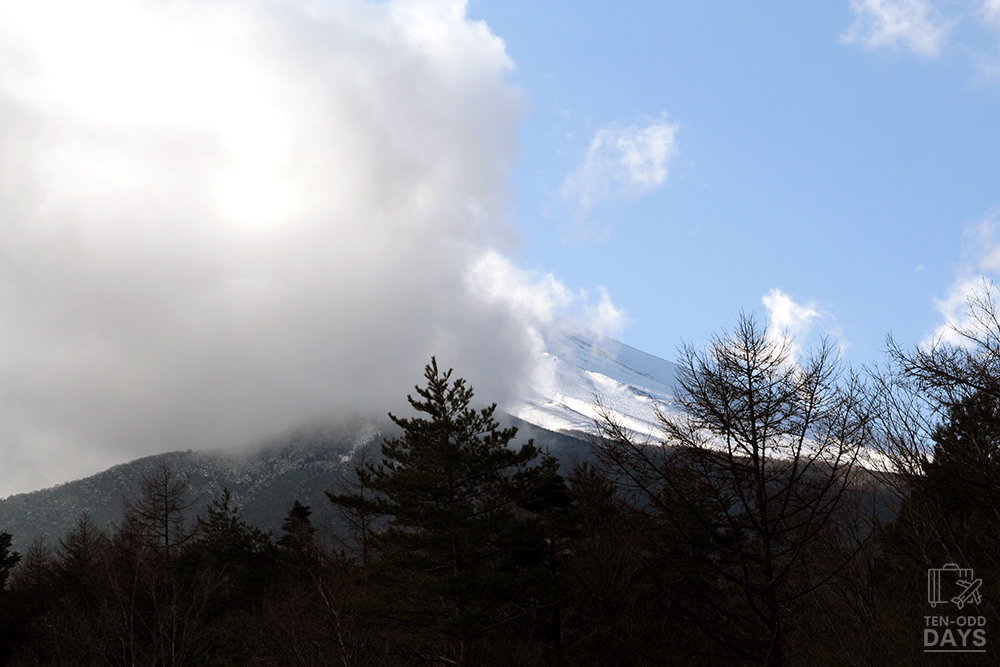
Take #1 was taken on the moving coach while we were in the vicinity of Lake Yamanaka. No chance of gazing upon the full beauty of Fuji-san because the summit was completely enveloped by clouds. Never mind though: the day was still young and I should have plentiful opportunities to shoot her again, hopefully in better weather conditions.
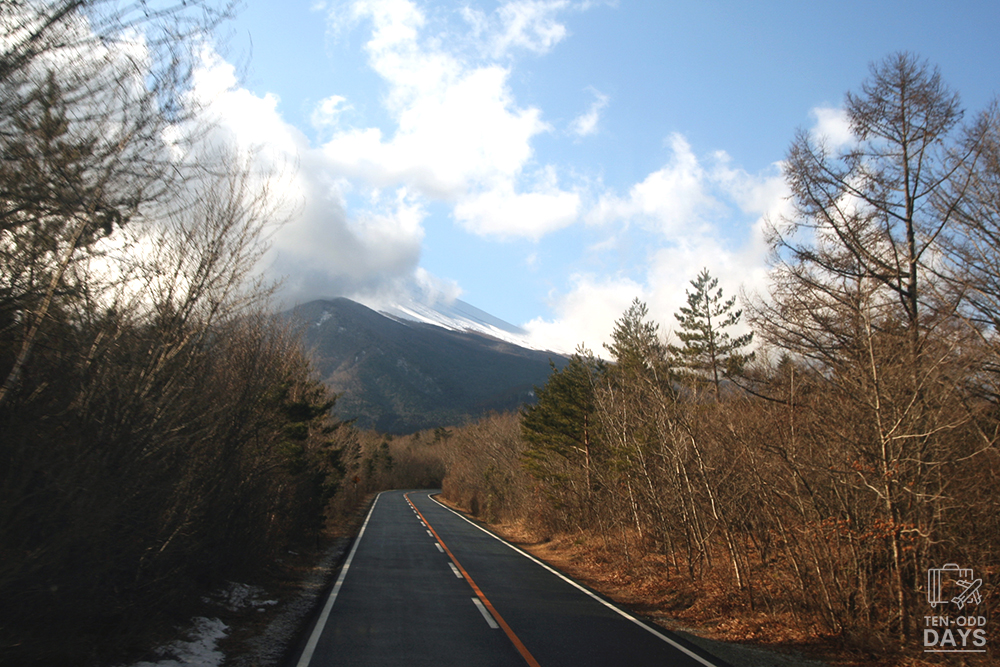
Take #2 was taken on the moving coach again, when we were nearing Kawaguchiko 5th Station. Risked getting lectured by walking to the front of the coach for this shot. But I think it was worth it. Probably the best shot I had of Fuji-san. The summit was still partially hidden. However there was just a tinge of it peeking through the clouds.
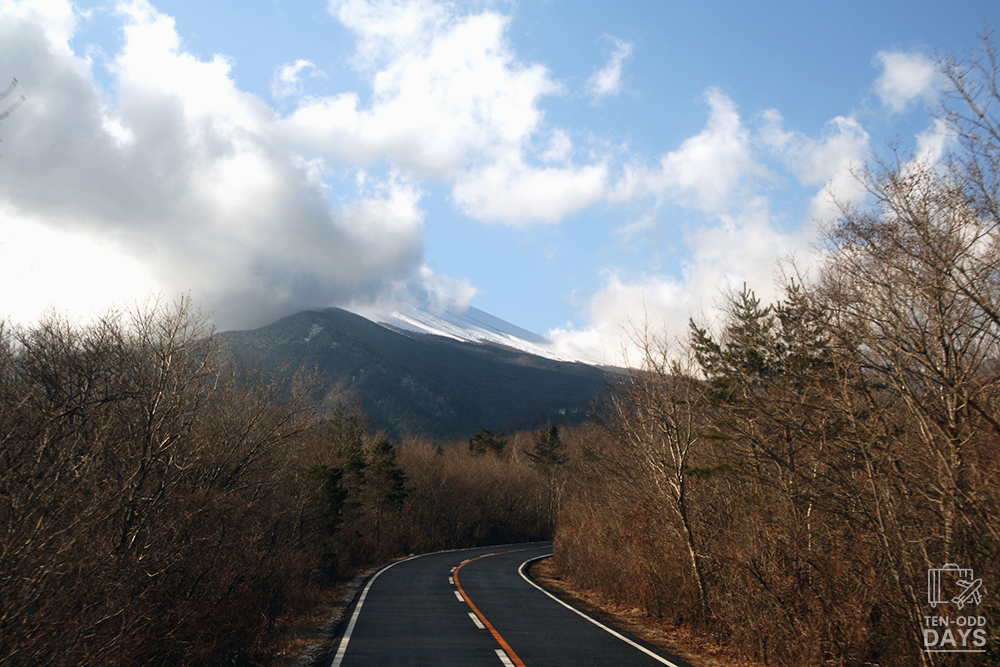
Take #3 was taken a few metres down from the previous shot. A closer shot but basically the conditions didn’t change. I was hopeful that we might see the summit as we ascended slowly to Kawaguchiko 5th Station.
But alas, Take #4 taken at Kawaguchiko 5th Station featured the same patch of clouds in the way of us and the summit. She was so near, yet so far. Well at least she lives up to her reputation of being elusive and out of reach. She is consistent in this way. 😆
There was no one else about, and absolutely nothing to do at Kawaguchiko 5th Station. We stopped and alighted the coach for some photo-taking but 1) it was cold being at higher altitude (2,300 m, to be precise) that had many of our tour mates went running to the coach in less than 10 minutes and 2) there were only so many photographs we could take. I reckon we were on our way again in less than 15 minutes. Which posed a real challenge to our tour leader since we were not supposed to leave till much later. Why, you may ask. Because our next destination was where we were supposed to have our lunch, and we were obviously way too early for that.
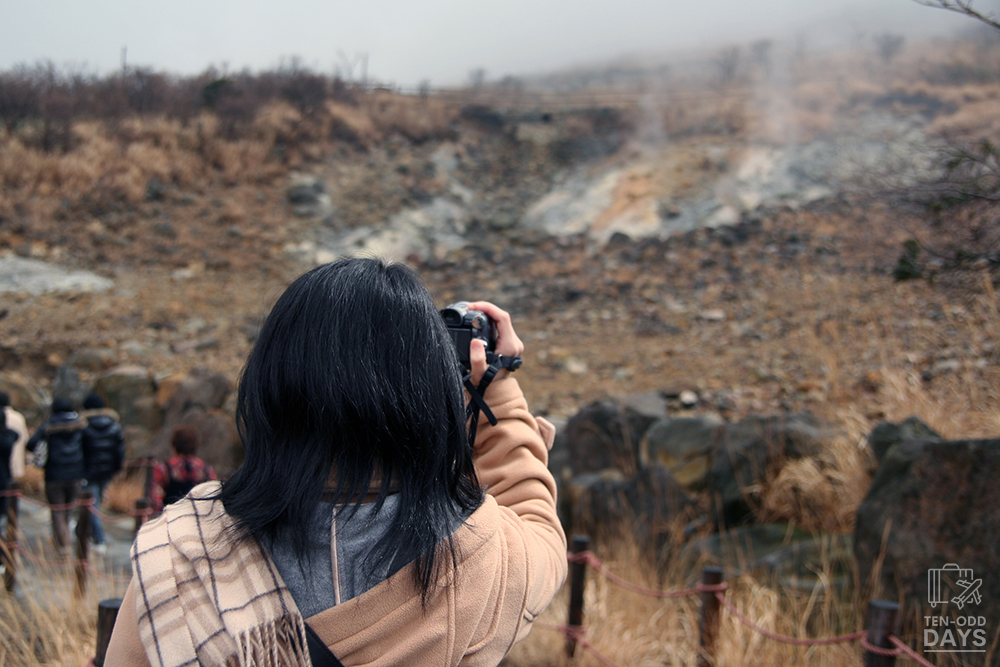
It helped that we were travelling with a group of very considerate and understanding tour mates. With her explanation, we were all agreeable to spending a little more time at Owakudani (大涌谷). It sure beat hanging around Kawaguchiko 5th Station doing nothing in particular. Apart from having a manageable trail to explore, Owakudani (which is essentially a volcanic valley with sulphur vents and hot springs) is also famous for its black eggs (黒卵) and scenic view of Fuji-san on clear days. As already established earlier, it was not a clear day so we had no luck of seeing the whole of Fuji-san.
We walked on the Owakudani Trail a little but I was hasty to leave the area because the pungent smell of sulphur did not sit well with me. Instead the mum and I went to hang around the visitor’s centre because the restaurant where we were supposed to have our lunch was just adjacent to the centre, leaving the little sis to explore more of the trail by herself.
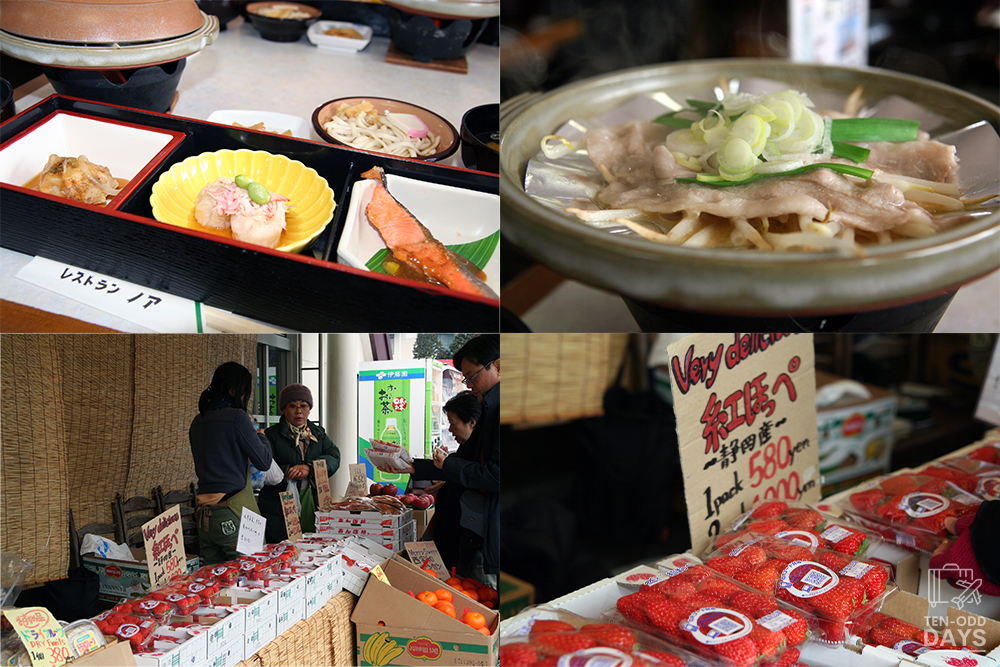
It was a hearty lunch we had. Some Nabe (鍋) it was but I can’t tell exactly what it was, now. It was in fact one of the most delectable meals of the whole trip. But what we were really impressed with was not the lunch itself, but the packs of strawberries on sale just outside the restaurant. The strawberries we get to purchase at reasonable prices in Singapore (hence eliminating the Japanese strawberries sold at Japanese supermarkets) are hardly tasty, and rarely sweet. The strawberries we ate at Owakudani were anything but. Big, juicy and also unbelievably sweet. I thought I tasted some really great strawberries at the Keukenhof near Amsterdam in 2005, but these just beat them hands down. I was never quite a fan of strawberries but after that experience, I absolutely love strawberries. They were that life-changing.
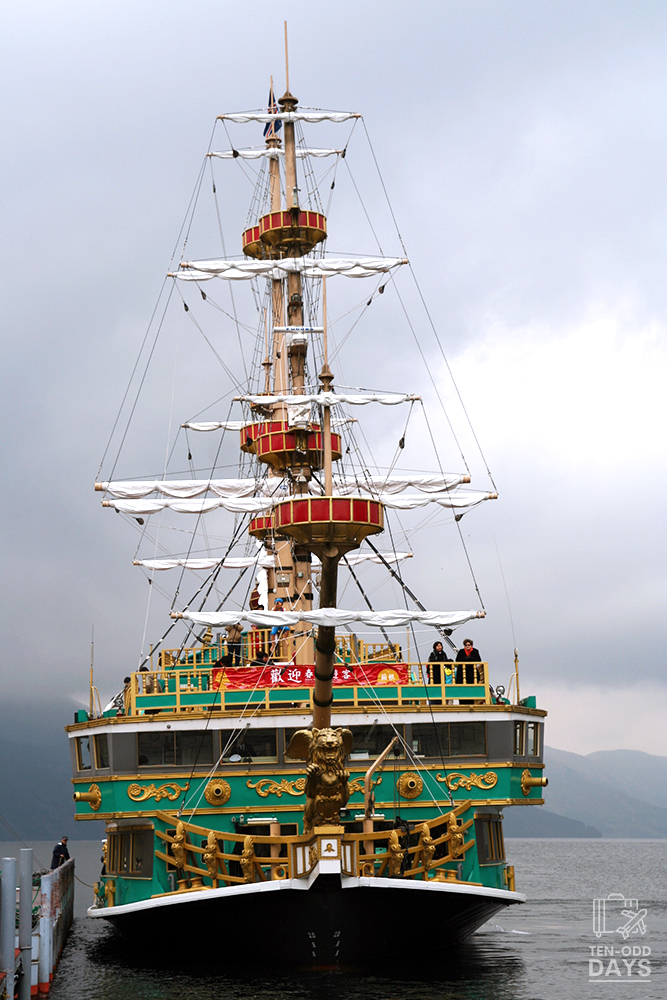
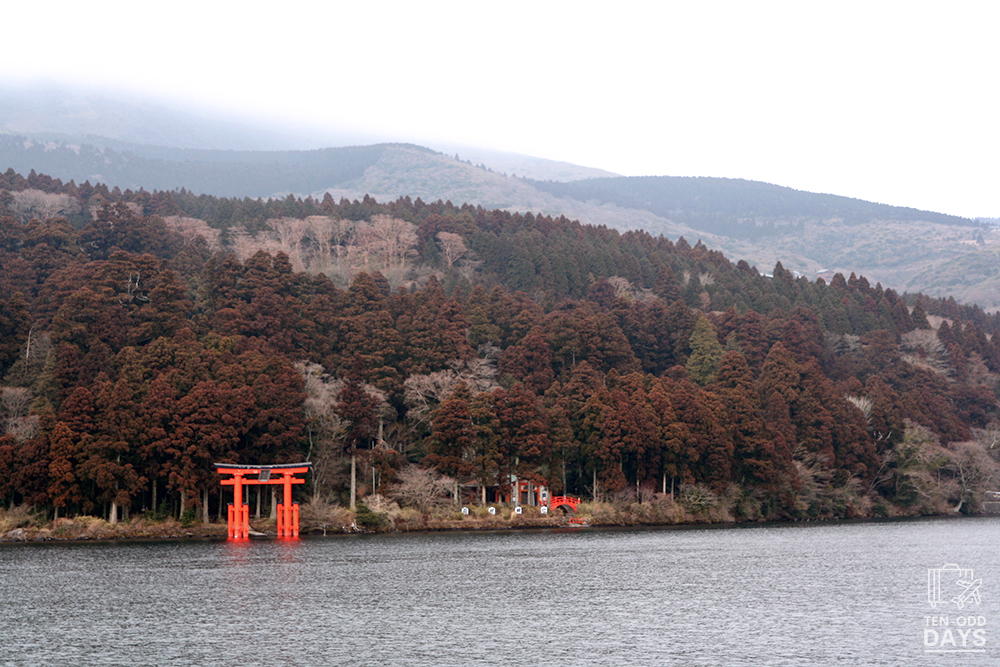
While we were at Owakudani, we of course must embark on the Lake Ashi Sightseeing Boat a.k.a. the Pirate Boat. Having no hopes of getting a better view of Fuji-san, we concentrated on enjoying other beautiful scenery. And spotted this beautiful red Torii (鳥居) of Hakone Shrine (箱根神社) at the foot of Mount Hakone. While possibly not quite as spectacular as the ‘floating’ Torii of Itsukushima Shrine (厳島神社), this Torii is magnificent and mysterious in its own way.
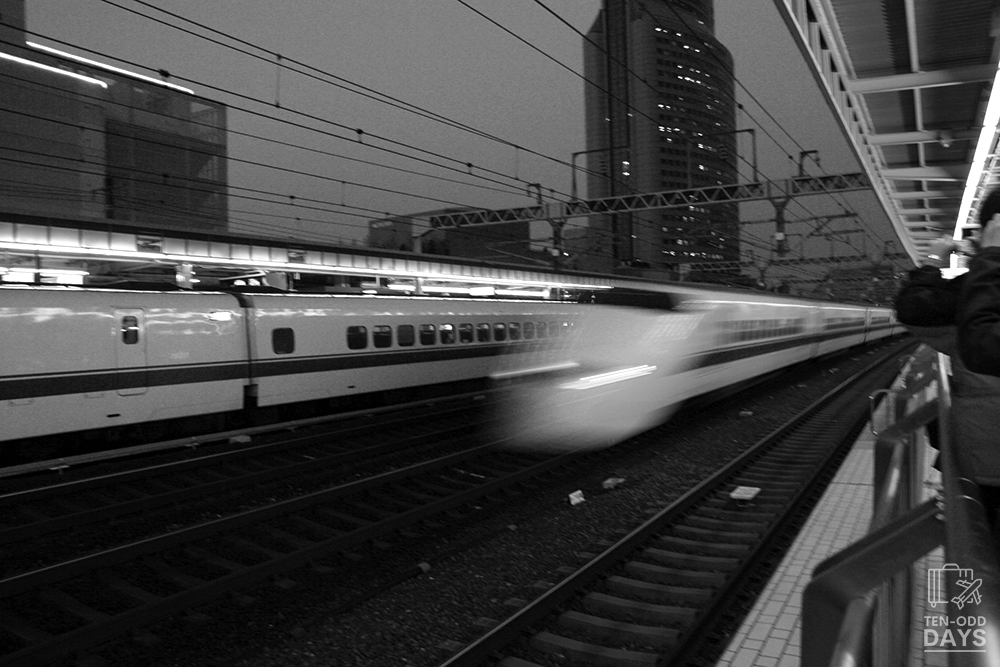
It was a long day, but was most certainly not over for us. Yet. Because it was time for us to experience for ourselves the real speed of Japan’s legendary Shinkansen (新幹線), or Bullet Trains that could operate at a maximum speed of 320 km/h. It was not completely necessary for us to board the Shinkansen to get to Osaka because our coach could traverse the same distance by road to meet up with us on the other side although it took much longer. It was a novel experience and really just for thrill of the speed. Except that we didn’t really feel the speed at all. The train was that stable on the move. I was duly impressed!
It’s a wonder what one night of good rest could do to a person. From the grouch I was the day before I transformed into someone in considerably better spirits the next morning. That was until I saw the rain. What a mood dampener…
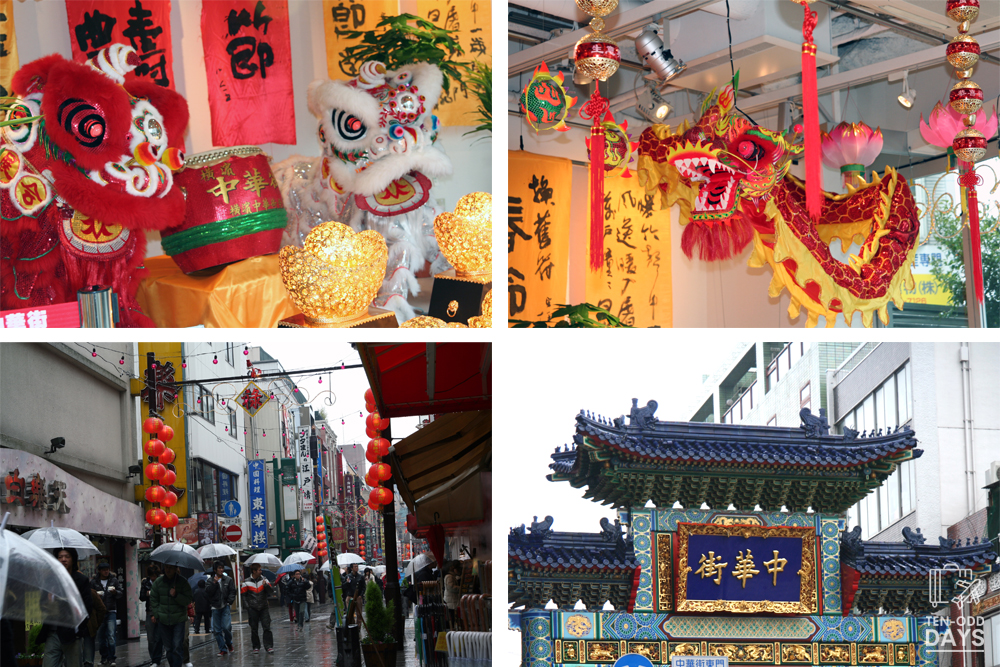
Still, the show must go on. The coach transported us to Yokohama (横浜) where we spent time for the better half of the day. First and foremost, the Yokohama Chinatown (横浜中華街) cannot be missed. Purported to be the largest Chinatown not only in Japan but in Asia, it started and grew exponentially in 1859 following opening of the sea port in Yokohama. Today not many Chinese are still living within Yokohama Chinatown itself but it remains a major sightseeing spot and a must visit for many overseas Chinese tourists. Us included.
Personally, I have always found chinatowns fascinating. For a start, I’m always amazed by the fact that Chinese have somehow found their way to all parts of the world: from Yokohama to San Francisco, London to Barcelona. This is also the very reason why I am a Singaporean – because my ancestors travelled all the way down from Canton to Singapore!
Because of the unrelenting rain, we didn’t stay very long shopping around Chinatown. Furthermore, most things that could be found in and around Yokohama Chinatown are easily available in Singapore so nothing much intrigued us. After visiting this iconic location in Yokohama, we headed for yet another iconic location – Shin-Yokohama Raumen Museum (新横浜ラーメン博物館). And no, no spelling error there.
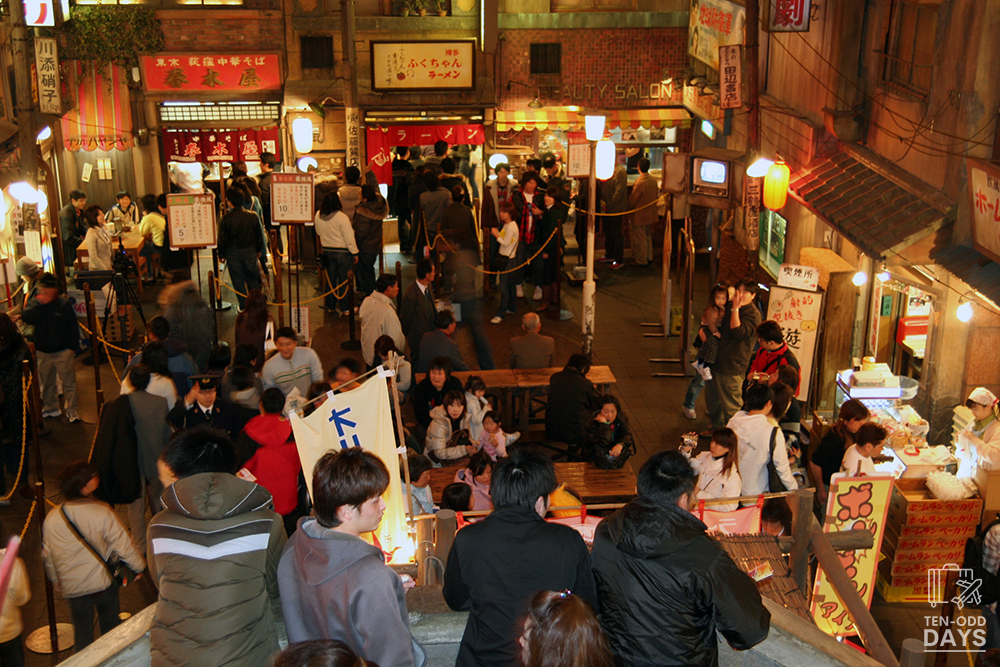
To be precise, Shin-Yokohama Raumen Museum isn’t exactly a museum but more like a three-storey food amusement park where some of the biggest names in the Ramen circuit in Japan are gathered together to provide visitors (mostly overseas tourists) a convenient one-stop regional Ramen experience. At last count, 9 carefully selected Ramen branches occupy the stores at the basement level of the ‘museum’, which is very tastefully donned up like the yesteryear of Tokyo complete with billboards overhead and music blaring from the loudspeakers as if they were played on a gramophone.
It was a very tight space accommodating the many people who were either queueing at their favourite Ramen store, browsing around trying to decide on which Ramen to eat, or basically standing around to soak in the whole atmosphere. And in order to allow patrons to be able to taste more of the Ramen offered, half portions are available. Which is a very good strategy if one intends to eat to one’s fill, provided time is not a factor. The queues were outrageously long when we visited!
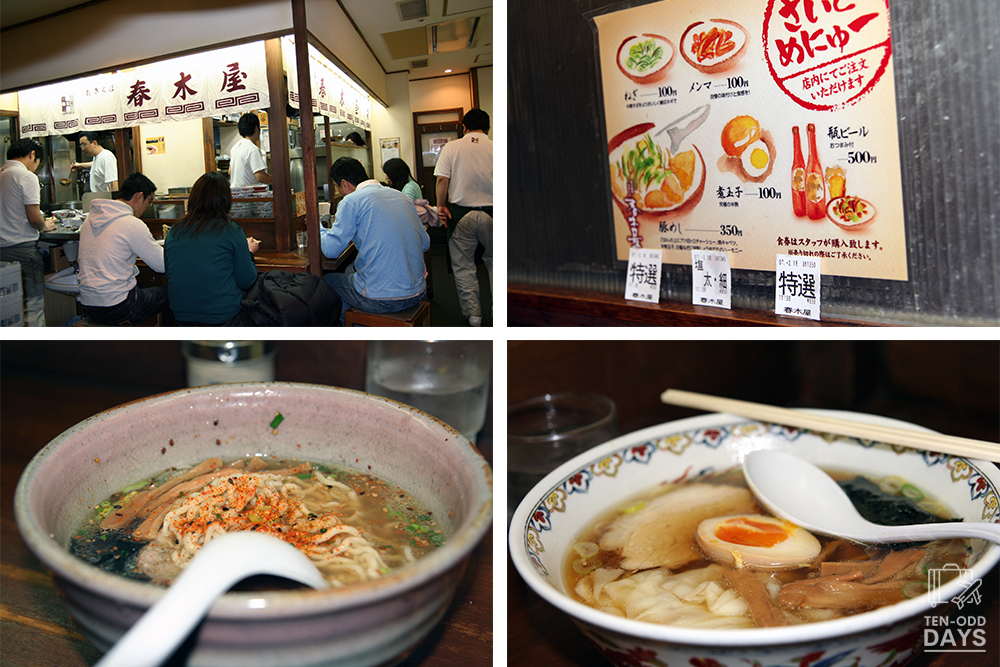
Our tour leader’s personal recommendation was the Sapporo-style Ramen. Clearly it was one of the most popular stalls because the queue was, in much correspondence with its status, equally impressive. After walking round and round aimlessly, the mum, the little sis and I decided on patronising the stall with one of the shortest queue – Harukiya Ramen (春木屋). We reckoned any of the stalls would serve delicious Ramen, so it didn’t really matter which choice we made. Our deduction was quite right.
We didn’t have to wait too long for our 3 bowls of Tokyo-style Ramen. On a cold and wet winter day as such, there couldn’t be a more inviting and welcoming sight than a bowl of noodles complete with piping hot soup. As with any other Ramen stall, the patrons quietly waited for their order to arrive, concentrated on their Ramen when it arrived, and then quickly vacated the seats after being done with their food. We did the same. In no time, we were done with our lunch and all ready to explore the rest of the ‘museum’ which includes an area showing Ramen exhibits and history (the true ‘museum’ part of this building) and a shopping area for the Ramen enthusiasts to bring vacuum-packed Ramen home with them, on top of other knickknacks. However I think nothing beats Ramen in fresh, thick broth prepared by chefs who obviously know what they are doing compared to us novices so as much as I love my Ramen, I will never be tempted to buy those vacuum packs.
The Shin-Yokohama Raumen Museum, repleted with symbols and memorabilia reminiscent of urban Tokyo in the 1960’s, was a truly fun place to visit as we relived how life was back then during the ‘Ramen boom’, so to speak. But it is also one of those places where you visit once, and once is enough to last you a lifetime. I revisited the food amusement park 18 months later, with the mister in tow. It was kind of a trip we specially made down to Yokohama from downtown Tokyo (where we bunked in with a good friend), and let’s just say my companions (the mister and good friend) were not amused with my making them travel all the way to Yokohama just so to visit this ‘museum’. So I guess it’s only worth a visit if you truly love your Ramen, or stay within striking distance. Otherwise, good Ramen alternatives are easily available everywhere in Tokyo.
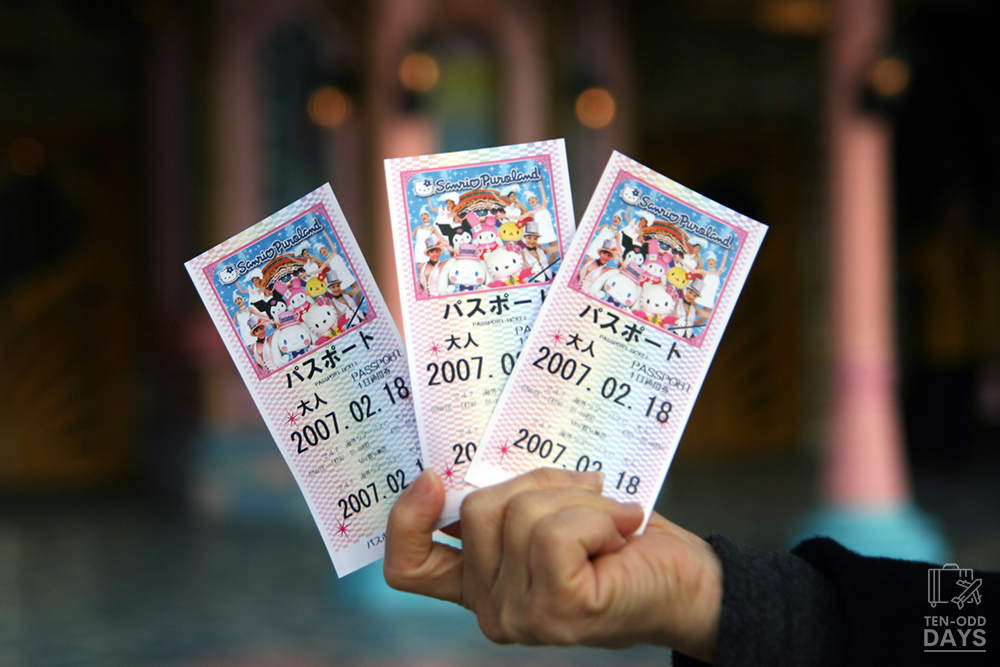
The entrance tickets are so pretty!
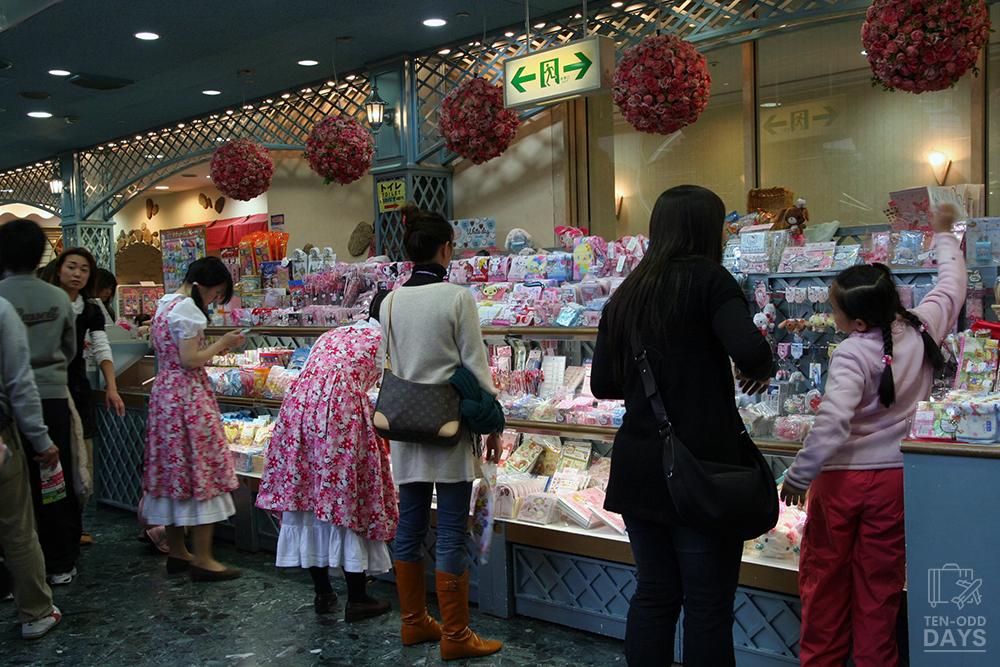
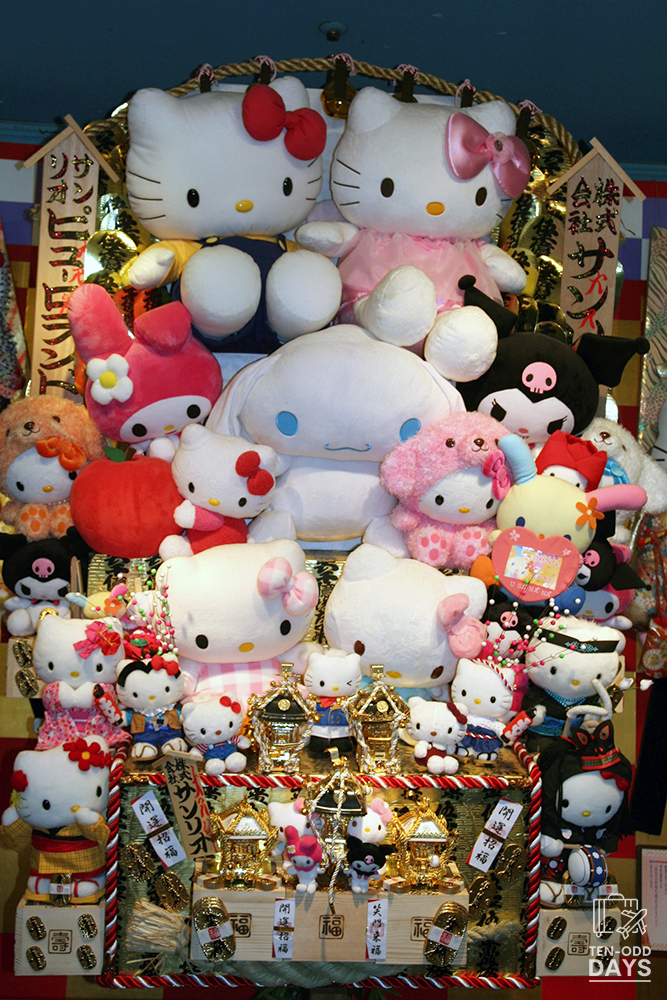
Our next stop for the day – Sanrio Puroland, a rather small-scaled indoor theme park about 30 minutes away by train from Shinjuku Station. Unlike Tokyo Disneyland, Sanrio Puroland appeals much more to younger children. But the stationery shop selling all sorts of Sanrio character merchandise saw an endless stream of wide-eyed customers, adults included. While there also exist Sanrio stores in Singapore, none is at this scale with such a complete collection of merchandise. I’m not a huge fan of Sanrio (although the little sis loves My Melody) but even then, I was equally taken by the cute array of pinky merchandise. The little sis, needless to say, was elated to have found numerous authentic My Melody stationery.
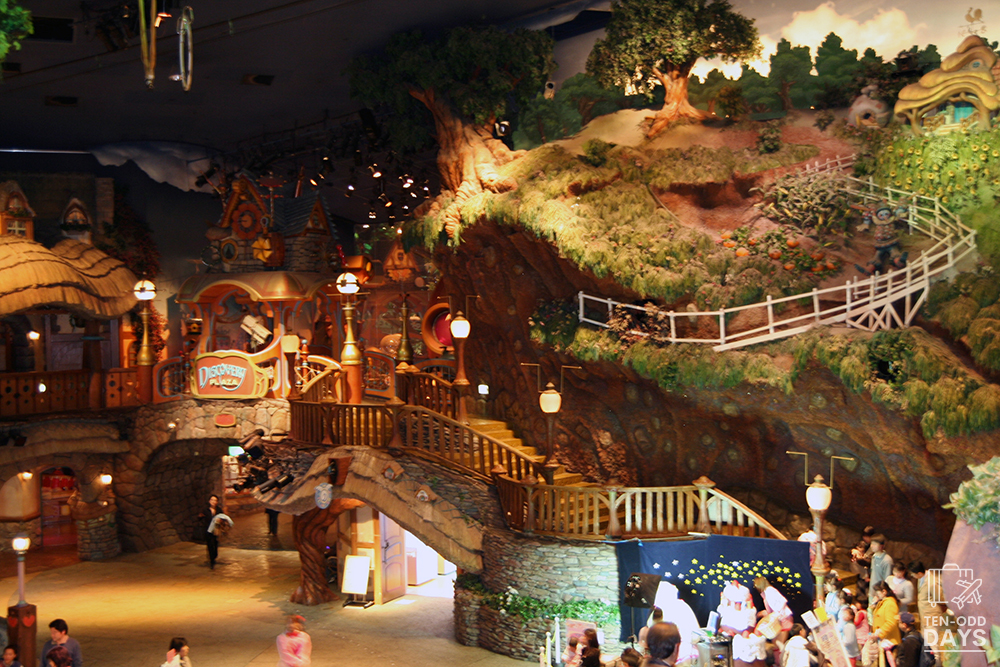
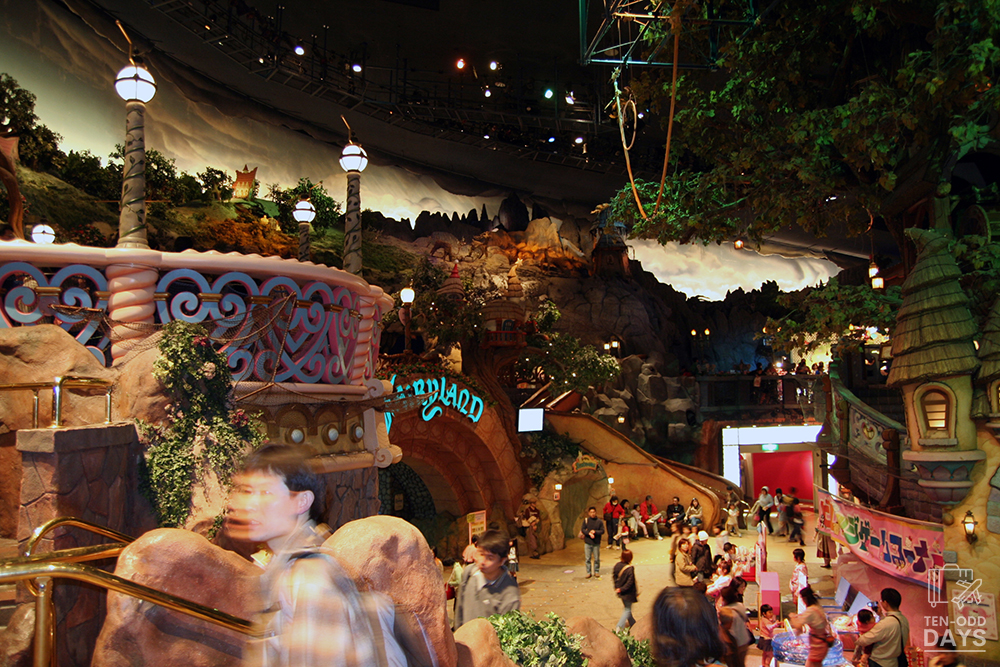
Sanrio Puroland was truly an eye-opener. I’d never seen indoor amusement parks that elaborately adorned. I had initially thought that Lotte World Amusement Park in Seoul is one of its kind in the world and I was completely dazzled. But that was before I saw Sanrio Puroland. It might not be entirely fair to compare the two because they are obviously different in terms of scale, and appeal. Lotte World after all, still has to maintain outdoor thrill rides while Sanrio Puroland probably easily generates more than enough income to sustain the park from the sale of Sanrio merchandise alone.
Subsequent visits back to Tokyo always sees me wanting to return to Sanrio Puroland but the trip out never quite materialised over the numerous trips we made. One big reason is that this indoor amusement park really doesn’t appeal much to me. It is definitely worth visiting if you have young children, especially girls, in tow. Otherwise, you wouldn’t be missing anything much.